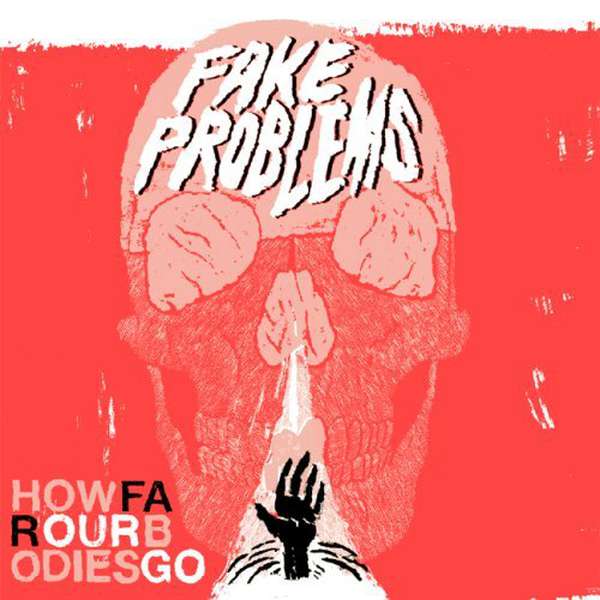
The comparisons are going to be made so let's just get them out of the way right now. As Against Me! becomes the new Hot Water Music, Fake Problems might just become the new Against Me!. Maybe. Yes, Fake Problems hails from Florida, a few hours north of the aforementioned bands and yes, they take a no frills approach to punk rock while also relying on some very basic elements of folk. But after a few listens to their first full-length, How Far Our Bodies Go, it's easy to see how different they are.
While the earlier Against Me! takes a very political standpoint lyrically, Fake Problems stick to simple storytelling, sharing the ups and downs of their everyday life. While some of the songs on How Far Our Bodies Go do include political elements, they merely occur from the simple truth it's almost impossible to go through life being totally apolitical. A good example of this is the song "Born and Raised." Rather taking a firm stance on issues like the army or higher education, their vocalist simply admits those types of places just are not for him. While Fake Problems may not be stepping on any toes, they also acknowledge everyone's entitled to their own opinion. The band has effectively proven it isn't always bad to be middle of the road. But the lyrics don't stop there; How Far Our Bodies Go is a look at life in the big picture, how we spend our day to day and how that will affect our entire lives; quite astounding for such a young group of gentlemen.
Perhaps even more impressive than the lyrical insight, is the variance in music style present on the album. Taking a little bit of everything that's good and right about country-western music and mixing it with elements of punk and early Elvis Costello-era rock and roll, How Far Our Bodies Go is thirty-five minutes of feel good music that constantly stays fresh and inventive without falling into the simple chord progression pitfalls that many punk bands face. The album opens up with a few rowdy numbers more punk than anything but subtle elements that evoke the spirit of the Americana by the use of horns, acoustic guitars and a gentle touch of violin. As the album makes its way towards its midpoint, the overall pace settles just a bit, instead using a tactic of both loud and soft parts creating not exactly, but in essence the tone of a ballad. As the album closes is settles even more, with a few sincere numbers about lost loves and lamenting over all the curveballs life throws.
For an album just over a half an hour, Fake Problems covers an immense amount of ground both lyrically and musically while never accepting to rely on standard conventions in music. They have proven that when you really push yourself there's no telling just How Far Our Bodies Go.