Bad Religion recently rode an extensive virtual bonanza, where they celebrated their fortieth anniversary with a series called “Decades”. i.e. four episodes where the band played songs live from each decade since the 1980s streamed from The Roxy Theatre in Los Angeles and accompanied by interviews.
Watching the first two episodes reminded me of how much Bad Religion coined my formative years, especially the 80s and 90s period. I vividly remember when one of the older musically clued in punks I hung out with played Suffer and No Control back to back for me. I was immediately hooked, which given the excellence of those two albums and what was to become the trademark Bad Religion-style, was not further wondrous.
Witnessing them incarnating live in the early 1990s still ranks as a highlight and even though my tastes and preferences in punk and hardcore started to radicalize in the 1990s, it regularly checked in to witness the subtle changes and evolution of their songwriting – something that was helped with by replacing Pete Finestone on drums, who stoically seemed to drum the same way across all songs during a live set.
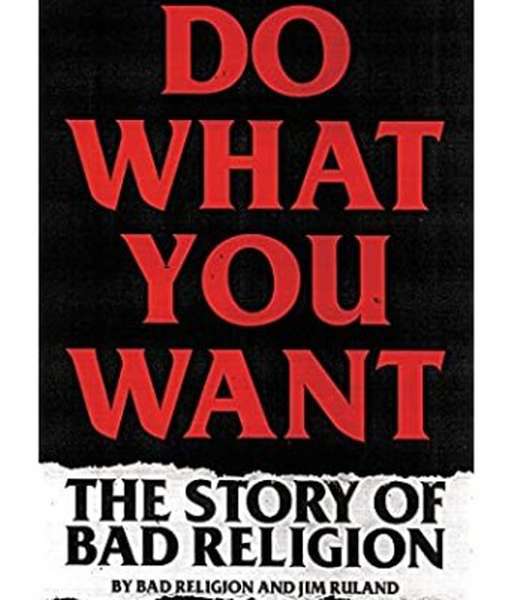
In a literary manner, the book Do What You Want (Hachette Publishing) is the biographical equivalent to the Decades concert series, which substantiates the narrative of the band with in-depth background on the travel and travails, splits and reunion with the band. Aficionados will be pleased as the tome chronicles both their back catalogue and tours, while documenting their rise from suburban delinquents to stalwarts of melodic punk rock along with Gurewitz’s progression to record label mogul ad Graffin’s academic pursuits.
There is a wealth of behind-the-scenes details, some drama and what makes Do What You Want specifically interesting, is that it puts the focus on the interpersonal elements between band members and how those contributed to the ups and downs.
The chapters where light is shed on the headier aspects of the band and the songwriting aspects are intriguing, especially when Graffin and Gurewitz share what makes them tick and inspires them. There is also a refreshing open- and frankness when it comes to talking about the band’s weaker releases, which helps to contextualise them in the canon.
Hardcore fans will find things deliberately left unsaid or unaccounted for, e.g. the firing of Greg Hetson, however, the band’s constituents under the guidance of author Jim Ruland has created a highly enjoyable overview of their career that is recommend to anyone with an appreciation for what lies beyond the appeal of “oozing ahs”.