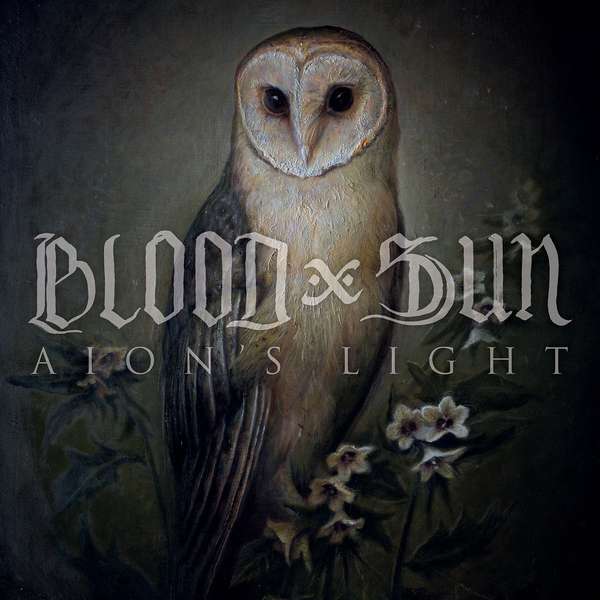
The trajectory of Blood & Sun has been one of natural evolution. Starting off from rough demos, the project of Luke Tromiczak slowly became something more immersive and complete. The compositions grew richer, the songwriting more nuanced, and the production cleaner. However, the creative process does not necessarily have to be about looking forward and evolving, and in fact at times it is wiser to look back and remember how it all started. Blood & Sun's Americana-derived neofolk might have reached its peak with 2020's Love & Ashes, but there is still something endearing about the raw quality of their early demos. That is the purpose of Aion's Light: to restore the project's original, primitive sense.
For this purpose Tromiczak goes back to the basics, limiting his production setup. In Aion's Light he relies on the same Tascam 414 four-track that he used in the early days of the project. It is a significant constraint, but one that can accelerate creativity, forcing him to find new approaches to both the songwriting and the production process. Rather than working around these limitations, Tromiczak embraces them, making their imperfections an essential part of the record's appeal. While initially it might seem harsh and inappropriate, the guitar timbre soon becomes one of the strongest elements of Aion's Light. The ringing artifacts produced by the strumming soon turn into a soothing presence, one that gives "The Gifts of Oneiroi" its fatalistic and nearly unyielding tone. The guitar simultaneously brings weight and bite, each strum arriving with almost punishing force, while Tromiczak's baritone voice provides a soothing counterweight.
The rougher production could jeopardize the neofolk component that relies more on subtlety and atmosphere, but Blood & Sun do not follow the genre's traditional trajectory. The rough production instead accentuates the raggedness inherent in their Americana. The roughness instead showcases the dark lyricism Blood & Sun share with Wovenhand, where Americana becomes a vehicle for existential themes of solitude and vulnerability. Tromiczak's black metal background adds another dimension, recalling Panopticon's acoustic explorations alongside the Appalachian-inflected pagan folk of Osi & The Jupiter.
Yet the rough production also threatens to obscure the finer details of Blood & Sun's sound. Tromiczak, however, knows when to introduce additional layers of detail. Audio effects still have a place in Aion's Light, providing the necessary otherworldly feeling, as is the case with the tape rewinding effect in the opening track. Melodic flourishes are used sparingly, but their occasional appearance makes them all the more effective. "Kiss The Wilds" is the best example of this, awakening an archaic folk magic through the delicate scales.
But what separates Aion's Light is not that it is a restoration but a return. Tromiczak is not looking to go back to the earlier sound and rehash ideas simply. He draws on the experience accumulated through years of musical evolution. The result is a record that is rough but also moving, one that accepts production limitations and works with them instead of agonizing against them. It is this mindset that sets Blood & Sun apart.