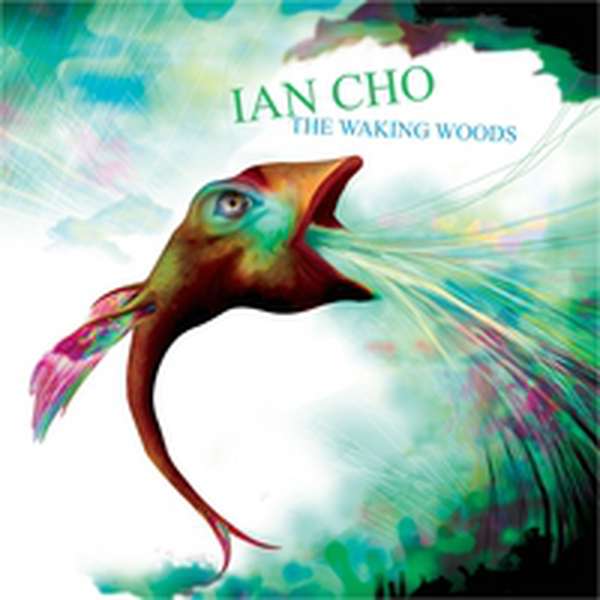
Reviews of music this insular, personal, and weird usually end up talking about other artists. Something along the lines of: "Cho sounds like that one guy, but with a hint of that other guy. A complex ratatouille of influences including..." but I can't write that review for a couple of reasons. The first is that I don't spend a whole lot of time with this type of atmospheric electronica, and won't pretend to have a vast knowledge base of the world's bleepers and bloopers. This album plops its listener down in the middle of a pure soundscape - it lacks all traditional song structure, but it's also relatively easy on the ears. It's weird, but not unpleasant. Nothing on this album innovates, but nothing here disappoints either. Of course, I have no idea how you COULD disappoint if you stuck to making this kind of bleepy-bloop hodgepodge. So if you wanted an all-music style analysis of connections to other albums, I'm not your guy.
The second reason I won't compare this to anything is more legit: I think this music sounds a lot like the inside of some dude's head. An Australian dude named Ian Cho, most likely, one who takes the time to compose elaborate backstories concerting magical forests for his freeform techno (yeah, he did do that.) Either it's that idiosyncratic, or it really is just random combinations of sound. The simple fact that this album DOES succeed in creating a mood, even an atmosphere of its own, makes me believe that it comes from and expresses a coherent concept and a very personal take on what music can be. And what do that odd concept and view of music have to do with any other album that might happen to sound similar? Answer: not much.
So I can't tell you to track this thing down if you love The Hildegard Broken-Knob 6 or whatever (man, I hope there's a band out there with that name), but I will tell you that Ian Cho's mind sounds a lot like liquid computers, Internet trees, and sentient cyborg-squirrels. I will tell you that this would make AMAZING video-game music, and that the songs flow into one another in a way that unifies the album and makes it evocative of some weird scene in a future/past sci-fi novel. I'll also tell you that it doesn't really GO anywhere. But I don't get the feeling that's the point. It almost seems like the individual songs are just there to provide Cho with an opportunity to make up names, including, "The Flying Fish," "The Coral Horn," "Dragon," and "The Waking Woods." They all work together to create the whole, which is sort of pleasant and dreamy and aimless. It feels like a walk through the elaborate scene Cho has constructed. A pretty, pointless way to spend some time in a place that belongs entirely to him.