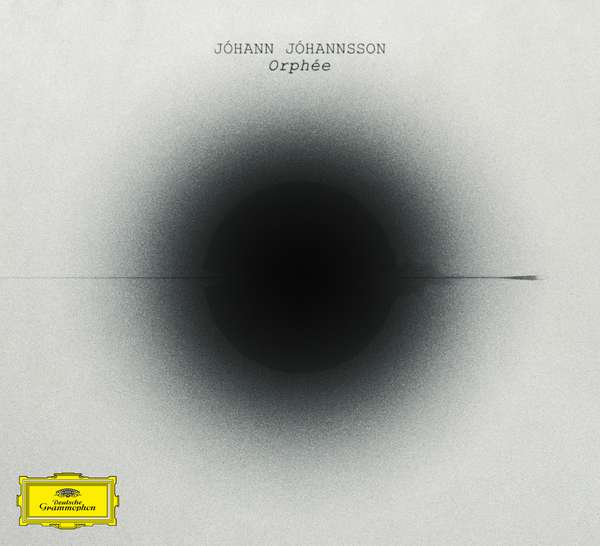
The Icelandic composer has risen magnificently in the last few years due to his works within the film domain. A prolific artist, Johannsson has contributed with scores for some excellent recent movies, including The Theory of Everything, as well as his frequent collaborations with visionary director Denis Villeneuve, in Prisoners, Sicario and the upcoming Arrival. Johannsson returns now with Orphee, his Deutsche Grammophon debut, an album that he considers his first “true” full-length in six years.
The reason for Johannsson considering Orphee his first record in that time span is due to his continuous work with film soundtracks. This is the first time in that period when the composer is allowed to work unrestrained from an existing film or script. Taking influence from Ovid's rendition of Orpheus' myth, he sets out on a masterful musical journey, navigating through the underworld and the realm of the dead, as the hero is trying to escape towards life.
Sonically this work is closely related to Johannsson's previous film scores and other releases. Styles are bent, as the composer is able to move across various influences to enrich his sonic palette. Standing solidly on a neoclassical basis, elements such as piano and string quartet to full orchestras, are to be expected, and that is the domain where Johannsson truly shines. Sweeping through moments of serenity, otherworldly sceneries, passing through feelings of melancholy and loss to nostalgia and longing, he is able to craft unforgettable memories from his pieces. From subtlety he travels to grandeur, as many epic manifestation let on, causing a devastating shift in perspective, always followed by a strong emotive quality, a cathartic element that rewards this effort.
A stunning choral (Paul Hillier's Theater of Voices) performance highlights parts of his work, something especially impressive in album closer “Orphic Hymn,” is not something we have regularly found in Johannsson's compositions, but its presence lifts the record even higher, as do the more experimental wonderings of the composer into the drone area. The overwhelming quality that Orphee reaches in these instances is truly admirable.
What is stunning after multiple listens of this great work, one understands how strong a composer Johannsson truly is. Sure, his film scores sound fantastic, but they are accompanied by an existing medium, in the film, but here he manages to do the exact opposite. With the music as the starting point, the cinematic quality rises to the surface, as Johannsson freed from the bounds of an existing story, recounts his own narrative, resulting in a work that is able to pierce through to the visual domain. You experience the journey and tragic fate of Orpheus in full effect through this album.