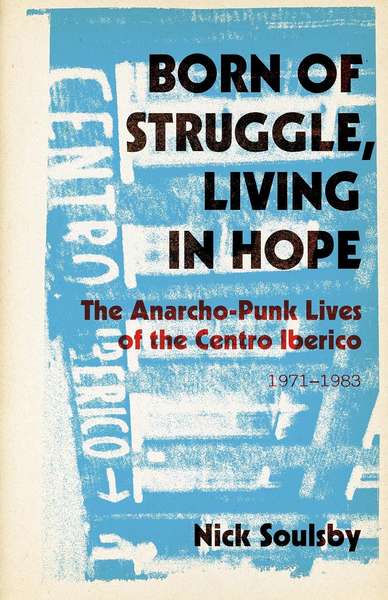
Living in Hope , as the subtitle suggests, is a punk-centric history of the Centro Ibérico, an anarcho-punk squat at 421 Harrow Road. It is also the first book-length treatment of the space, which was at the crossroads of far-right fascist violence, police surveillance, housing disputes, and the punk scene. Founded in 1970 by Spanish Civil War veteran Miguel García García, it initially served as an anarchist political community center for anti-Franco exiles and the Anarchist Black Cross. It only opened its doors to punk rock in 1978 and systematically bypassed the initial fashion punks of 1977.
Beyond the Bands, Into the Barricades
Punk rock history is littered with books and magazines that chronicle the exploits of the scene’s punk vanguard. However, few works focus on the places where these performances occurred. In many ways, Burning Down the Haus , by Tim Mohr, and Living in Hope by Nick Soulsby highlight two sides of the same coin. While Mohr’s book tells us about East German punk rockers and their clashes with the Stasi, Soulsby’s narrative focuses on British anarcho-punk and its encounters with British state institutions.
The Repression of the Underground Punk Infrastructure
It is unsurprising that the two books, one set in East Germany, the other in Britain, have much in common when it comes to the direct confrontation between punks and the authorities. Mohr writes about East German punks using the cover of youth clubs/churches to hold secret concerts, which were then shut down by the Volkspolizei (People’s Police). Similarly, Soulsby writes about British authorities using a combination of property laws, licensing regulations, and even fire safety ordinances to harass the residents of the Centro Ibérico even long before it started housing music to help with legal defense funds.
Battlegrounds for Autonomous Communities
The pressure was not directed solely at the bands; it is fair to say that the establishment did not take kindly to autonomous communities forming in working-class squats. Closing down such venues would put an end to punks’ unauthorized performances, but it would also disrupt the fragile order of these communities.
On 21 October 1978, the Belfast band Rudi played a show sharing the stage with London-based band - Raped at a Benefit for the “Persons Unknown” defendants. The show’s legacy was cemented in the book as one of the pivotal performances in the history of British punk.
That probably says more about the Centro Ibérico than most other things put together. For Rudi, playing in London was an incredible opportunity, while for the venue, it was just another step in its long journey. The first show was not easy; the promised public address system did not materialize, and the band accepted “LOTS of free beer and wine” before heading on stage and, as Young put it, “we were more than a little shambolic before the first song began.”
Intergenerational Anarchist Punk and Final Thoughts
Soulsby does not whitewash the history of the Centro Ibérico; the place was not some utopian socialist paradise with hookah pipes and harems. The roof leaked, funding was always an issue, there was always a repair to be made, a benefit to be held, and a threatened eviction. Drawing on his interviews with various contributors to the Centro Ibérico as well as archival research, Soulsby shows that anarcho-punks were a serious commitment for those who wanted to pursue it. It involved considerable personal sacrifice on the part of individuals who already had to work full-time at it.
In addition to providing a valuable addition to the existing literature on the history of punk, Living in Hope serves as a much-needed reminder that in order to have a scene, one needs to find a space first. That space has to be equipped, maintained, and repaired; the benefit needs to be organized and promoted. All of this is to say that there are people behind every scene, people who make it possible, and Nick Soulsby’s book is a tribute to these individuals.
Brian Young of Rudi Remembers Centro Ibérico
While only portions of Brian Young's recollections appear in the review above, I thought it was important to include his complete account here. As a member of Rudi, Brian's memories offer a firsthand glimpse into the atmosphere at Centro Ibérico during its formative years as a punk venue. My thanks to Brian for taking the time to share them.
Hi... here's what my fevered brain can recall about Centro Ibérico.
From what I can remember, it was a Spanish anarchist squat in an old school in Harrow . We'd gotten friendly with Raped and their manager, Alan Hauser, as they'd put up and looked after a pal of ours from Belfast called Nick Park ("Mr. Puke"). He'd run away from home to London and, as he wasn't 16, couldn't sign on and claim state benefits. He used to do a zine called C.S. Control, and we'd often find him with his head inside our bass drum when we were playing the Harp. (He's now a proper minister with his own church in Drogheda...)
Anyway, we got friendly with them, and Alan Hauser helped get us gigs, which were hard to come by because we weren't with an agency.
The first Centro Ibérico gig was Saturday, October 21, 1978: Raped, RUDI, and AUM Band. It was a benefit for "Persons Unknown." AUM Band never turned up. There was no PA, as had been promised, so we hired the Gems PA. (Denis Forbes was driving for us at the time and lived on the same street in Clapham where we all squatted.) We got offered LOTS of free beer and wine before we went on, so we were more than a little shambolic.
Our pal Dave McCullough, who was writing for Sounds, slagged us mercilessly in the next issue of Alt Ulster. We probably deserved it.
Raped were always really tight and captivating live, and most of their set consisted of the new songs that would later appear on the Cuddly Toys LP. I loved them.
Our second gig there was much better, on Sunday, November 5, 1978—Guy Fawkes Night. This time Denis had to provide the PA again.
First on were the Four Kings, who were on Alan's Sresh Records label. They were a sort of oddball rock band, though they were supposed to be involved in the Pistols film that was being made back then... as was half of London.
Bitch were on second. They'd promised us support on a tour, which turned out to be one date in Manchester with them, us, and Skrewdriver. Charlie, their frontperson, was one of the old Roxy Club faces. They were OK.
RUDI headlined, and we did damn well too, if I remember right. There was a lot of standing about, drinking, and lighting bonfires outside because it was Guy Fawkes Night.
We were just glad to get ANY gig in London.
And we'd MUCH bigger bonfires in Belfast.