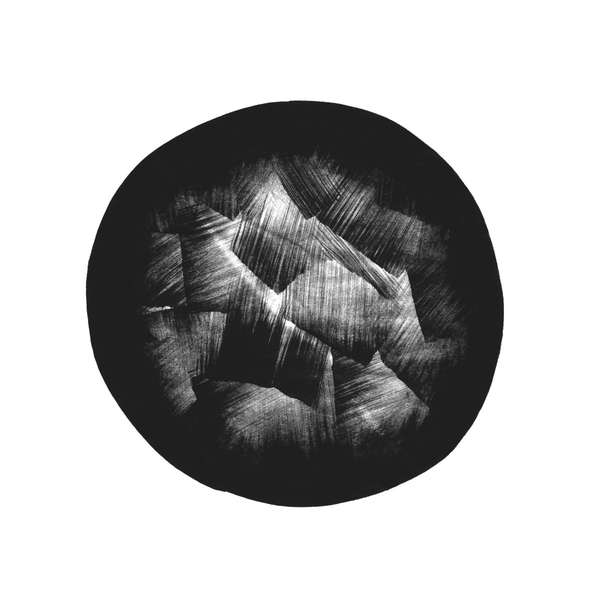
Sonic playground, or finding beauty in the cracks. It feels that this is an appropriate title for Yuko Araki’s new opus, End of Trilogy. But again, this is to be expected from an artist that has been so curious throughout their musical endeavours. From starting out as a pianist to becoming obsessed with the energy and weight of metal and hardcore, these early experiences and memories shaped Araki’s approach to music. And yet, after these initial interactions, Araki would continue to search fervently for something more. Psychedelic injections of tribal music through performing drums for Kuunatic, and the fusion of neoclassical with noise in Concerto de La Familia opened up new pathways. Yet, it is Araki’s solo project, combining noise and power electronics with many elements from her past that shows the most promise.
Araki has already released music through her solo project, through a series of split works before unveiling the excellent II full-length in 2019. The harsh and raw perspective prevailed, navigating an intense ride through noise soundscapes and abstracted long form investigations. The successor now in End of Trilogy, features many of the same attributes but it also has its own unique quirks. Firstly, Araki has allowed the longer investigations to melt away. You will not find here the cinematic unfolding of epic tracks like “Vermillion Bullets,” or the intense build-ups of “Taklamakan.” Instead, End of Trilogy proposes a more to the point approach, focusing on brief moments of excitement and joy, or brutality and nihilism.
The first thing that is apparent with End of Trilogy is an almost childlike delight in the arrangements. In the busier moments of the record this attribute truly shines, be it through the busy and hectic “Cat Food” or in the verging on free jazz inspired “Position In Bloom”. And then, these are all these fragments of Araki’s interests that find their way in End of Trilogy. One of particular note is the harsh and metallic influence that “Inconstant Tangents” displays, and it is moments like that giving the record an innate sense of wonder.
But of course, this is only part of the puzzle here and Araki treads on more tumultuous paths. The pressure and the asphyxiating quality that defined her work is still present, be it through the overwhelming approach of “Exhalation” or the dizzying effect of “Moonstroke in The Mountain”. Here, dissonance is not just evoked, it is rather worshipped especially in moments like “Blood and Castle” and “Optical Landfall,” showing the many facades that Araki can place on her art.
In many ways, End of Trilogy feels like a deeply personal work. Beneath its sonic bombardment, the dissonance and the haze of power electronics, the abstracted metallic and jazzy themes, Araki seems to be navigating through her own history, and her own life. It is what allows End of Trilogy to bounce so masterfully from the beautifully crystalline melodies of “Dazed” to the harrowing finale that is “Dying of the Night”.
Related news