Iron Maiden
Allianz Stadium
Sydney, Australia
15 November 2026
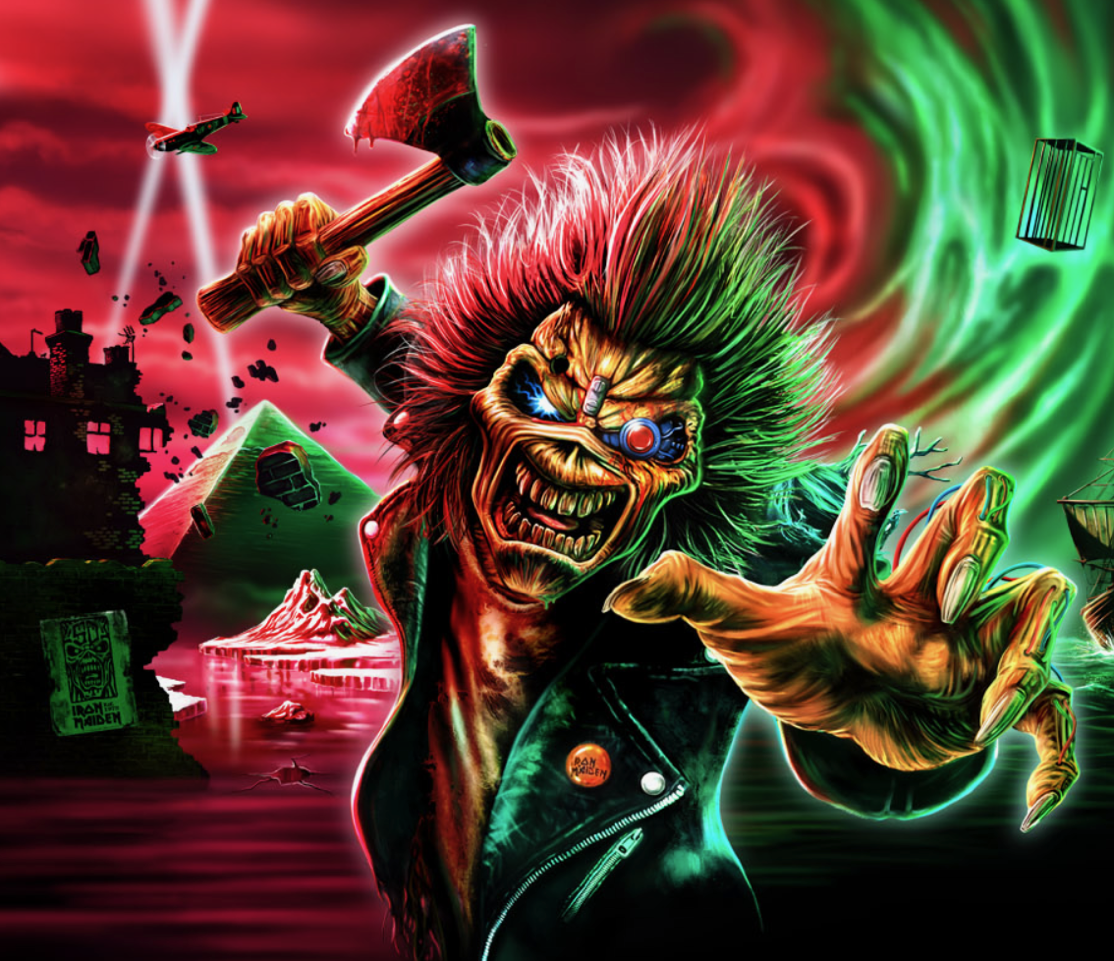
Somewhere between childhood and the first tentative suspicion that adulthood might be an elaborate confidence trick, Iron Maiden arrived in my life with an unusually persuasive proposition, i.e. the world was considerably stranger, darker and at times more interesting than it appeared. In 1988, I encountered Seventh Son of a Seventh Son, an album that seemed to have been conceived somewhere between a medieval grimoire, a fever dream and an unusually ambitious philosophy seminar. It was not so much a record as an invitation to disappear down a rabbit hole populated by prophecy, ancient mythology, supernatural apparitions and the occasional existential crisis. Other children were negotiating the mysteries of adolescence; I was contemplating clairvoyance and the metaphysical implications of being the seventh son of a seventh son. One suspects my parents had other educational priorities.
What made the album so captivating was not simply its theatricality, although there was plenty of that. It possessed an almost literary architecture, its interconnected songs constructing a world in which innocence, foreknowledge, destiny and damnation were less abstract concepts than rather pressing practical concerns. Its progressive arrangements and recurring musical motifs gave the record an unusual coherence, while its lyrical preoccupations suggested that heavy metal could accommodate intellectual curiosity without necessarily requiring a change of wardrobe.
There was something Borges-like about the experience, i.e. the sensation of entering a labyrinth in which every corridor opened onto another question, and where certainty was generally the first casualty. Jung might have recognised the appeal of its archetypes, those recurring figures of the prophet, the innocent, the shadow and the inevitable reckoning with oneself. Kierkegaard, meanwhile, would probably have found plenty to contemplate in the album’s uneasy relationship with anxiety, uncertainty and the burden of knowing too much. Whether any of these gentlemen would have approved of the guitar solos is another matter.
Nearly four decades later, standing among thousands of people at Allianz Stadium, I found myself returning to that formative encounter. Iron Maiden were marking fifty years, but the "Run For Your Lives" tour was not an exercise in sepia-toned sentimentality or the musical equivalent of a commemorative tea towel. It was a demonstration of how an artistic universe, once entered, can remain remarkably difficult to leave.
There was an additional satisfaction in seeing the band’s mythology occupy a stadium on this scale. Iron Maiden have always understood the theatrical possibilities of heavy metal, but their appeal has never rested solely on spectacle. Beneath Eddie’s increasingly elaborate disguises, the elaborate stagecraft and the formidable volume lies a body of work preoccupied with the oldest human obsessions, i.e. mortality, power, war, faith, superstition, identity and the uncomfortable possibility that we understand rather less about ourselves than we would like to believe.
With Megadeth providing the prelude, Sydney’s first Iron Maiden stadium headline show brought together two formidable institutions of the genre. But the evening belonged firmly to Maiden, whose catalogue offered a journey through five decades of musical history, intellectual curiosity and magnificent excess. If the objective was to run through the band’s formative years without behaving as though time had any jurisdiction, they were off to a promising start.