The Effigies-Still Da Machine
In direct contrast to the swirling Chicago cesspool of the 1980s radio fodder emerged the Midwest punk scene; amongst those bands dwelling from the underground, none were as imposing, incisive, and influential as The Effigies.
Along with Naked Raygun, they were one of the first bands to emerge from Chicago's underground, forging a fiery path from the heft of post-punk's dangerous guitars and sense of urban isolation through the dark, dank, fertile breeding grounds of La Mère Vipère, O'Banion's and Oz.
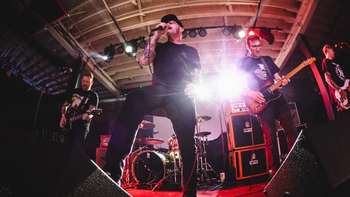
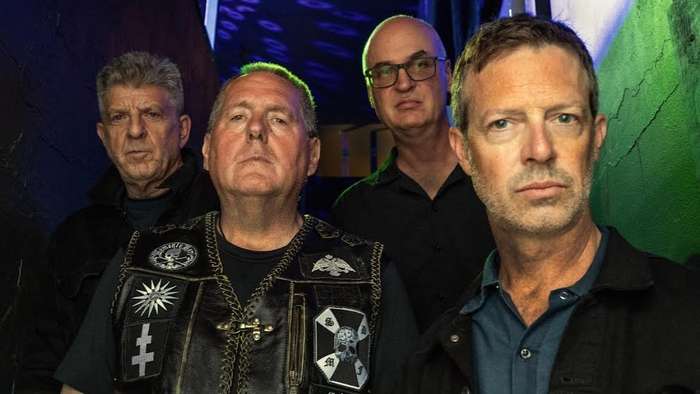
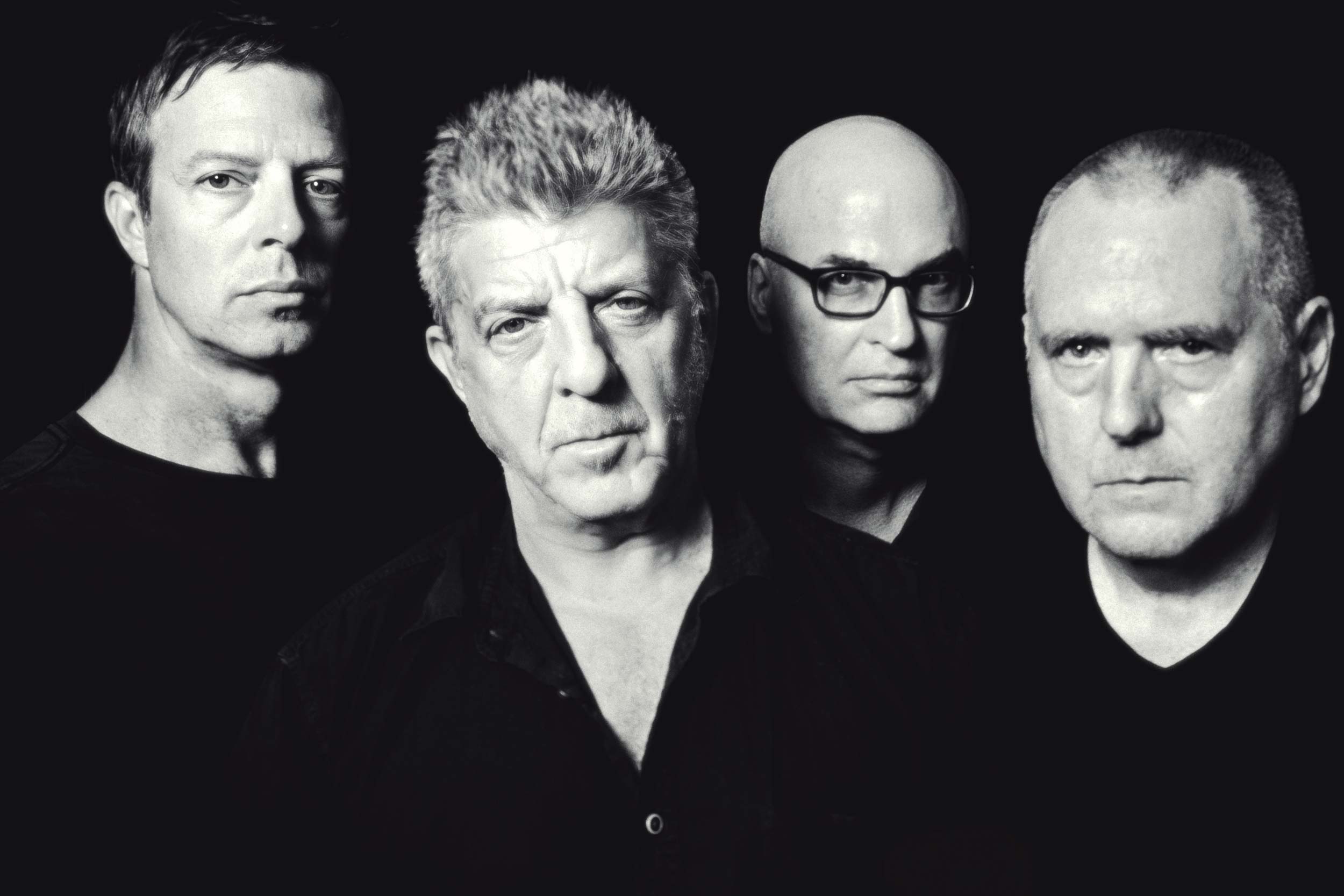
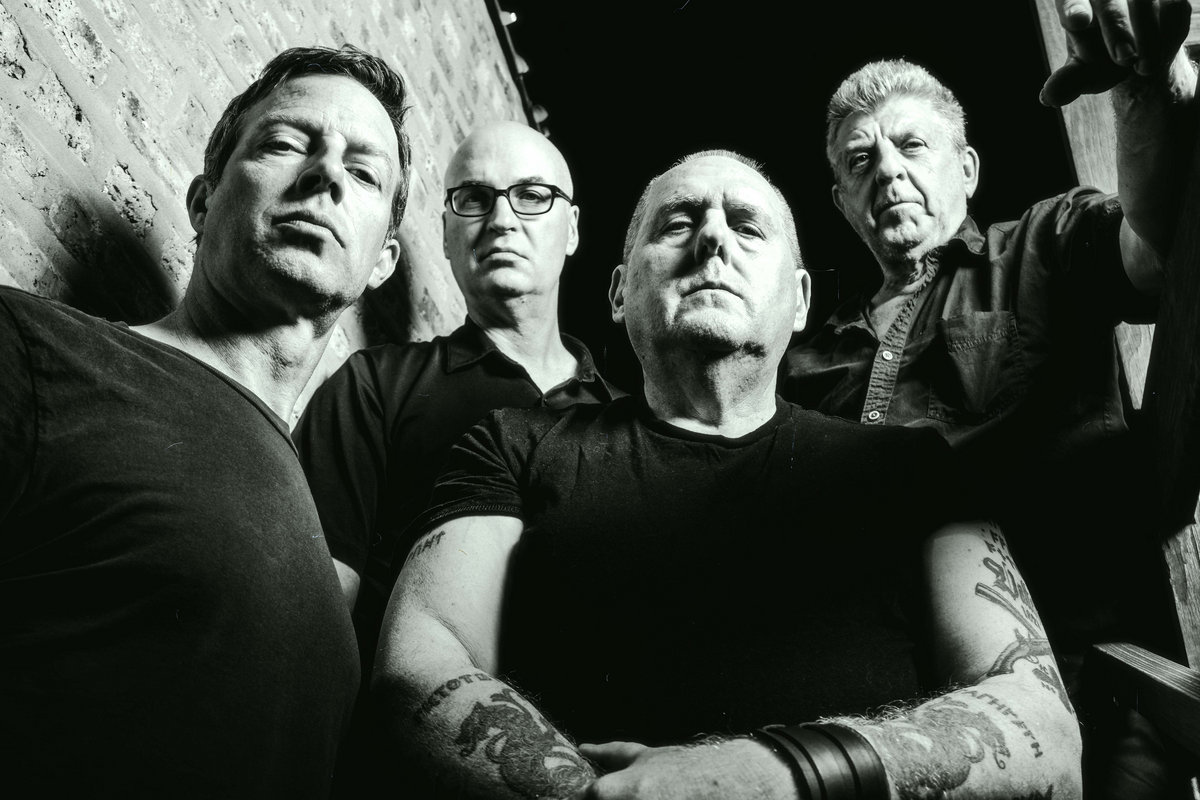
Decades after their rise to notoriety, the band's spirit shows no signs of a cooling-off period. After the passing of founding frontman John Kezdy in 2023, the rhythm section of Paul Zamost and Steve Economou, along with long-time collaborator guitarist-producer extraordinaire Andy Gerber and ex-studio engineer turned singer Geoff Sabin, have decided to continue to forge the fire because they are da machine!
Fire Aim Ready, a new record on Chicago-based Pravda Records, serves twofold as a tribute to the band's legacy while looking resolutely to the future. We spoke with Steve, Paul, Andy, and Geoff about the early scene, their new release and the band's legacy, one page at a time.
Fire Aim Ready: The Effigies Keep the Machine Running
Lineup Evolution & A New Chapter
Scene Point Blank: Geoff, your connection to The Effigies goes back nearly two decades, from engineering John Kezdy's vocals to contributing artwork for Reside. How did those experiences shape your approach when you stepped into the role of vocalist on Fire Aim Ready?
Geoff: Working with them on the Reside record got me front row to how intentional and driven they were in approaching the songs. I was already a fan of the band’s early stuff, but the new studio work was another door opened. John was uncompromising when it came to lyrics and vocal tracks. When I started to collaborate on new songs with Paul and Steve, that foundation was impossible to ignore, so you check your work, so to speak, to be mindful of the essential characteristics that should shape an Effigies track.
Scene Point Blank: Geoff, during your first run of shows with the band, you let Paul handle most of the stage banter until you felt you'd earned your place. Now that fans have embraced this chapter of The Effigies, how has your confidence as frontman evolved? Has your relationship with the audience changed?
Geoff: I think the band as a whole has grown confidence through banging out the set at shows for the last couple of years. We’re working to be that well-oiled machine on stage, and I think the audience reactions give us confidence that what we’re doing is appreciated out there. You still won’t hear me claiming to be a spokesperson for the legacy yet, but I’m deeply enriched by the interactions I’ve had with the people coming to the shows, new and old.
Scene Point Blank: Paul and Steve, after John's tragic passing in 2023, was there ever a serious conversation about ending The Effigies, or did it quickly become clear the band still had more to say?
Steve: Well, I think we were in complete shock when it happened and really didn’t know what to do. The recording for Burned was just winding down in the studio, and John had just finished all his vocal parts, so we knew at the very least the record had to be released, if nothing else as a tribute to his memory. It was the total support of Andy and our families that we decided to keep going. In the end, we felt that the songs were good and that the band owed it to John to play these live. I am so happy we decided to keep going. We dedicate "We’ll Be Here Tomorrow" to him at every show we play. We did get some negative pushback from some of his family and friends, and that’s understandable. I think they felt that The Effigies couldn’t exist without John as the central figurehead and co-founder. I completely get that, but I also think he would be proud that we kept going and this band he helped start still lives.
Scene Point Blank: Paul, you've said Geoff was never brought in to replace John, but to bring his own voice to the band. Did that change the chemistry during the writing and recording of Fire Aim Ready compared with Burned?
Paul: The chemistry was different due to Geoff playing guitar during the writing sessions and working on songs he wrote musically.
Chicago, Punk & Survival
Scene Point Blank: The name The Effigies suggests holding a mirror up to society -- or burning one. When you chose that name in 1980, what were you reacting against, and does that same frustration still exist today?
Steve: This was right after the Iranian Revolution of 1979. The US had Jimmy Carter as president, and the US embassy staff were taken hostage. Every night the evening news showed protests from Tehran with thousands in the street burning effigies of Uncle Sam. “Death to America” was the slogan. It was very powerful, and I think a lot of people in the States felt very powerless. We had just gotten out of the Vietnam War with the feeling we had lost, and now the American Embassy staff were prisoners, and nothing could be done about it. Yes, lots of effigies hung and burned. That’s where we were then, a fitting name.
Scene Point Blank: Chicago's early punk scene always seemed to be fighting for survival. Venues disappeared, shows were shut down, and promoters constantly faced pressure. Did that atmosphere fuel the band's confrontational energy?
Steve: Absolutely. Chicago was a tight-assed conservative backwater then. Disco, blues, and bad tribute bands dominated the local music scene. You couldn’t play anywhere if you didn’t play cover songs, and the radio was dominated by what you would now call classic rock. It’s funny, those same songs are still being played. Not that I don’t like those bands, but punk never made it to the mainstream corporate stations, almost like it never existed.
Chicago is now progressive and has a great music scene with some awesome venues -- Metro, Liar's Club, Cobra Lounge, and many others. The early scene also started in the gay discos in the late '70s. La Mère Vipère was the beginning of the Chicago punk underground. A gay bar during the weekdays and a punk bar on the weekends. It was burned down either by the Chicago Police or the mob, depending on who you talk to. Maybe the juice money wasn’t being paid -- who knows? Following them was O'Banion's. A true dump, violent and gritty. Located then in Chicago’s Skid Row district. It was a rat-infested dive that was around for years and was once owned by an Irish mobster in the Twenties who was gunned down by Al Capone’s crew -- ever hear of the Saint Valentine's Day Massacre? The last of the original punk bars at that time was called Oz. It was owned by two gay leather guys, Dem and Gary. Oz was the place that bands actually started playing and forming at. It had three locations. The first was located on the north side in Rogers Park, and it was short-lived. The neighbours hated the place, and I can recall vividly one night waiting for some friends on the corner when the local bar next door emptied and its patrons surrounded us. I can still smell the Old Spice on that short little guy who called himself Angel, carrying his black cane with a silver devil's head. He started to shake my hand and introduce himself, then all of a sudden he took a swing at me. We brawled for what seemed like an eternity before they scattered. Thank goodness for that leather jacket and those steel-toed work boots: not a scratch. The second location was near the North Loop and was also short-lived, but I consider it to be the best of the three locations, as all local businesses were closed by the time Oz was opening for the night. This is where we had our first show in 1980. The third location was on Halsted Street at the northern periphery of Boystown. This was also a dangerous location, as the neighbourhood gang members would be on the prowl to gay-bash anyone outside of the gay district. We had several fights with them and constant police harassment. They eventually closed due to a revoked liquor license and the owners constantly being arrested. Sadly, Dem is gone, and I don’t know what happened to Gary: two sweethearts who made the scene possible in the early days. After that, other club owners in the city started allowing bands to play and the crowds eventually grew.
It was something we just wanted to do. We never thought of this as creating a Chicago punk scene.
Scene Point Blank: Mainstream radio and much of the local music establishment initially dismissed punk as a fad. How much did that outsider status shape songs like "Body Bag" and "Security"?
Steve: It was only college radio and one or two DJs on XRT, like Bobby Skafish, who played punk music. All of the other corporate stations hated punk. There was this station called The LOOP that played your average rock of that time and would make fun of punk. This station sponsored a stage at ChicagoFest, and one year John, Pierre Kezdy, and I went down there to check it out. John was wearing his LOOP T-shirt that had “I Hate” written in paint above it. Man, we got mobbed and harassed by all the outraged Midwestern Camaro-driving mustached rock idiots. It was hilarious. Let’s just say it was great fun trolling these braindead macho clowns. Again, not a scratch.
Scene Point Blank: Steve Albini once said that The Effigies and Naked Raygun were the bands that kept Chicago punk alive during its early years. At the time, did it feel like you were building something important, or were you simply trying to survive from one show to the next?
Steve: It was something we just wanted to do. We never thought of this as creating a Chicago punk scene. We formed out of a need to play the kind of music we wanted to hear. All this great stuff was coming out of New York and Great Britain, and we couldn’t see any of it. Forming our own bands was the solution.
As far as the Chicago police? An envelope with 10 percent of the door should do it.
Scene Point Blank: Early on, engineer Timothy R. Powell helped record your first songs despite virtually no budget. How important was that kind of DIY support in getting The Effigies off the ground?
Paul: Timothy Powell's contribution was hands down the most important support for The Effigies and the Chicago scene. What he did for us still resonates today.
Scene Point Blank: Just for fun: if the 1982 versions of Naked Raygun and The Effigies met in a no-holds-barred steel cage match, who walks out the winner...and how long before the Chicago police shut the whole thing down?
Steve: I would see this as not a cage match to the death but more like an oil wrestling match with loincloths only. Bass player against bass player, Drummer against drummer, etc... You get the picture, or maybe you’d rather not. Last match is both bands fully in. Naked Raygun would score the most points for originality and tactics; The Effigies would score the most points for technique. Nah, of course there’s always that sense of competition, but we’re brother bands. We love those guys! As far as the Chicago police? An envelope with 10 percent of the door should do it.
Scene Point Blank: If Chicago erected a statue celebrating the city's punk legacy, who belongs on it, where should it stand, and what's the one part of the statue fans would inevitably rub for good luck?
Steve: I say a statue to Jimmy Skafish would be it. Skafish was the first band that was part of the early scene to make it nationally. He was this androgynous frontman with a pageboy haircut who would dress in women’s clothing and a one-piece bathing suit. He had a great band behind him, and he would drive the audience mad as an opening act for mainstream bands. He was way ahead of his time and a genius, really. I say a lifesize Greco-Roman-type statue, fully painted like in ancient times, placed in front of the Arie Crown Theatre where he was booed off stage so many years ago. He’d be holding up his right hand giving the middle finger, and there would be a 12-foot stepladder so one could rub his nose for good luck. The guy has an incredible nose!
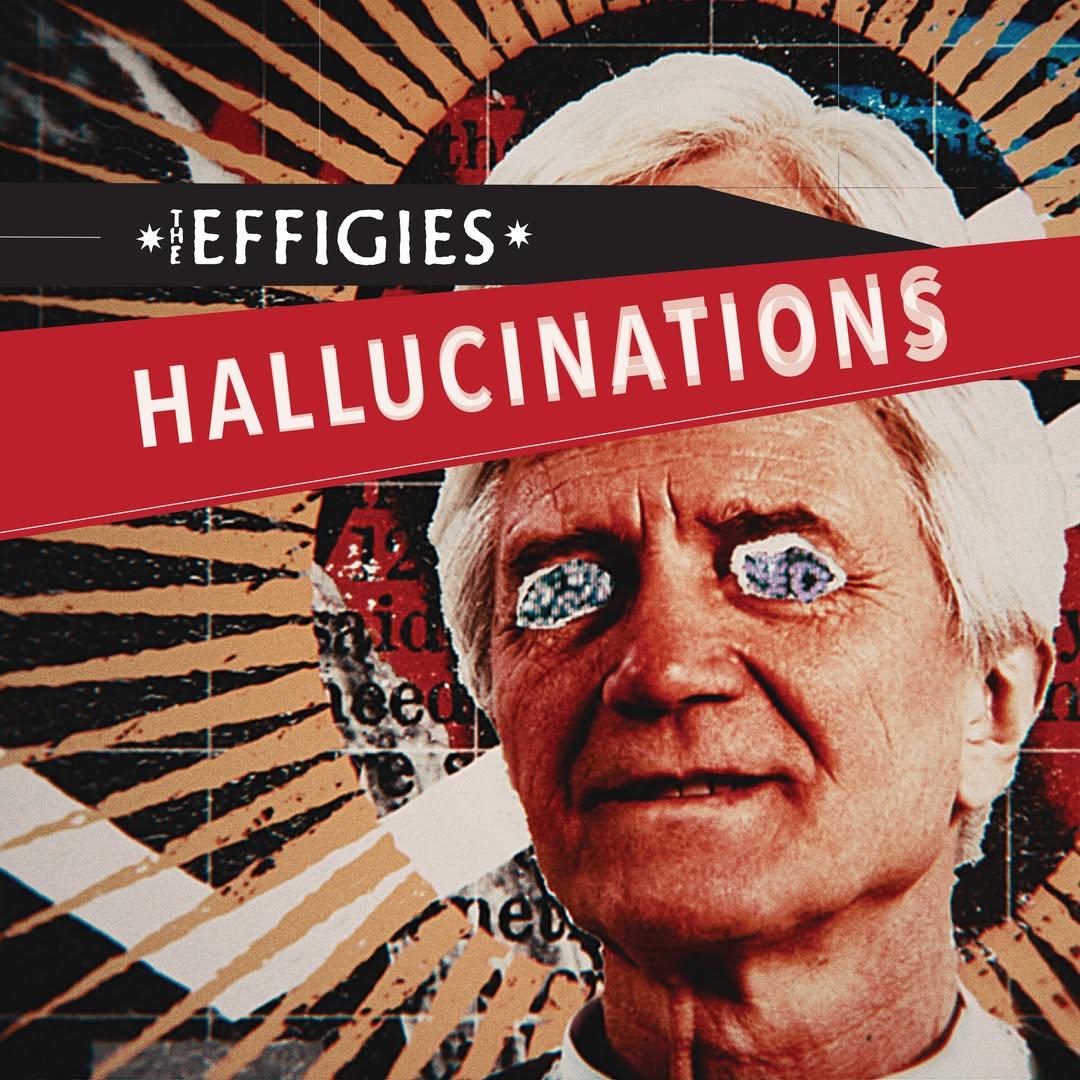
Making Of Fire Aim Ready
Scene Point Blank: Written and recorded between tour dates, Fire Aim Ready has the urgency of a band capturing a moment. How did that pace influence the songwriting and overall feel of the record?
Geoff: I think it helped in this case. We didn’t stray far from the sound we were making on stage. We worked with focus in short windows, and it kept the record tight.
Scene Point Blank: The title Fire Aim Ready immediately catches the ear because it reverses the familiar phrase "Ready, aim, fire." Was that intentional wordplay, and what does that change in the meaning of the phrase?
Geoff: It is intentional. Seems like we observe it so much around us currently: shoot first, think later. Overreact first, research later. Toe the line first, consider the issue maybe never. Fire Aim Ready is commentary on those actions and influences and how seemingly backwards some of the presented options can be.
Scene Point Blank: Andy, after producing Burned and Reside, you're now also the band's full-time lead guitarist. How did you balance honouring Earl Letiecq's legacy while putting your own stamp on the guitar work?
Andy: When I first met Paul and Steve in the late '80s, they were fresh out of The Effigies and those influences loomed large back then. Having kept in touch and worked on different projects throughout the '90s, it was natural for me to produce the Reside album, as we were all fishing in the same pond pretty much, and agreed on what rock should sound like. Learning and performing the back catalogue has definitely given me insight into "what would Earl do?" and that certainly influences my playing and note/chord choices with the band.
Fire Aim Ready is commentary on those actions and influences and how seemingly backwards some of the presented options can be.
Scene Point Blank: Were there particular guitars, amps, or recording techniques that became essential to the sound of Fire Aim Ready? And philosophically, do you still lean toward analogue recording whenever possible, or has digital become part of your workflow?
Andy: We ended up using mostly our stage gear, P-90 Gibsons with early Marshall 900 amps. I always mic the amps as opposed to using a direct signal with digital amp modellers. You need to hear those tubes get hot! That said, I love the editing capabilities of digital. We experimented quite a bit with the arrangements of a few of these tunes, slicing and dicing.
Scene Point Blank: Shortly before John passed away, the band digitized its master tapes at Steve Albini's Electrical Audio. Looking back, how important was that project -- not only for preserving The Effigies' history, but also for making reissues like For Ever Grounded and Fly on a Wire possible?
Andy: I was pestering John about doing that before he passed. He was a little cagey about what he had, and as it turned out he kept almost every master, multitrack and mix tape. I think it was super important to archive that stuff while we still could; it could have easily disappeared forever. We will get everything reissued eventually so the full legacy of the band can be fully appreciated.
Scene Point Blank: The album includes a cover of The Stranglers. What drew you to that particular song, and was it a way of acknowledging some of the band's early influences?
Andy: Well, The Effigies love The Stranglers! I got an idea in my head that we could do a cool version of that tune in the style of "Smile!" from For Ever Grounded, so I started working on a demo that chased that idea. It turned out so good that I brought the guys in to finish it "for real," and it turned out great. It was an atypical choice, but I think that makes it interesting.
Looking Ahead
Scene Point Blank: Whether it's Riot Fest, Rebellion, Punk Rock Bowling, Metro, or The Middle East, you've played in front of longtime fans and people discovering The Effigies for the first time. What's been the reaction to the new material?
Steve: I’d say pretty good. Most of the older fans want to hear the old songs, but the new fans don’t know old from new, so the festivals are nice in that we are playing to people that have never seen us. But in general, people have been into it.
Scene Point Blank: Pravda Records has long been part of Chicago's independent music community. What made it the right label for Fire Aim Ready as the band prepares for another round of international touring?
Andy: Both Pravda and The Effigies are longtime Chicago independent music icons. We figured this made Pravda an excellent fit to release the new Effigies album: two great tastes that taste great together.
Scene Point Blank: Looking back now, does Fire Aim Ready feel like a continuation of The Effigies' story, or the beginning of a new chapter? When fans drop the needle for the first time, what do you hope they hear?
Steve: For me, this record is a new beginning. With Andy and Geoff, the band has taken an exciting and new turn. We play the old songs with a new vigour, while the new ones have that Effigies feel, but they’re different. I’m very grateful to be playing with these guys and hope we can keep making music together. I think of the lyrics that John wrote on "Manifesto" for the record Burned. To me, it expresses what we are as a band.