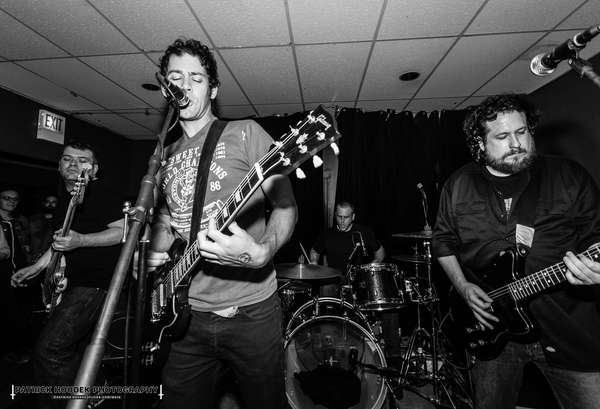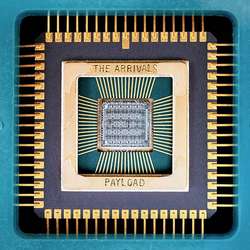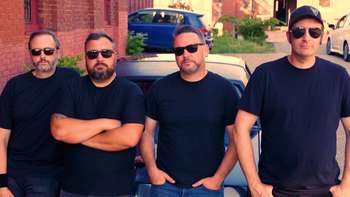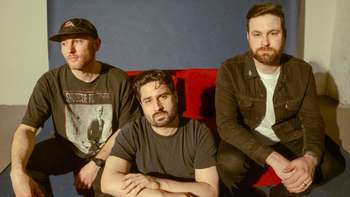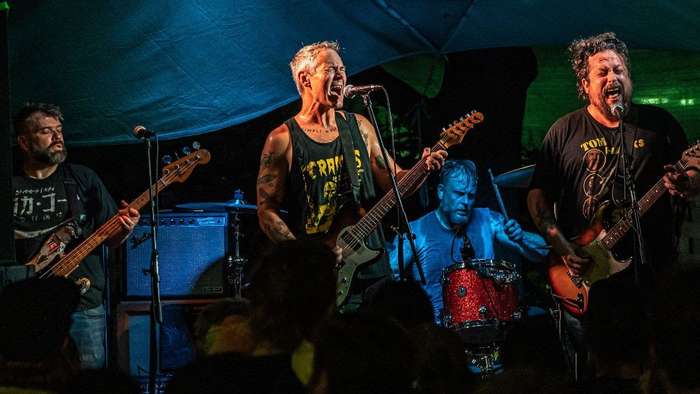
The Arrivals have been a band for 30 years -- though they’ve made us wait 16 years for the follow-up to 2010’s Volatile Molotov. While a ton of time has passed and the band has moved, literally in some cases, and raised children in others, their sound is still the same: thoughtful and timeless DIY punk, rooted in foundational rock ‘n’ roll.
We sat down for a group phone call with half the band last month to learn more about the making of their brand new album, Payload.
 Scene Point Blank: It's been 16 years since Volatile Molotov. You kind of paused, roughly a decade ago. What happened between then and now?
Dave Merriman: I got a I got offered like a jobby-job, doing graphic design and I wasn't able to tour as much. It stomped on our momentum. And soon after, Isaac moved to California.
Isaac Thotz: Paddy had [a child] right around then as well. It was a lot of things happening all at once.
Dave Merriman: And then Isaac started Treasure Fleet and that picked up some steam. That was a few of those years.
Scene Point Blank: You did some Christmas shows in Chicago and stuff like that, right? Did you consider yourself inactive or on hiatus or just, like, life getting in the way?
Isaac Thotz: We definitely didn't talk about taking a hiatus. It just kind of happened that way.
Dave Merriman: There was always a show here and there. We did the show with [Naked] Raygun and White Mystery at The Metro, then Awesome Fest. And we did the Christmas shows. We all had a bunch of stuff going, but we never lost touch.
It was just, "There's nothing going in The Arrivals right now." I think that's an accurate way to describe it.

Scene Point Blank: Were you practicing or writing in that time or it was just that you had other priorities?
Dave Merriman: Of the songs that I wrote on the new album, a few of them were written quite a few years ago. I started writing "When It's Gone" in maybe 2015 or 2014.
And we've all been writing songs and playing in other bands too. For me, I'll write certain songs and it's just, "Boom! That's an Arrivals song." So I had a few in my back pocket as soon as we could get back together.
Scene Point Blank: You wrote “January 7th” prior to the events of January 6, 2021?
Dave Merriman: Yes. I named it afterwards and the lyrics were different. I think the the last verse was the first verse and it was more general. Then I rewrote it pretty much right when we were recording.
Scene Point Blank: Was this record planned, or was it just "Oh, we have eight songs already. Let's do this"?
Isaac Thotz: We had been sending songs to each other.
Dave Merriman: Yeah. I think it was 2019 when we finally pulled together like, "Hey, we’ve got an album."
"Motivation" was an acoustic riff with no lyrics and a totally different melody. So things changed as we got serious. Then we polished up the songs and got ready to roll.
Scene Point Blank: You mentioned 2020, so I should ask if like Covid played a big role in this too. Were you thinking about Payload as the world stopped?
Dave Merriman: We had a lot of time to think about a lot of things. I was doing a lot of Zoom hangouts during that era.
We demoed the instrumentals, I think, of all the songs.
Isaac Thotz: Yeah.
There's always a tasteful way of doing it and a dated way of doing it.
Scene Point Blank: Really, what stood out to me is that the new record doesn't feel like 15 years have passed. I've followed your other work, and I get some Treasure Fleet elements in there. I was curious if some of these songs started with another project and turned into Arrivals songs?
Isaac Thotz: I started playing with Neil Hennessy -- I don't know if it was a Treasure Fleet song, but I showed him and we were trying to work out “Iron Curtain” together for a while. Once I wrote lyrics, I was like "Oh, this is an Arrivals song." The end of “The Wretched of the Earth,” the last song on the record -- the last movement of that one was something I wrote for Treasure Fleet originally. It was just something I demoed and I was thinking it was for Treasure Fleet, but as an instrumental.
"Sound of Bombs" was just super weird. I don't know if you remember the demo of that, Dave, but that one started out just experimenting. At the time I wrote on my computer with no real instruments -- with a drum machine and synths and stuff like that. It was pretty wacky, actually. And I don't think it had the lyrics that has now, but it had the chorus and the hook.
"Drill Baby Drill is an old Arrivals song. That one was around before Volatile Molotov. Ronnie and I demoed "Wretched Of The Earth" right after Volatile Molotov came out.
Dave Merriman: That was the three of us.
Isaac Thotz: Yeah, that was in the practice space even before the record came out, but after we had recorded. They come from a million different places and times. Once we did a demo session with me, Ronnie, and Dave getting together and basically playing their songs front to back, that's when they sort of gelled into what these songs are gonna sound like as The Arrivals.
Dave Merriman: The guitar part I play on "Sound of Bombs" was me kind of mimicking one the arpeggiators. It was kind of synth, like [sound effects]. I was thinking of Andy Summers from The Police – a cool little rhythmic thing. You should hear it some time. Next time we're in Minneapolis, I'll phone-punish you outside of a club with it.
Scene Point Blank: It sounds appropriate.
The record comes together really strongly given all the different sources and directions and time that passed. A lot of records that have this kind of gap, they are all over the place -- a Chinese Democracy kind of thing. Payload feels very focused. And even when I mentioned your other bands, I thought of the Treasure Fleet with a couple of those songs like "The Wretched" but, at the same time, I was it all totally sounds like The Arrivals.
Isaac Thotz: We recorded the whole thing in three days. We had basically one day of rehearsal together before we went to record, so it couldn't be more condensed and continuous. I think it makes the record very cohesive. We’re focused like a pinpoint of light when it comes to actual recording. And then, of course, we did guitar overdubs and stuff like that, but all the meat and potatoes of the record happened in a very condensed period of time. I think that balances out how spread out the writing was.
Scene Point Blank: And this is probably a testament to how you write songs but nothing here sounds dated either. “January 7th" was pre-2020 but you don't listen to and think "It's 1989, stand up and take a look around" or whatever. It feels in the moment and, yet, cohesive.
Dave Merriman: No matter what the songs are, I always try to not let them be too much in a time.
On the other hand, I think we're influenced by a lot of different things, a a lot of classic stuff. There are new groups that excite me and inspire me all the time. But like a wide swath of classic sounds that do seem timeless. The albums that, every year, a new group of kids gets: Dark Side of the Moon and Nevermind from Nirvana. And Nevermind the Bollocks and It Takes a Nation of Millions [To Hold Us Back] from Public Enemy. That's the stuff that I'm influenced by. I don't want to speak for Isaac but I can't wait for you to agree with me.
Isaac Thotz: Yeah. The same.
I like I'm thinking of, like, a Clash song -- "Spanish Bombs" or whatever. They're talking about a particular thing, a moment in history, right? It’s a historical event, but they're not writing in such a way that it's like limited to that event and isn't relevant anymore.
Moments in history repeat themselves. What Dave's saying, musically, and I think lyrically too. There's a way that we're influenced by Woody Guthrie as much as Nirvana or whatever. You can write in a way that's timeless and it is of the moment, no matter what the moment is.
Scene Point Blank: When I saw that name of “January 7th,” I was like, “That's surprisingly topical.” It honestly caught me off guard, so that backs up what you're saying.
Dave Merriman: I wrote that lyric after. The first line is "Next time the capitol falls / It should be for the people, not a person.” It's directly about the Sixth right there, lyrically. But going back to Isaac's point again -- when I write songs, I try not to do anything that sounds too dated. I like to joke about: what if Bob Dylan was calling her up on her Nextel Flip Phone? "I was dialing star-two-five" [in mock Dylan voice]. Things that are archaic to people now. They are of a time, like the two-year period where the flip phones existed before they got screened out of existence. We try to avoid that.
Scene Point Blank: Yeah. And you never know what will stick. I remember cringing the first few times I heard lyrics about texting and now that's just part of life. It stuck around.
Isaac Thotz: There's always a tasteful way of doing it and a dated way of doing it.
Dave Merriman: If I was gonna write about a certain situation and there was a text reference, I'd say "a message," unless "text" sounded really good, like if the line before ends in "Wreckx-n-Effect." Like, "We were listening to "'Rump Shaker by Wreckx-n-Effect / I said I'll get back to you, I'll send you a text."
Scene Point Blank: You mentioned the recording process, but how often do you play together? You're in three cities.
Dave Merriman: We get together the day before we play.
Isaac Thotz: [Laughs.]
Dave Merriman: We didn't have a proper practice before Fest.
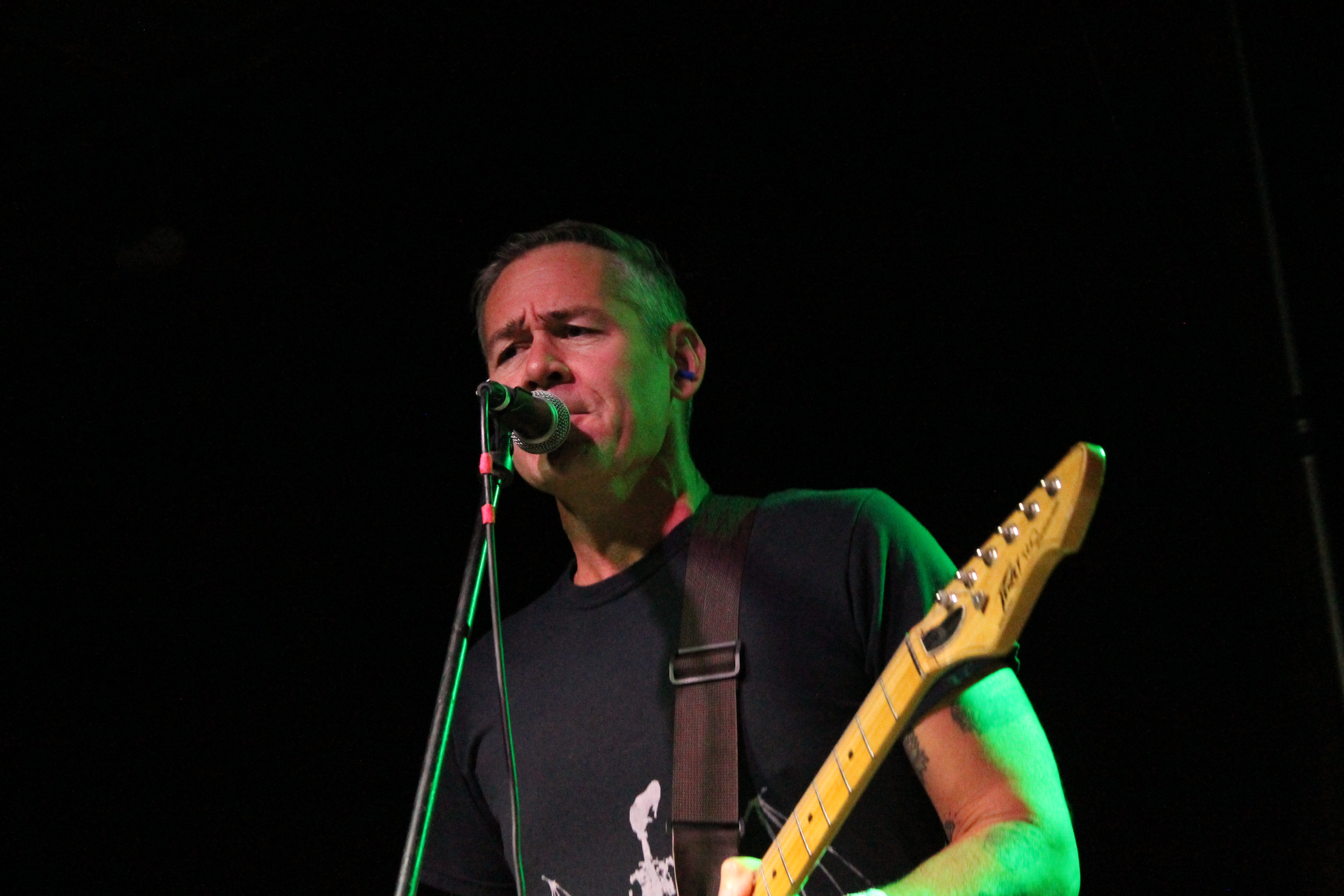
Scene Point Blank: You've been playing some of these songs for 20 years, but you played two, maybe three new songs at FEST 23. Will upcoming shows lean more heavily into the new record with that routine?
Dave Merriman: I hope so. I want to play these live so much.
Isaac Thotz: I was just thinking: we started playing in 1996, right Dave?
"Last Lullaby..."
Dave Merriman: It is our 30th anniversary. Shit!
Isaac Thotz: I think "Last Lullaby" was a high school song. I'm pretty sure that would be '96.
Scene Point Blank: Based on his face, Dave’s just realizing this now.
Dave Merriman: I know it's been 20-something -- I wasn't counting -- but anything with a zero on the end is a landmark number.
Scene Point Blank: Speaking of "Last Lullaby," you've been playing some of these songs a very long time, and you're at different points in your life now than when you wrote them. What are some of the songs that stand out today?
Dave Merriman: I think "Last Lullabye" is perfect. Sometimes planets align and, of course, there's work involved, but that song is perfect and I don't think it's blowing our own horn to say so.
I couldn't imagine going to see the Ramones and them not playing "Blitzkrieg Bop," even though they've played it at every show because it was on the first record. I'm sure they couldn't either imagine it either, because it's fun and everybody goes apeshit.
Personally, I just I I love “Last Lullaby.” I try to do different things with the solos sometimes and I spice it up to have fun with it, but it's just really fun to play live. It feels good on my hands.
Scene Point Blank: That it's still fun, says a lot.
Dave Merriman: We had a band rule that if it's not fun, fuck it. That's all.
Isaac Thotz: I can remember a time when we were practicing multiple days a week and we were playing our 20 songs that we had, again and again and again, and if we would write a new song we would always want to play the new song that nobody had ever heard because that was exciting to us.
Or I can remember playing a lot of covers. This is early on and --
Dave Merriman: I was just telling our daughter about how we used to cover "Suffragette City."
Scene Point Blank: I can't think of you playing one cover that I remember.
Isaac Thotz: Oh my God, we were pretty naughty about it, actually... I'm trying to remember the name of the bar in Saint Paul. We played our set and then we played like an hour of covers after that was over…It was at Big V's.
Dave Merriman: Big V's with Superhopper. I totally forgot about that. You just blew my mind. I forgot about that night. There's probably a good reason.
Isaac Thotz: It's ridiculous. Nobody should do that. But that's what happens when you practice three or four days a week. You burn yourself out on your own songs. At this point, we only play these songs once or twice a year, right? I don't know that we've played any of these songs more than four times a year for the last decade.
It's fun for me to go back to the songs even if they are 30 years old.
Dave Merriman: My only regret is not being able to sing some of the old songs.
Scene Point Blank: Age hits you. I'm not saying your voice has drastically changed, but to keep mentioning “January 7th,” on the first listen, I thought Paddy was singing until, “Oh no, he's just a little raspier.”
Dave Merriman: I had to re-record the vocals. When I tried it the first time I was blowing my throat out, it was stressful when we were in the studio. I ended up re-recording later. It was a hard one for me and I was really upset: we're in the studio and there was a time crunch. We had our three days and I didn't want to hold up anything. That was rough going.
It's funny. Somebody else told me that they thought "When It's Gone" was Paddy.
Scene Point Blank: Since you play less frequently now, is your voice totally blown out the next day after a live show or recording?
Dave Merriman: No, I I also ended up changing the melody [of “January 7th”]. I was trying to yell at that top note, like almost the whole time, with the way I had originally written it. I changed the melody to give some lowers and highers to everything. After I figured it out, I spent like four or five days singing it in all these different ways.
I was listening to the instrumental and, when I found that melody, I felt like it was a different song. Same lyrics, same everything. But I got so excited when I finally got to that spot and then tracked it in one take as soon as we re-recorded with Joe [Gac] at his practice spot.
Scene Point Blank: It doesn't really take breaks so you can catch your breath and reset.
Dave Merriman: In the original, there was a chorus where the guitar part is. It would been just yelling the whole time with no breaks and no gulps of air.
Scene Point Blank: Is it hard to remember the correct, final version when you go through that many takes? Do you go into the practice space and accidentally sing old melodies?
Dave Merriman: I've avoided listening to the original version so I don't poison the well. I've literally made a point not to, because I get those worms of melodies in my head all the time.
It happens. It's the same part of the brain that when you're playing live, you accidentally sing the second verse first. That's the common one.
we're four people who all very much go off of instinct and are maybe sometimes at our best when we're not overthinking things
Scene Point Blank: We talked a little about "The Wretched" earlier. I listened to the record a couple times before I looked at the details. I didn't even notice it's a seven minute song. The movements flow that smoothly. I guess that's not a question.
Isaac Thotz: Thank you.
Dave Merriman: I think so too. I've warned people. It looks like it's a long song, but it's good.
Scene Point Blank: It has that closing out a record, sort of epic element without being over the top. Is it something that you'd been talking about a while? Did it just happen?
Dave Merriman: The original was nine minutes or something. We gave it a haircut before we recorded it.
Isaac Thotz: Yeah. I feel like Ronnie came up with that weird time signature drumbeat. That's probably getting way too into the nitty-gritty details. The origins in what sense?
Scene Point Blank: You've never been a Ramones type band that's all the same formula every song. But this one changes direction even more.
Dave Merriman: It was born of a jam. It was the three of us, back when we used to jam at least weekly. I think we were getting songs together for Volatile Molatov and kind of in that zone of writing and demoing.
It kind of came together, almost quickly, even all the parts. We were vibing on the same frequency.
Isaac Thotz: When we went in for recording session, nobody ever demoed that song. I think the second time we ever played it, we hit record on Ronnie's Tascam and that was the version. I glued on the last movement later. The second time we played it through is the song, basically, with a little bit of shortening, right?
Dave Merriman: Totally right. And you added that bit and you also edited it. I remember there was one cut where there was some meandering where between the two parts like, "Should we go to the next one?" We cut that out and then you actually doubled one of the parts too, because it sounded dope. When I heard I was like, "Yeah, I wanted to double that too!" I think it was the [guitar sounds] in “Part 2.”
Isaac Thotz: Yeah, and there's the math of it. That's pretty insane because we were just sort of looking at each other in the room: “Okay, let's go to the next part now, right?” It was almost like improvisation, how we were able to pull this song together.
Dave Merriman: We weren't saying like, let's do this...I might be the only person in the band who likes Genesis, but I never bring that shit to practice. I keep that at home. It was totally organic and everything felt natural. It felt like a riff, like any other song.
Scene Point Blank: It feels that way in the record too. It really flows and your story right now explains that like. It flows together, like you guys just speak the same language.
Isaac Thotz: I don't want to speak for everybody, but my take is that we're four people who all very much go off of instinct and are maybe sometimes at our best when we're not overthinking things. I tend to ruin things when I overthink them. That sort of epitomizes how this record was made: we didn't give ourselves any time or space to second guess anything. Everything had to just be the way it was. That's my take.
Dave Merriman: I think that's a fair assessment.
Isaac Thotz: For at least five years, we were kicking around the idea of how could we make a record and what would that look like? What if we if we plan this and send demos to each other? “If there is a lot of planning involved, this is never going to happen. Maybe the best thing to do is just book studio time and sort of hope for the best. Just trust that we know what we're doing and it's going to turn out great.”
Dave Merriman: And then we had the show with Pegboy, where we were all going to be in Chicago and we had previously, mentioned recording with Joe. We'd talked about recording at Electrical Audio. The opportunity was seized.
Scene Point Blank: Years ago, I think we talked about writing "Simple Pleasures in America" and I feel like it was that same story about writing. It's spontaneous and mood driven, I guess?
Dave Merriman: Yeah.
I don't want to diminish the work that we do in the middle. Before these shows where we have one practice: we're at home, we send a playlist around to each other and we go through them at home and we try to do as much as we can to make up for the distance. But, yeah, if it doesn't feel good. It's not gonna be good.
And the overthinking...There's a joke: How do you create a masterpiece? You wait until the artist is done and then you kill them.
I think the joke was meant that once an artist is dead, the paintings are worth more. But I always thought that, if you let the artist keep painting, they're just gonna ruin it, man. They're going to overshade the cheeks or something. Some people need a pencils down moment and I think it's sometimes a good box to put yourself into. Force it, like a deadline. Put fires under butts. Although deadlines don't feel good. Bad end of that analogy, sorry.
But it's a deadline of something we love and want to do so, yeah, let's do it. Boom, we've got these three days. I remember Paddy in the practice before we recorded. I wasn't sure if he had heard "Motivation" yet because I played the riff and he's like -- I'm not gonna say what he said.
Scene Point Blank: That's fair.
Dave Merriman: He said it sounded like a certain band and I like people thinking something sounds like whatever they think it sounds like.
But then he started playing that bass hook -- [Bass sounds]. I'm so glad that happened, because it made the song. If he would have overthought it, he would have been probably been wondering what we were thought he should play. We all do that. If you overthink things, you start putting more restrictions on yourself and overkneading the dough. And then there's no air bubbles.
Scene Point Blank: We've talked about the dynamics of it between towns. Do you get together with Ronnie and do half-Arrivals things in Chicago?
Dave Merriman: He's in a couple other bands. He's really busy.
Isaac Thotz: He's on tour with Local H right now.
Dave Merriman: When we first started thinking about what songs we were gonna do, we played along to Isaac's demos -- "Iron Curtain" and "Sound of Bombs" and what became "January 7th" and "When It's Gone" -- and we got together a couple times to do that. And that's the only time we've gotten together, just the two of us. We hardly get to see each other just to hang out.
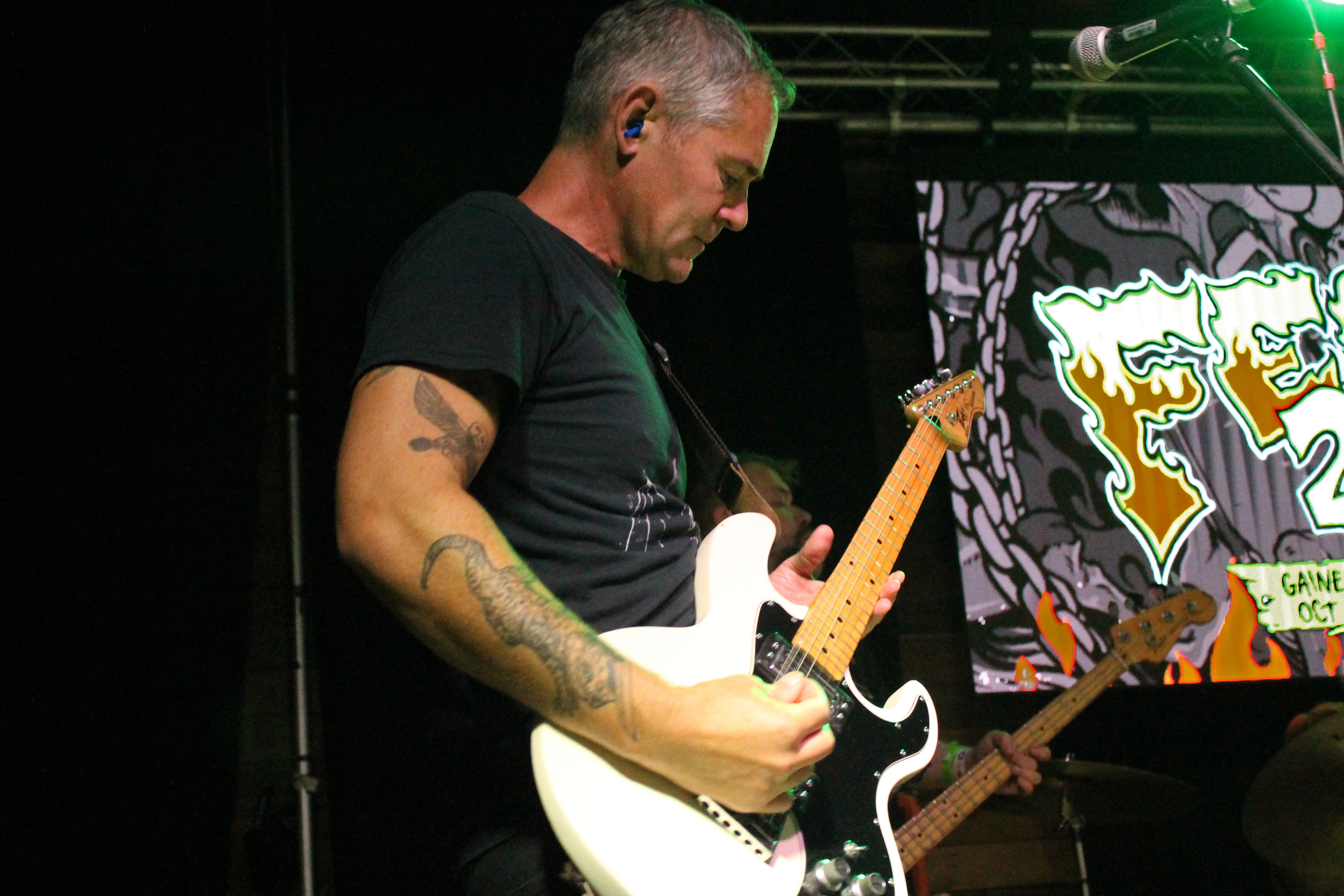
Scene Point Blank: It's largely Zoom for all the band interactions then?
Dave Merriman: Or our text thread.
Scene Point Blank: Does it look like this pattern will continue: sort of the one-off shows mostly where you live, or is it possible to have an Arrivals tour in the next couple of years?
Dave Merriman: It's hard to say. The business of it all not withstanding, I really think we should do more than a couple shows eventually.
We want to do a couple this summer that we're cooking up. And then…all the other bands are busy. D4 has been a lot busier, Local H is busy again. It's even harder than wrangling kids. It's dealing with a bunch of disparate band members times x amount of bands.
Yeah, I hope we'll play shows. I don't know like how much touring will be able to do but if we get to that, it would be fucking awesome. We haven't played the East Coast in forever, or the upper West Coast like Portland and Seattle. We haven't played Kansas since 2011. I would like to, but there's there's no plans in motion at the moment.
Isaac Thotz: It would be a trick... You have more obligations as you get older. You have little breaks, but to have all of us have our little breaks line up together, it's hard to imagine right now.
Scene Point Blank: Do you foresee continuing to write songs and possibly releasing another record before -- I'm doing the 16-year pace math -- 2042?
Dave Merriman: I always have songs swirling in my head and I've been having a few, like, riffs and song ideas popping up.
Isaac Thotz: I'm usually one thing at a time and I work pretty fast -- like when we had to get some videos together for these Arrivals songs -- I can focus and get it done really efficiently. But we've been recording a Treasure Fleet record for a couple years and we're about ready to mix it. I've been focused on that. I haven't really had the focus to write Arrivals songs again. But there will be time and space for that soon enough.
Scene Point Blank: You just mentioned another Treasure Fleet record. I didn't realize that band was still going as on/off as inspiration hits. Since it's also a concept band, not that everything will be a film but --
Isaac Thotz: Right now there's no film involved but that doesn't mean there won't be one made in six months. I just don't plan ahead that much. That's the truth of the matter.
Scene Point Blank: So how many bands is everyone in right now? Or is that a better thing to get in writing?
Dave Merriman: I'm in a three. Three bands and then I still do some solo shows when people ask.
Isaac Thotz: I'm three, maybe two?
I have Clown Sounds, but we haven't been very busy lately, but we made a record and we were playing shows a lot, but Todd [Congelliere] is in a million bands too. And Toys That Kill came out with a record. Jumpstarted Plowhards has been playing a ton. You pick up one thing, you’ve got to set something down.
Scene Point Blank: Yeah. Since this in, given the setting, what do you do at The Sardine? Everything?
Isaac Thotz: Yeah, everything. I don't bartend, I don't work the door, I don't book. Pretty much everything else. Anything else. That's the right way to put it.
Scene Point Blank: Handyman seems even too broad there.
Isaac Thotz: Yeah. Way broader than that. I help keep it running.