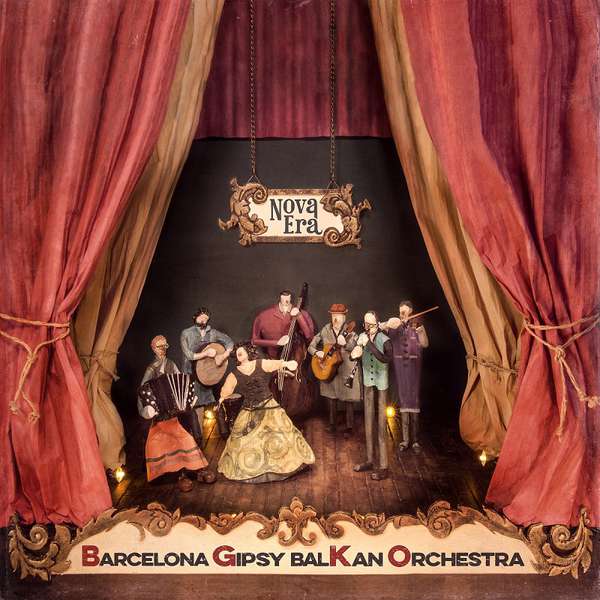
Nova Era is a sweet journey through the olden Balkan ethos that permeates this region, of which I also happen to be a part of. Of course, I have certain biases that will come to light through the course of this review, but do not let that discourage you from delving into these sounds in any way.
Barcelona Gipsy Balkan Orchestra is, well, to me at least, a bit of an unusual ensemble. It’s rather rare that world music and adjacent folk music as well as highly ethnic styles see the light of day in the form of a band – much less so a band that gets international coverage. One interesting example that fits that type which comes to mind is Gogol Bordello, but they’re far from the stylistic area we’re looking at as well as other aspects.
While I wasn’t as enchanted with this particular record as I was with the band’s previous releases, which sold me into listening to them in the first place, there’s a lot of great stuff going on. It would be strenuous on my end to expand on that, so I’ll leave it at that. Not that it’s bad or anything, it’s just different in a direction I didn’t necessarily expect or vibe with.
Nova Era adheres faithfully to the sound of traditional music from Balkan countries, as anyone from those regions could confirm upon hearing the tunes. It actually felt kind of surreal for me, especially with “Constantine, Constantine” and “Sedi Donka – Joc Mare” which are emblematic of the traditional music played here in Romania. I also had a bit of a nauseating feeling as, growing up here there are certain associations made with this type of music, as well as the fact that it created a certain listening fatigue as I’ve been heavily exposed to its brutishly common denominations.
You can definitely hear a strong Serbian influence throughout; I couldn’t say it’s isolated to any one track as it’s spread across the entire record. You can definitely hear this in “Ciganine Sviraj, Sviraj”. In geographical proximity, we also hear some Bulgarian tones, most noticeably on “Krajdunavsko Horo”. Going further south, there’s a fair Greek component that also comes to life in “Magia”. There’s also some of that highly specific Mediterranean magic coming through there.
Basically, what I’m trying to underline is how accurate and authentic the sounds are. They really capture the essence of these places in basically all the ways. It feels like a journey on multiple levels, as you pass through the record. The spot-on performance of the band, as well as the production value only serve to make the whole affair more compelling and immersive.
So, what are you waiting for? Get your ticket and embark on this trip. Nova Era is a great stepping stone for those looking to branch out into these styles and it’s definitely a neat collection of songs for those who are already consuming this stuff.