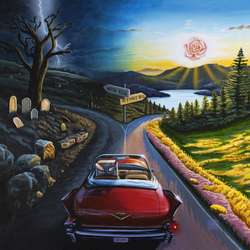
It's rapidly becoming clear to me that "post-black metal" just isn't a great name for a genre. In addition to the obvious clunkiness and how little "post-" actually means, a strong argument can be made that the genre doesn't have any legitimate claim to the black metal mantle in the first place. And it's hard to disagree, especially with acts like Michigan-based ?erná throwing their oar into the discussion.
I say this because ?erná's variety of "blackgaze" (ooh, I like that better) has almost nothing reminiscent of black metal in it. For one, it's all instrumental--if it was not for the occasional blast beat (which are already few and far between), this would sound exactly like post-rock. The only other hints to ?erná's "melanoid metal" (I want credit if this becomes a genre) influence are the melodic structures, full of the drawn-out, shoegazing elation so characteristic of the genre.
But what makes "atrametal" (I want credit for that, too) so interesting as a genre is the constant struggle between the euphoric and the discordant; the former coming from post-rock's love of gratifying melodies, and the latter from black metal's inherent harshness. Without that tension present, the blissful music loses the sense of relief that makes it so potent in the first place. Where it can be fun to listen to exaltation occasionally challenged by the raucous, unearned musical rapture is boring, and gives the listener no satisfaction. I mean, no one would want to listen to Sunbather without it's driving conflict--that between its viscerally effective pop sensibilities and its innate aural dissonance.
It's not that ?erná's project is an unworkable one; it just has to be executed with finesse, something that he unfortunately lacks. Though there's clearly ambition--you don't write a five-part, half-hour instrumental without having big dreams--there's no real substance to back it up. What could've been a very interesting genre study unfortunately wound up as another generic post-rock clone. There are a few good moments scattered about, and the album still retains its superficially pleasing qualities, but it's not an album that warrants--nor attempts to demand--a thoughtful listen.
There's really nothing original or inventive in what ?erná does--Restoring Life is an exercise in bland regurgitation of others' ideas, and it's far from the best interpretation of "that Alcest-y stuff" (which is still the clearest genre tag I have). But what it does accomplish is at least competent, even bordering on beautiful at times. It's a good, if unsurprising, listen.
Recommended if you like: Alcest, sleepmakeswaves, Explosions in the Sky