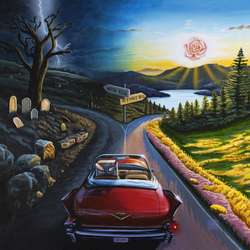
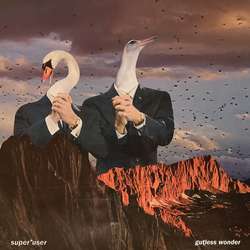
Photographs From the Shoebox is a split between two Philadelphia artists that mean a lot to punk music.
Mischief Brew are technically a band, but it seems safe to say all elements of their music are merely an extension of guitarist and songwriter Erik Petersen. Petersen also runs Fistolo Records, so this is a self-release in a way.
Joe Jack Talcum, you may remember, was the guitarist and occasional lead singer of the Dead Milkmen, certainly one of the better punk bands ever. He also plays organ for the totally righteous Low Budgets and has a slew of other less-notable projects.
Despite Joe Jack's impressive punk rock pedigree, it's no secret that the main event on this release is Mischief Brew's contribution. Petersen's folk-punk outfit is one of the best bands going right now, across all genres. No joke. He is a very special songwriter.
That isn't to say that Joe Jack Talcum can't fend for himself. His tracks are heavy on the folk and light on the punk, a sharp distinction from the work that he is most known for, but he pulls it off surprisingly well. The former Dead Milkmen member covers his old band with his first track, "Dean's Dream." Unlike the vibrant, youthful-sounding original, this folkier performance is a much slower and a bit somber in tone. It's just Jack and a guitar, but he covers this well.
Joe Jack Talcum's best tracks are his own, however. "Alcohol" is an addict's farewell ode to his best and only friend. It isn't stated why the separation is occurring, but the lyrics and cold bleakness of the song make the narrator sound genuinely hurt and spiritually exhausted.
"Sex Sting" features more instrumental variety than the rest of his songs, with fun harmonica and drum arrangements making it a real foot-tapper. The track also deviates from the rest of the album in that it shows some of the humorous tendencies of the Dead Milkmen and Low Budgets. The song seems to open a discussion of American society's mindset on sex offenders, perhaps hinting that the indiscriminate exiling of those who are branded with the label, no matter the nature of their actual offense, may not be the most humane or even logical course of action.
The song is about a good-intentioned fellow who types in the wrong instant message screen name and inadvertently contacts a fed posing as a horny 14 year-old girl. He falls for the trap, says dirty things and sends naughty links, and is imprisoned.
I lost my job, I lost my family / I was found guilty and I'm no longer free / And when I'm free again I'll be registered in a vigilante-accessible sex offender registry.
The track is quite catchy and, in a sick way, quite amusing.
The Mischief Brew side of the split is more punk rock-oriented than Joe Jack's side. Erik Petersen's songs draw heavily on Celtic and gypsy folk sounds while intertwining with the anarcho-punk ethos. Open contempt for establishment and modern society give Mischief Brew an appearance of anti-intellectualist, but Petersen's actual lyrics reveal a highly intelligent individual with much, much more knowledge and insight than your average college graduate-type. His lyrics are always spectacular, no exceptions.
Mischief Brew's side starts with "Labor Day Massacre," a song documenting a conversation between two labor workers of some sort who are philosophizing on the relationship between nobles and workers.
When you've been here this long / One day you belong / One day you wake up and forget what seemed wrong
/ And you curse when I say words like "living" and "wage" / And say "I've made my house out of mud, so should they / Now the ball field is level, let's play!
"Bury Me in Analog" is a manifesto against the practices of the big music industry and the sad culture it spawns. Petersen touches on subjects of art ownership, personal privacy, and what happens when art is treated as investment. The song is immensely fun and catchy, with an unusually dynamic drumbeat and rocking guitar arrangement for the band.
With the help of Joe Jack on the harmonica, Mischief Brew also cover a Dead Milkmen track, "Watching Scotty Die." Unlike the dobro and country-twanged original, this effort is stripped down to a harmonica and acoustic guitar. Petersen's strong and rugged vocals are a contrast to Joe Jack Talcum's nasal whine on the original, but the track functions exactly the same: you just don't know whether to laugh or cry. Both songs are great, for the record.
Overall, this release is a real joy to me. Joe Jack Talcum's side won't hit you hard, but it will grow on you, and Mischief Brew are always great. Joe Jack Talcum's contribution isn't as impressive as his bands are, and Mischief Brew's tracks aren't as good as previous releases, but this album has everything a reasonable folk or punk listener could ask for.