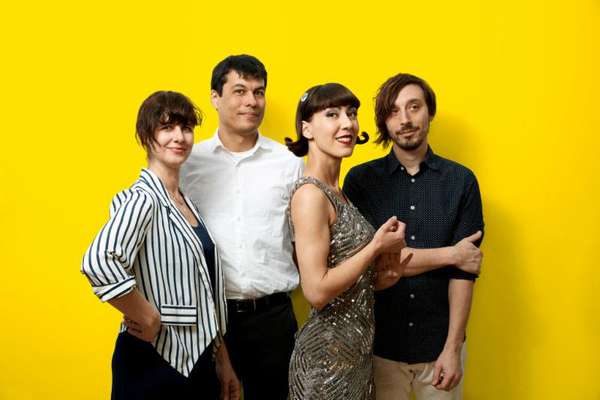
When did the Octopus Project add vocals? Well, it’s not exactly a lead singer—think more along the lines of Black Moth Super Rainbow (with whom they released a collaborative record in 2006)—it’s mostly loops, reverb, and effects, but it really changes the dynamic of the four-piece group from Austin, TX.
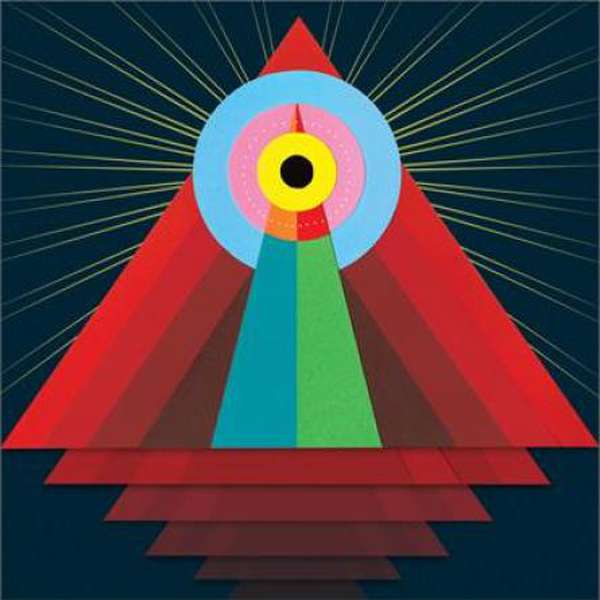
Dubbing themselves “experimental pop,” Fever Forms is their fifth full-length and first since Hexadecagon in 2010. The band has a synthetic, moody, and ambient feel while the beat delivers a pop pulse, something with a danceable beat and a clear progression of energy. The live shows are trippy affairs, zoning into the world of Yvonne Lambert as she alternates between Theremin and sampler whilst the tunes, alternately sprawling and concise, shine on the room like an in-and-out disco ball reflection. The addition of lyrics disrupts the wandering aspect, pulling the songs into a tighter formation in line with the beat and giving a somewhat narrower appeal. A song like the closing “Sharpteeth” features full-on vocals and it sounds like a dry pop song with an electrobeat that keeps on running. It’s a catchy rhythm, but it lacks in depth and just feels too pop and dismissible once five minutes have passed.
Things start out nicely, with “The Falls” carrying something of a post-punk angular aspect with an extra emphasis placed on the layered beat. It slowly pulls away from guitars as the beat increases in prominence and the heavily-effected vocals shift the tone. It works well as an opener, setting that askew tone with an ability to consistently change directions. Follow-up “Pyramid Kosmos” incorporates some “Nintendo-key” sound and I’d go a step further, saying “Choi Sighs,” later on the record, could function in a Super Mario Bros. underwater world. Piled atop that base, wandering melody, however, the group inserts ambient Theremin, fuzzed out guitar and, yes, even a bit of glockenspiel. The primarily live band creations, with assistance from keyboards, add more depth and fullness in sound. It works quite well during instrumental bits, peaking in “Mmkit” and “Deep Spice,” but I always find the vocals pulling me out of that atmospheric fog and back into pop conventions when I’d rather not.
The band has long had a challenge in recreating their live show on record, and the manufactured vocal elements adding another level of separation rather than bringing them closer. Perhaps I read “experimental pop” to focus on the former while others wish for the latter, but it feels like a step in the wrong direction.
Related news