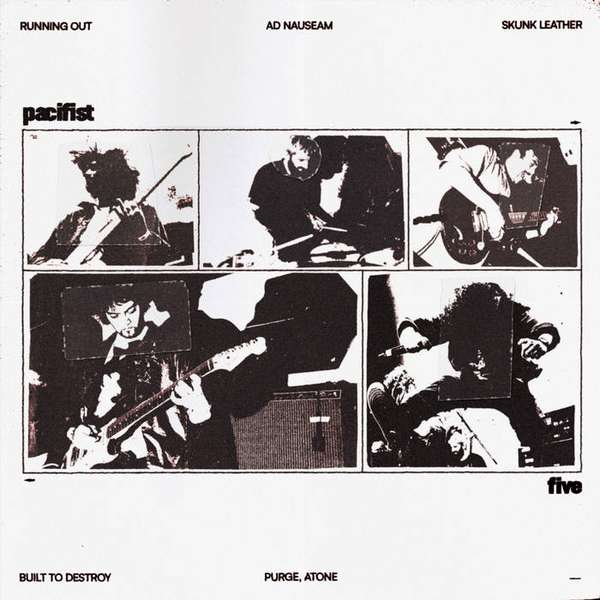
There’s a reason five doesn’t feel like just another EP title. This isn’t a casual release or a stopgap between bigger moves but a line in the sand. On their latest five song statement, Bombay’s Pacifist sound fully aware of the lineage they’re working within, and just as aware of how much effort it takes to keep those ideals alive in 2025.
From the opening moments, five is confrontational without being chaotic. The band’s approach to post-hardcore is sharp, deliberate, and deeply physical. Opener “Running Out” doesn’t ease you in at all. It drops straight into a sense of urgency that feels authentic instead of staged. The riffs churn with tension, the drums stay restless, and the vocals come across less like performance and more like release. There are furious shouts aimed outward but rooted in inward reckoning. It sets the tone for the entire EP. This band makes music made with purpose, not polish.
Pacifist’s strength lies in how they balance volatility with control. Tracks like “Built To Destroy” channel feral energy without collapsing into noise, letting jagged chord progressions and rhythmic pivots do the heavy lifting. You can hear the DNA of bands like Refused and Drive Like Jehu in the way the songs snap and bend, but Pacifist never feel like a tribute act. The riffs don’t chase nostalgia but use it as a tool, repurposed for a modern sense of discontent.
What really elevates five is its sense of dynamics. “Skunk Leather” pulls back into something more reflective, letting space and restraint speak just as loudly as distortion. It’s a necessary breath in the middle of the record and proof that Pacifist understand that tension doesn’t only come from volume. That push-and-pull keeps the EP from feeling one-dimensional and gives its heavier moments more impact when they hit.
The track “Purge, Atone” feels like the thesis statement of the EP. Lyrically preoccupied with death, reckoning, and release, it barrels forward before dissolving into a haunting instrumental passage that lingers longer than expected. Sonically, the EP benefits from its commitment to analog methods. Self-produced and mixed by guitarist Apurv, with mastering by Brad Boatright at Audiosiege, five sounds tactile and human. Nothing feels overly edited or clinically assembled. The imperfections are part of the point. In an era where heavy music is increasingly sterilized, Pacifist’s insistence on tangible sound feels quietly radical.
Context matters here, too. Pacifist aren’t just operating within a local vacuum but carving space for hardcore from India to exist on a global stage without compromise. five reads as both a personal and cultural statement about friendship, legacy, and refusing to let the ethics of hardcore dissolve into aesthetics alone.
This EP doesn’t pretend to reinvent post-hardcore. Instead, it reminds you why the genre mattered in the first place. This release is conviction put to tape and it’s loud, urgent, and unafraid to stand its ground.