It's been over sixteen years since the death of Robert Lee Maupin, otherwise known as Iceberg Slim. An African-American author and poet responsible for works such as Pimp: The Story of My Life and Mama Black Widow: A Story of the South's Black Underworld, hHis works, while revolutionary at the time, have since been co-opted over the years to become synonymous with the blaxploitation films of the 70's and the pimp-style posturing still saturating hip-hop music today. Saul Williams's music is like the soundtrack to Iceberg Slim's life, brutally honest yet somehow misunderstood and underappreciated.
Continuing without irony in the musical vein of his ancestors - Isaac Hayes, Curtis Mayfield - rather than throw down with his contemporaries, Williams' flair for language leaves most writhing in the dust. Like any great lyricist, any lyrics from any song can be taken in written context only and appreciated as such, thus blurring the line between lyrics and poetry, songwriter and poet. Case in point, from the track "Break":
Consider yourself: less than, inferior to, half man, superior to woman, unbearable likeness.Consider yourself: almost, never quite, dark-skinned, lily white, black as sin, devil's den, whiteness.
Consider yourself: outcast, criminal, unseen, invisible, point blank, ready cocked trigger.
Consider yourself: hardcore, dirt poor, hustler, bitch, whore, reverend, doctor. Nigger.
Granted, the nature of hip-hop being so beat and groove oriented makes the translation somewhat smoother than other genres, but in this instance the written word is worth a thousand beats. There's a synergy to what Williams is saying like a Bukowski narrative with a fictional pretext.
The album is produced by none other than Trent Reznor. This seems at first to be an odd pairing - although maybe not so much, given that they were tourmates in 2006 after Williams appeared on Nine Inch Nails' Year Zero. It was a low-key affair even by backing-vocal cameo standards, not unlike Reznor's appearance on Tori Amos' "Past the Mission" back in 1994. Reznor's influence as producer is much more apparent strong industrial backing that suits Williams' voice well, from the thumping of "Convict Colony" to soft piano-driven refrains of "No One Ever Does". This latter song is one of the albums' highlights. Williams' voice is surprisingly tender with a soft, inoffensive nasal tone reminiscent of Faith No More/Bad Brains vocalist Chuck Mosley.
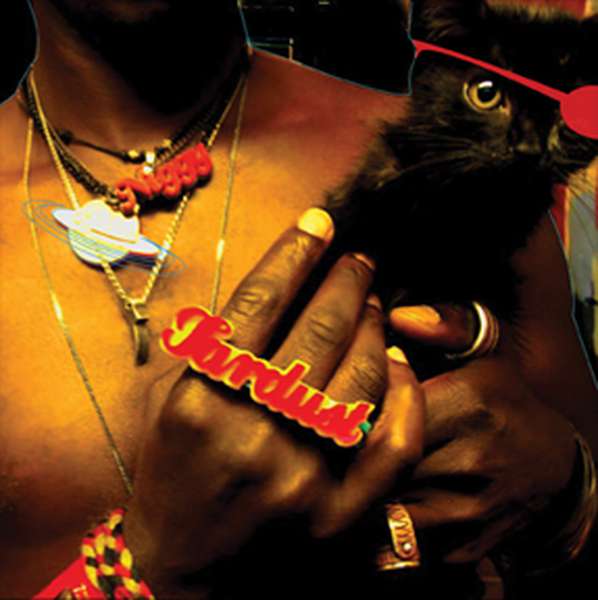
The Inevitable Rise and Liberation of Niggy Tardust is not an album that's easily defined but that doesn't stop it from being deftly written, produced and executed in a way that won't burn up the charts of mainstream urban radio but should remain in heavy rotation for all who tire of the incessant posturing of modern hip-hop and long to get down with the real.