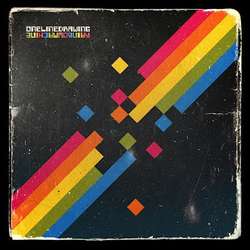
Late 90s post hardcore and emo feels impossible to recreate now. That’s not because the sound itself is gone, but because the tension behind it was so specific to that era. Six Going on Seven’s Human Tears, their first full length in roughly twenty-four years, captures that feeling perfectly. Having a wonderful history by having done a split with Hot Water Music and toured with Elliot back in the day, they know what it takes. There’s nervousness, melody, and it’s emotionally frayed without ever tipping into self-pity. At its core, the album lives in the space between restraint and release. The guitar bounces with ringing melodic lines that feel almost conversational. There’s a wiry urgency running through the entire record, but it’s never purely about emotion. Even in its softer moments, Human Tears feels thoughtful and captivating.
That melodic trance is what makes this record help you just zone out and absorb it. You can hear faint influences of bands like Fugazi and Jawbox but honestly it leans more towards the vibe of The Smiths. There’s a rhythmic precision and guitar interplay laced throughout the release, but Six Going on Seven bring a warmer, more vulnerable undercurrent to the material. There are hooks buried throughout these songs, but they rarely arrive in obvious ways. Instead, melodies slowly reveal themselves over repeated listens. Vocally, it’s very beautiful with the album avoiding the overly theatrical tendencies that would dominate a lot of emo adjacent music in the early 2000s. The delivery feels grounded and urgent when it needs to be but never forced. That authenticity gives the lyrics more staying power, especially on a record so centered around emotional exhaustion, disconnection, and trying to navigate adulthood without clean answers.
The production also deserves credit for resisting polish. This album sounds alive and I can’t help but tap my foot to it. The drums breathe and the guitars retain texture. Nothing feels over edited or artificially tightened. It sounds like a band in a room trying to capture a feeling before it disappears. At times, the album’s commitment to mood and subtlety can make individual tracks blur together, especially compared to more immediate records that nod towards that era. This isn’t an album built around giant choruses or obvious emotional peaks. It asks for patience, and in return it slowly unfolds rather than immediately grabs hold.
But that understated quality is also what separates Human Tears from a lot of its peers. Instead of chasing catharsis through spectacle, Six Going on Seven find it in tension, repetition, good song writing, and atmosphere. The result is a record that feels deeply human. It’s messy, uncertain, and quietly resilient. More than two decades later, the band still sounds less like a relic of its scene and more like a blueprint for everything that came after.