William Fowler Collins is a very interesting experimental music producer from New Mexico, who specializes in creating abstract and majestic dronalities. Through the years he has released some excellent solo records, including Perdition Hill Radio and the amazing Tenebroso, and he has also appeared in collaborations with Aaron Turner (in their shared project Thalassa), Raven Chacon (in Mesa Ritual), avantgarde noise fiend Gog and shamanic sound designer Daniel Menche.
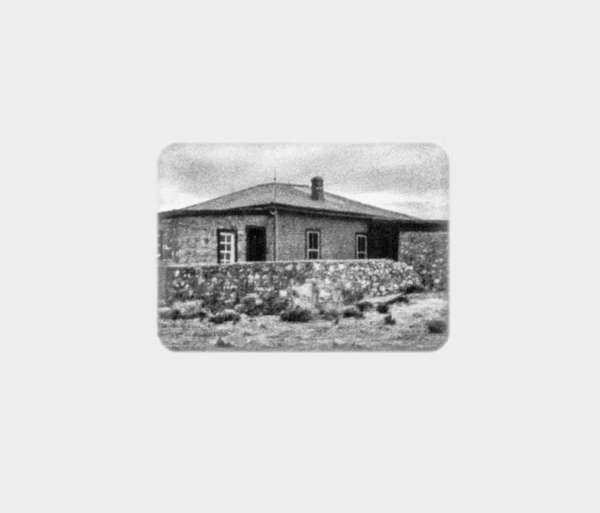
Collins now returns with his first solo full-length since Tenebroso and once more focuses on the dark minimalism that drones can shape. For his new record Field Music, Collins finds inspiration in the history of the atomic bomb, with the album cover displaying the ranch where the first nuclear weapon was constructed. Collins dive further into the lore of this subject, also drawing concepts from his secular reading of the Hindu scriptures of Bhagavad Gita, which was famously quoted by Robert Oppenheimer. As a result, the guitars and electronics that produce the soundscapes of the new record feature a more ominous and threatening flavor, a feeling of dread and impending doom.
In all his previous works, Collins features a cinematic narrative that journeys through the soundscapes of his tracks. Field Music sees this approach once more take over, as the subtle drones arrive slowly, taking form and crafting a sublime realm of sonic artifacts. “We Are Here To Help” sees this implantation, where the overall dreamy sentiment is intriguingly disturbed by a darker aura that lurks beneath its surface. More direct and succinct is the ominous tone in “How Horrible It Would Be”, with Collins managing to take advantage of the minimalistic progression to provide a truly disturbing moment. It is a subtle art achieving such a result with minimal drone techniques, but his use of modulation in this case really makes the track stand out. And there are more times where the audio manipulation of Collins causes further deviations. The title track is an excellent example of that mentality as the samples and modulation take over the peaceful scenery and transform the soundscape into an entropic vortex, delivering one of the more brain melting moments of the record.
Still, the element that causes the bigger shift in Collins’ approach is the rhythmic quality of Field Music. While the previous work saw Collins distance himself from the rhythmic dimension, Field Music features a more solid form of rhythm, which takes a centric part in the record. “Contact Is A Mother” sees the subtle incorporation of these components take form, featuring a heartbeat-like rhythmic backbone, while the minimal drones set the background. However, there are times where Collin’s approach becomes more extravagant and the use of rhythmic components is more direct and menacing. The tribal attack of “They Wept Together” sees this mode of operation from the producer as he leads the way through a bizarre voodoo ritual through repetitive drum loops and intoxicating rhythms.
The combination of the ambient drone quality of Collins with the rhythmic dimension display the continuation of the producer’s vision. His incorporation of this new theme is elegant, allowing for subtle transition between the different parts of the record, and enhances the cinematic quality of his work. It makes Field Music feel like a record of evolution and change.