Mumford and Sons
Enmore Theatre
Sydney, Australia
January 19, 2019
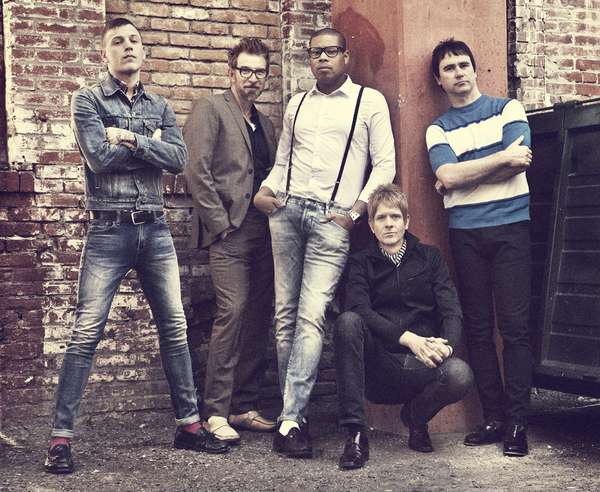
Mumford & Sons has risen from a niche band to one that commands stadium crowds.
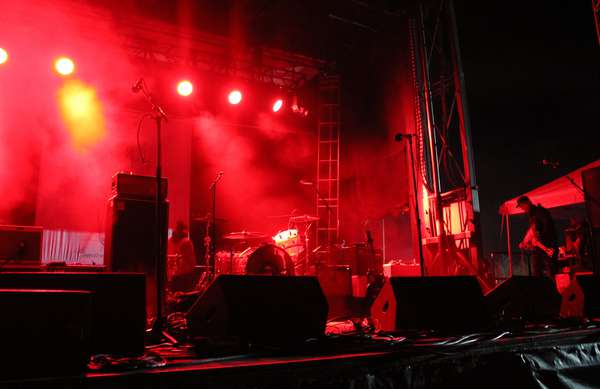
Following a show at the local Qudos Bank Arena, the London folk-rock quartet decided to use a day off to incarnate in more intimate surroundings for a special show that was instantly sold out.
Mainstream success has certainly not dimmed the enthusiasm and gusto with which Marcus Mumford with his immense vocal range and his worthy constituents navigate through their catalogue with the audience at all times firmly in the palm of their hands – so much so that scene applause is readily given for mere tempo transitions within songs, let alone the sing-alongs of their older, grand folk hits.
I am not overly familiar with their more recent, rockier material but the common denominator of their set was a sonically dense fabric that conveyed an array of vibes, valiance and warm-heartedness that made it easy for the enthused faithfuls to connect.
A passionate and soulful performance that is testament to the fact that no matter if you are a hardcore aficionado or just enjoy good songwriting no matter the genre, it is fun to listen and see them perform live.
While self-proclaimed music experts recently seem to have a field day critiquing their recent musical derivation from their tried and tested formula, i.e. their Delta album, tonight was an impressive set in front of an eager and adoring crowd, which with an engaged band created a perpetuum mobile of energy and a celebrative spirit.
_4.jpeg)
_3.jpeg)
_3.jpeg) The Art Gallery of New South Wales has a history of continually challenging the things are traditionally done via reinvention as well as the expansion of existing and new mediums.
The Art Gallery of New South Wales has a history of continually challenging the things are traditionally done via reinvention as well as the expansion of existing and new mediums._5.jpeg)
 With a myriad of projects spanning across a plethora of disciplines and media, David Lynch has established himself to be a bit of a renaissance man, who idiosyncratic approach to art pervades every emission no matter if it is film, music or paintings.