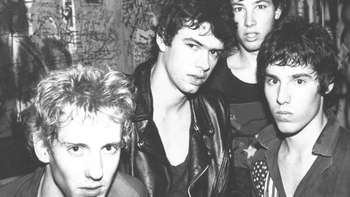
There is a specific kind of velocity associated with the name Deniz Tek. To the aviation world, he was a flight surgeon and a pilot in the cockpit of an F-4 Phantom. To the medical world, he was the calm in the center of the ER trauma ward. But to the global underground of high-energy rock 'n' roll, he is the primary architect of Radio Birdman -- the band that effectively rewrote the Australian musical landscape with a Detroit-born blueprint of "loose tightness."
His new solo album, The Beat (released on April 17, 2026 via Wild Honey Records), is a literal collaboration with the past, built upon the final, spontaneous drum tracks of the late Ric Parnell. It is a project that mirrors Tek’s entire career: a balancing act between the precision of the "forensic" mindset and the artist's unchoreographed intuition.
Scene Point Blank: How often does unchoreographed intuition take over from precision? Or is life just a balancing act to keep the chaos from sucking you into the void?
Deniz Tek: In performances, improvisation without direct thought is usually better than choreography. As a rhythm guitarist, actual precision comes into my playing only in the timing. But it’s not thought out. It’s instinctive. In creating a new piece of art from scratch, it has to start with intuition to have a hope of being worthwhile. Expertise, applied with precision, comes later on, in finishing the piece. Of course, in engineering or aviation, things like that, precision obviously takes precedence.
Scene Point Blank: You’ve seen the human body at its most broken. Did that direct understanding of mortality change your outlook on life?
Deniz Tek: It makes you aware of the transience of life. Health is so precious, and even if we are lucky, we don’t have it for very long. I don’t like to waste time.
Scene Point Blank: Most musicians use drugs to find "the edge.” You used G-force and trauma surgery. How do you apply that adrenaline surge to your music -- is it calculated or unpredictable?
Deniz Tek: I don’t think most musicians use drugs to find the edge. They use them more to take the edge off, to chill or, on the other end of the spectrum, to stay awake when tired. Rock 'n' roll music, played at high energy levels, creates its own edge if the songs are good. You don’t have to apply anything; it finds you.
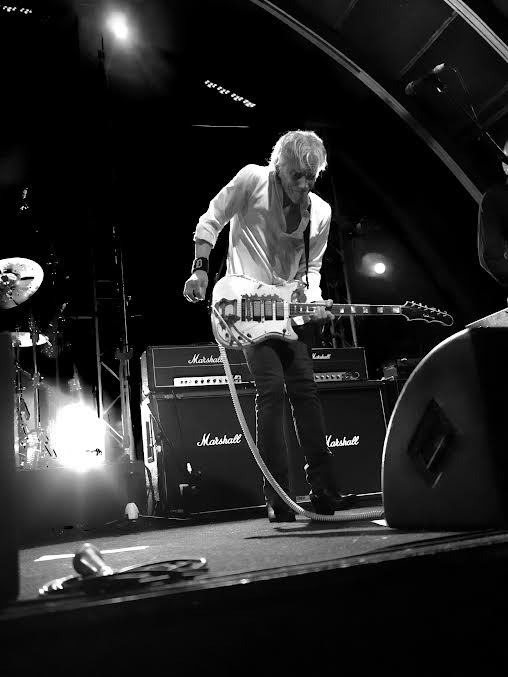
Scene Point Blank: You’re often labelled a perfectionist. Does that actually factor into a rock band, or can human error and "mistakes" manifest something better -- or can both exist?
Deniz Tek: Really? Who says that, I wonder. Ask anyone who has actually worked with me. I have no problem calling a take or a mix good at 90% and moving on. I’ve never gone for 100% -- it’s not achievable anyway. Miles Davis once said, “There are no mistakes -- only unintended notes.” Those unintended notes often prove to be the most interesting. Happy accidents.
Scene Point Blank: You once prepped for an ejection during an engine fire in an F-4 Phantom. Did that moment change how you view risk? Can you draw parallels to pushing limits in music?
Deniz Tek: I tell the story in some detail in my upcoming book. Having been in a few of those immediate life and death situations, my response has always been calm and deliberate. This just automatically happens. I don’t panic. So I don’t worry about risk. I don’t take stupid or unnecessary risks, but I know if I find myself in a dangerous situation, I will handle my end of it. But there’s nothing in music that is remotely comparable to those situations.
Scene Point Blank: Since you worked at the Chevrolet Nova assembly plant in Michigan, do you hear music in machines and factories -- much like Rauschenberg seeing art in a local waste facility?
Deniz Tek: Yes. Sometimes the rhythm of heavy machinery can evoke music. Listening to it can be a good way to get ideas for songs.
Rock 'n' roll music, played at high energy levels, creates its own edge if the songs are good.
Scene Point Blank: You were the original "Iceman" before Hollywood lifted the name. If you were writing a realistic movie about naval aviation, what one scene would show the real Deniz Tek? (And don’t say you're better looking and not an asshole, lol.)
Deniz Tek: You want it to be realistic? Well, for one thing, there wouldn’t be any unnecessary chatter on the radios. And guys would pretty much all get along. No silly rivalries. All on the same team, with the same goal. The film would show that these guys love their job so much that they can’t believe they get paid to do it.
Scene Point Blank: You’ve said film tends to "supplant memory." Does it bother you that the squabbles in Descent into the Maelstrom might become the official historical narrative?
Deniz Tek: Yes. The Maelstrom documentary leaves an inaccurate impression. When it was made, we had no idea what would be in the final cut. We were all interviewed separately. I was interviewed for over six hours on camera, and they only used a few bits and pieces. I didn’t know what the others said until I saw the premiere, so there was no chance to respond or to challenge things that were misrepresented. I was hearing some of those complaints for the very first time at the premiere... Murray Engleheart’s recent book Retaliate First is a much more fair and accurate presentation of the band’s history.
Scene Point Blank: In this era of digital perfection and AI, is "human error" defining a sound even possible anymore? Is Fun House the ultimate example of "loose tightness"?
Deniz Tek: I still record to tape, with very few takes, whenever possible. It’s still the best option. Even recording in the box, you can still get an organic track, but you have to be careful how you use the technology. Digital editing is too easy, so the tendency is to overcorrect everything. There are many great examples of loose tightness, but Fun House is pretty hard to beat. It was actually Ron Asheton who first mentioned “loose tightness” to me.
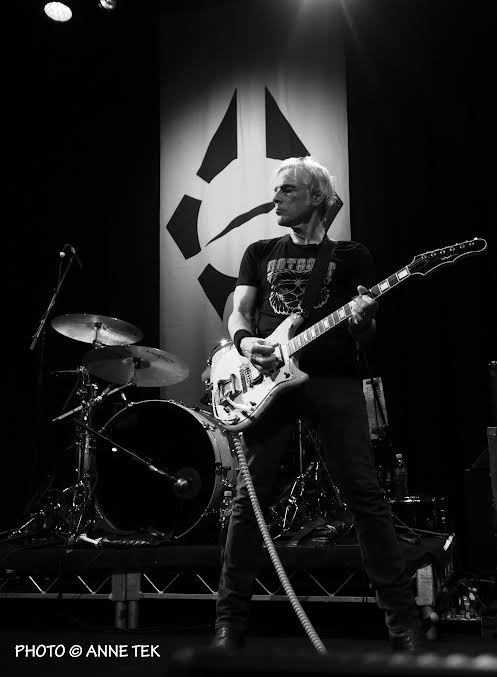
Scene Point Blank: When the police cut the power at those early Sydney gigs and you started reciting beat poetry, was that to keep the crowd entertained, or a deliberate middle finger to the men in starched white shirts?
Deniz Tek: No, there was no motive other than to keep the show going. Sometimes it would be the Beat poets, sometimes the Black revolutionists, sometimes the French romantics. I pulled out a copy of The Lords And The New Creatures and read from that once. You've got to keep things happening, keep the momentum going as long as possible, y’know? We would do that kind of stuff even when a purely technical issue got in the way, like a blown amp or something.
(By the way, it was never the police who cut the power; it was the management who had hired us to play, knowing full well our reputation. Then, when confronted with the reality of what we were doing, they changed their minds about having us in their venue.)
Scene Point Blank: After 50 years with Rob Younger, how do you maintain a creative partnership when the friction is exactly what makes the engine run? Is it a yin and yang dynamic?
Deniz Tek: I’ve rarely had any friction with Rob. Almost never. In music, and in much of life, we see things the same way. That’s why we formed the partnership. The friendship came first, and then the opportunity to start something together that would reflect the shared values that created our friendship in the first place. Our engine, as you put it, runs best without friction.
Scene Point Blank: You bought Fred "Sonic" Smith’s guitar. When you first plugged it in, did it feel like a tool, or did it exude history and spirit?
Deniz Tek: A tool. It was my first really top-quality guitar. It was like you’ve been driving an old six-cylinder Buick, and someone gives you the keys to a Ferrari. It fit me perfectly, and still does. Of course, it’s cool that Fred owned it before me.
Scene Point Blank: You saw the Stooges doing "Energy Freakouts" before they were a rock band. What non-musical sound from those art-performance days resonated with you?
Deniz Tek: Probably Scotty smacking amplified 44-gallon oil drums with a steel pipe.
Scene Point Blank: Are there other bands from the Ann Arbor/Detroit scene that were influential but never got their due?
Deniz Tek: The MC5, The Rationals, The Frost, The Up, SRC, Bob Seger’s Last Heard. Maybe also Death, and The Unrelated Segments, but they were so obscure as to be non-influential. And of course, many Motown bands that were great but didn’t quite make it big, like The Velvelettes, Edwin Starr, etc. A couple of jazz guys, too: Yusef Lateef, Pharaoh Sanders. Some of the riffs on the first Stooges album were lifted from those guys.
Scene Point Blank: Is there anything you haven’t accomplished yet that still lingers on your checklist?
Deniz Tek: Learning how to speak French.
Scene Point Blank: Public perception sees a coffee farm as a tranquil escape, but the reality is that there are multiple challenges to accomplishing output. What initially drew you into this venture?
Deniz Tek: My mom said, “You should plant some coffee trees over there along the north end of the property.” I said, “OK mom.” (She already had mac nut trees, but she wanted coffee!)
Scene Point Blank: Do you approach photography and artwork with the same "forensic" mindset as your music, or are they separate paths and entities?
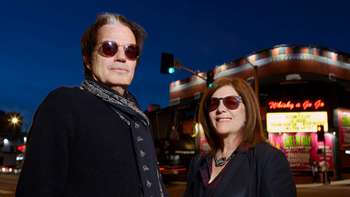
Deniz Tek: I don’t approach photography at all. One of the many wonderful qualities of my wife, Anne, is that she takes all the pictures and I don’t have to!
I still love to paint, but I rarely have time for it these days. My approach to painting is essentially the same as my approach to music. Let an idea beam in, try to realize it in whatever medium without overthinking, work on it, and see if something enjoyable comes out of it.
Scene Point Blank: You’ve said automated mastering creates a "flat" sound. For the reissues, you’re cutting lacquers manually with Levi Seitz. Is the technical art of mastering becoming a lost craft, and why is it important?
Deniz Tek: Yes, fewer and fewer people know how to do it. Almost all the old masters of the art are gone, like George Horn in Berkeley, who mastered Fast Freight, an album that we recorded to 8-track tape. George was the chief engineer at Fantasy; he cut those amazing CCR records. And just listen to how Fast Freight sounds... It’s important because cutting lacquer by hand and by ear is the only way to make a vinyl record sound great.
Scene Point Blank: Before Detroit, you were cut on the high-velocity precision of surf-rock. Did that early obsession with "clean" picking give you the discipline to control the chaos later on?
Deniz Tek: Before The Beatles and Motown -- way before there was a hard rock scene in Detroit -- in the early '60s, I was attracted to surf instrumentals, but also Chuck Berry, Scotty Moore, James Burton, Roy Clark, guys like that. I didn’t care much for the Phil Spector wall of sound when I was a kid. It sounded too crowded… not enough space. The British Invasion brought the massive influence of George Harrison, Keith and Brian, and Pete Townshend. A couple of years later, I was influenced in my playing by the old blues guys after I found out that’s where the Brits got their stuff from: Lightnin’ Hopkins, Muddy Waters, Hubert Sumlin, Jimmy Reed. And of course, much later, Buck Dharma. They were all clean players.
Scene Point Blank: Your partnership with Wild Honey feels like a global extension of the Birdman DIY gang. In the Spotify era, are physical, independent releases the only way to beat the machine?
Deniz Tek: What would qualify as “beating the machine”? If you mean creating music that I’m personally satisfied with, I have never stopped doing that and streaming platforms have been irrelevant. I will admit that I often use YouTube to reference things that would be almost impossible to find otherwise...
If you mean earning money, then touring or getting sync licenses are the ways to do that. Physical independent releases don’t generate significant income, and are lucky to pay for themselves. They are done essentially for love of the music, and for the opportunity to present it in a cool-looking album cover, with the highest sonic resolution possible.
The band was at full power, and that can’t last forever. RB-50 was a success on all fronts, and maybe that’s a great place to leave it.
Scene Point Blank: You’ve got nearly 20 solo albums. Is the plan with Wild Honey to eventually have every one of them back in print on vinyl?
Deniz Tek: That was the idea, originally, but I will be long gone before they could ever get around to releasing all of them.
Scene Point Blank: Did building The Beat around Ric Parnell’s tracks feel like "collaborating with a ghost"? Did you play differently to avoid disturbing his intent?
Deniz Tek: No, because we recorded those tracks together live in the studio. There wasn’t really any “intent.” They were just spontaneous jams, just me on rhythm guitar and Ric on the drums. None of them were actual songs. We were just throwing ideas at each other during the early workup for Mean Old Twister… Now that I had the opportunity to finish those unused tracks as songs, I let the songs themselves develop how the various guitar parts should be played. I never thought about how Ric might have wanted a guitar part to sound. He was never one to offer those sorts of suggestions anyway.
Scene Point Blank: Ric’s voice was caught in the drum mics. Why was it vital to leave those "vocal ghosts" in the final mix?
Deniz Tek: It wasn’t vital, but I miss him, and I wanted to hear his voice.
Scene Point Blank: Since Ric’s tracks provided the grounding force, did this allow you to explore areas of the guitar you hadn't experienced prior? Or, to put it another way, are you experienced now? :)
Deniz Tek: I’m always experimenting with new guitar sounds, and this recording was no exception. What was a new experience was in the songwriting and arranging. I never built new songs from scratch on top of existing drum tracks before. The process was interesting and led to some unexpected places.
Scene Point Blank: With the Birdman 50 tour potentially being the final shows, are you looking to "land the plane" for good, or is there one more vertical climb left in the engine? And finally, will that tour include Canada?
Deniz Tek: I can’t say for sure. The band was at full power, and that can’t last forever. RB-50 was a success on all fronts, and maybe that’s a great place to leave it.