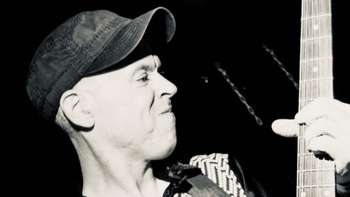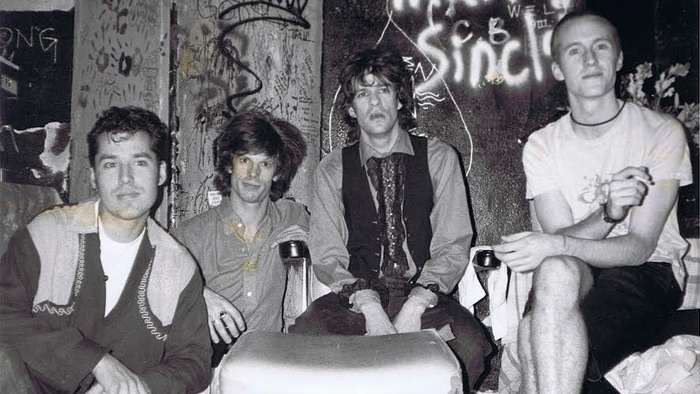
By 1981, the Red Rockers were famously branded "The American Clash" by Lester Bangs -- a tag that carried both the weight of massive expectations and the raw power of a band exploding out of the New Orleans humidity. Decades before they became MTV fixtures with the polished pop hooks of "China," they were fueled by the absolute grit of the underground West Coast punk scene and the mentorship of 415 Records' Howie Klein. The missing puzzle piece of that legendary trajectory has always been the feral energy of their live sets. Enter It's in Our Blood: Live at Tipitina's, the new archival release from Liberation Hall Records. Capturing the band's blistering 2023 reunion show, the album serves as the definitive companion piece to the newly recovered and remastered Condition Red master tapes, delivering a dry, natural, effect-free gut punch that strips away the over-processed gloss of the 1980s.
Scene Point Blank sat down with Red Rockers bassist Darren Hill to dig into the forensic history of the band, from signing a record contract on Keith Morris' back to recovering lost two" masters from an estate sale and setting the record straight on their legacy.
Scene Point Blank: How influential were The Normals to the Red Rockers in those early days?
Darren Hill: Huge influence. John, James, and I would go see them every time they played. Because of them, we decided to start a band. Our first show was opening for them. We covered “Almost Ready” at the 2023 reunion show that’s being released by Liberation Hall Records but, unfortunately, several of the covers we did aren’t included due to space reasons. We played “Almost Ready” as a tribute to The Normals and our scene. It was the first New Orleans punk single.
Scene Point Blank: When The Normals moved to NYC, and it didn't "happen" for them. Did that scare the Red Rockers? Did it make you realize you had to move to San Francisco instead of New York to find your own space?
Darren Hill: We watched The Normals go to NYC and come back defeated. The NY scene had changed so much by the time they arrived. There was no place for them.
Meanwhile, we were learning all we could about the LA/SF scenes by reading Flipside, Search & Destroy, and other fanzines. And we bought every West Coast single that came through our local record store. We realized that we fit in way more with those bands than the NY bands.
We sort of knew we would head west early. We opened for every California band that came through and befriended them: X, Black Flag, Circle Jerks, etc.
Little-known fact: We used Keith Morris as a desk and signed our contract with 415 Records on his back outside of a club in NOLA. Didn’t even look at what we were signing, but he gave the label a thumbs up.
Scene Point Blank: The Cold were selling tens of thousands of records independently, but couldn't get a national look. Did seeing them get "stuck" in the regional circuit make you more aggressive about signing with a label like 415/Columbia?
Darren Hill: When we signed with Columbia they put us with Don Devito, Bob Dylan’s A&R rep!
You’re right, we didn’t want to be a big fish in a small pond. And New Orleans’ musical landscape at the time was kind of lame.
We put out our first single, “Guns of Revolution,” before signing with them, and it started getting airplay everywhere, particularly out west. Way more than The Cold ever got. Rodney on the ROQ, KUSF, and others really embraced us. I knew 415 was the label we wanted to sign with because Howie Klein believed in us. He sent our single around the country on our behalf, and it got a tremendous reception from all of his contacts.
Scene Point Blank: Were all three bands -- Red Rockers, Normals, and The Cold -- supportive of each other, or was there healthy competition for the soul of the New Orleans scene?
Darren Hill: Between The Normals and us, absolutely. We felt like we picked up their torch.
The Cold, on the other hand, weren’t really in the NOLA punk scene, although adjacent. They wanted to be pop stars from the beginning and didn’t mingle with us much. They had a totally different audience -- mostly college kids. They were still our friends, though. No real competition, although we made fun of them a lot. I never understood the competitiveness that I have experienced in other similar scenes.
Scene Point Blank: Are there other NOLA bands from that era that never recorded or got recognition that you think deserve a mention now?
Darren Hill: Some minor bands had a huge influence on us but didn’t last very long. The Skinnies were my favourite. Everybody was doing something different. The Mechanics and Men in Black were sort of art-punk. The Rockabyes were rockabilly. Two younger bands that we helped along were The Sluts (John played drums for them on their early shows, and the singer, Dave Slut, almost ended up being the singer for Black Flag. The other was Shell Shock -- a prototype for speed metal punk before it was even a thing. They came to every single Red Rockers show and really looked up to us. Tragically, Mike Hatch the leader of the band and a friend of mine, committed suicide.
Scene Point Blank: How did 415 Records help shape the band’s identity in those formative years? With Howie Klein’s recent passing, do you have any distinct, "gritty" memories of him from the early days of the label?
Darren Hill: I have many memories that I plan on sharing in my book. Howie had a bigger influence on my career than anyone else. He was a tireless worker and taught me so much, not only about the business but about life and everything that was out there. He knew everyone. I shadowed him whenever I could, and it was an incredible experience.
When the Columbia suits heard the finished record, they flipped. And flipped the switch.
Scene Point Blank: Howie started 415 in a tiny Mission District office with a map that said "All Bands on Tour All the Time," but by ’81, the Columbia distribution deal changed the stakes. Did this change the game for the Red Rockers for better or worse?
Darren Hill: At first, no. We still got $5 a day to live on while sleeping on floors during the pre-production and recording of our second album, Good as Gold.
When the Columbia suits heard the finished record, they flipped. And flipped the switch. All of a sudden, Annie Leibovitz was flying down to NOLA to photograph us for the album cover. We were filming videos for MTV. We had a hit single, “China,” on the radio. It was dizzying. We just held on for dear life and tried to enjoy the ride.
Scene Point Blank: "The American Clash" is the definitive phrase often attributed to the band. Did that label feel like a badge of honour in ’81, or was it a weight you were trying to shake off?
Darren Hill: Well, that two-word review came from Lester Bangs. It wasn’t meant to be complimentary, but I’m sure we embraced it. Looking back now, I couldn’t be prouder.
Scene Point Blank: When you moved from the humidity of New Orleans to the SF scene, did the change in environment physically change the way you played as a band?
Darren Hill: We started playing faster, more to fit in with the scene there, but maybe to stay warm. SF was so alive. It was gritty, diverse, and always socially and politically charged. Certainly, that influenced us. New Orleans is below sea level, and it affects you like a narcotic. San Francisco was like being on speed.
Scene Point Blank: How did the pivot from the "Guns of Revolution" vibe to "China" happen?
Darren Hill: That’s a tough question to answer. We had written our first album, Condition Red, over the first two years of the band. When we came off the road, we had little time to write the next one, Good as Gold. Our sound was already changing. I think the transition can be heard in “Voice of America,” which we recorded in SF while on tour for Condition Red.
We put “Voice of America” on the B-side of “China” as a subversive Trojan horse, as a way to counter its more polished sound. CBS didn’t realize we were talking about them and their corporate interests.
We trusted our producer, David Kahne, and he had a lot to do with taking the songs we brought in and dressing them up. The last thing we wanted to do was make Condition Red 2.
Scene Point Blank: Was this shift intentional on your part, or was there grooming happening by the label to water down your initial sound to make it more palatable to the masses?
Darren Hill: They never pushed us that way. It was pretty much hands-off. But we really wanted to play in the big leagues. It was intentional but not calculated.
Scene Point Blank: Who chose the wardrobe for the Schizophrenic Circus era? Looking back, does that aesthetic feel like "you," or was it part of the ‘80s major label machine?
Darren Hill: Jesus, I was hoping you wouldn’t ask about this. The cover photo was supposed to be a circus poster lying on the beach, while we stood in our normal clothes above it. We didn’t know they were using that photo of us as circus performers until it was out! So fucking humiliating. We fired our manager the next day. I have been on a mission to recover and burn every single copy. The internet is not my friend.
I have been on a mission to recover and burn every single copy. The internet is not my friend.
Scene Point Blank: What’s the one track from the Columbia years that you think got "lost" in the production that you still stand behind today?
Darren Hill: “'Til It All Falls Down,” maybe. Certainly, “Home Is Where the War Is.” Our demo of that one sounds ferocious and cool.
Scene Point Blank: How did you manage to recover the 2-inch masters from Johnny Colla (of Huey Lewis & The News), and do you know the history of how he ended up with them in the first place?
Darren Hill: He called one day. He was at Sandy Pearlman’s estate sale after he died, and Johnny found them in his garage. I had been trying to find them for almost 40 years. Howie thought Sandy had them. Sandy bought 415 from Howie but told Howie he didn’t have them.
Scene Point Blank: There’s been talk about "de-'80s-ing" the archival releases. For the Condition Red remaster and remix, what specifically was done to bring back the "grit"? Might it be possible to revisit Good as Gold and Schizophrenic Circus and give them the same treatment?
Darren Hill: Yes, mostly it was just turning off the effects, especially the reverb that all those period records were “washed” in. What a difference when it’s dry and natural. We also boosted the guitars a bit. That’s it, other than the remastering. I had Justin Perkins do it. He did all The Replacements remasters, and they had suffered from the same drenching. When I heard what he did with The Replacements’ Tim, I knew he could make Condition Red sound better.
We would love to do the same with Good as Gold one day. Maybe not Schizophrenic Circus. That would be a tough one.
Scene Point Blank: A lot more was found on the original 2-inch masters than people realized What surprised you most during that discovery?
Darren Hill: A couple of songs we hadn’t had the time to finish and mix. We only had a couple of days to record and mix the whole record. “Missing in Action” is my fave. I had completely forgotten about that one.
Scene Point Blank: How did Jello Biafra end up doing backup vocals on your Johnny Cash cover of "Folsom Prison Blues”?
Darren Hill: He befriended us, and we actually stayed on his floor for a while. He would jump on stage with us regularly at the Mabuhay Gardens, and we opened for The Dead Kennedys a few times.
We thought his endorsement of being on our record would help us nationally. Even though we were only in SF for a few months, we became known as “from SF.” At the time, that meant more in the punk rock world than “from NOLA.”
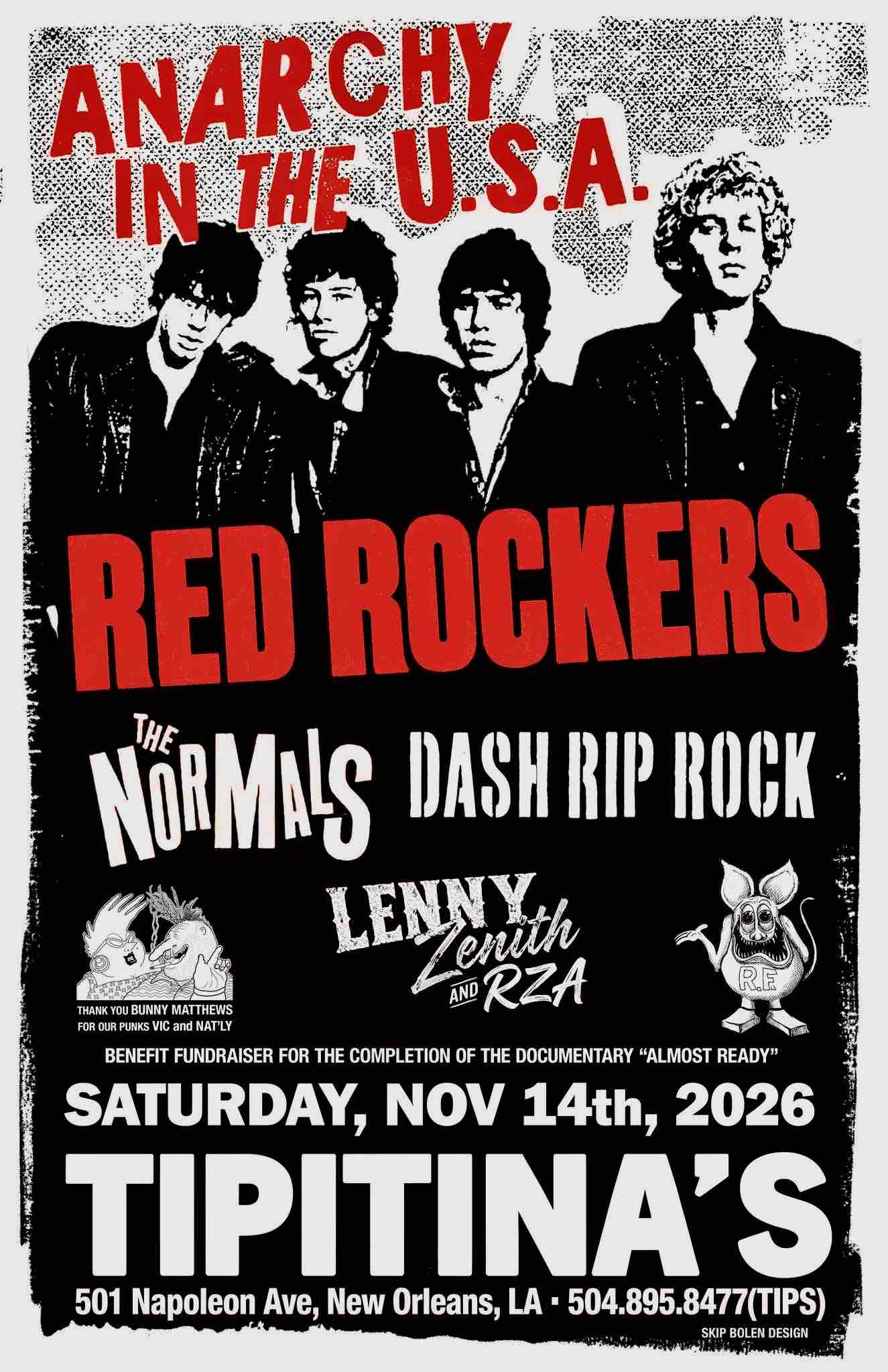 Scene Point Blank: How did the 2023 reunion at Tipitina’s actually come together?
Darren Hill: We talked about it for 30 years, but once the master tapes to Condition Red were found, that gave us the reason to re-release the record and finally do a show.
Scene Point Blank: You’ve all gone in different directions over the years, but did you remain close to the other members throughout the decades?
Darren Hill: John, James, and I are best friends to this day. We are very, very close.
Jim Reilly as well, although he is back in Ireland now. He and I, more than the others, because we stayed in Boston and started The Raindogs together after Red Rockers split up.
We became estranged from our original drummer, Patrick Jones, after we fired him, but we still stay in touch somewhat.
Shawn Paddock played guitar on Schizophrenic Circus. Although he was from our NOLA neighbourhood and was a longtime friend, he was never really a Red Rocker. He had a different aesthetic, particularly when it came to politics. I think he’s born again.
Scene Point Blank: When you finally got to rehearsals for the reunion, was there any trepidation? Was it a challenge to evoke the energy of the early band and relearn material written nearly half a century ago?
Darren Hill: The challenge was actually playing a note once we got in the room together. We laughed until we cried. It was like we were 17 again, and all the feelings you have when you start your first band came flooding back.
Scene Point Blank: Is the message of Condition Red still relevant today or, in your eyes, is it more relevant than ever?
Darren Hill:In my eyes, more relevant than ever. So prescient! I can read the lyrics to nearly every song and draw a parallel to what is going on now. Sure, they are simplistic and naive, but man, it’s uncanny in a warning sense. “Dead Heroes” was written in the backseat of John’s car when we went to the post office to register for selective service. It could have been written today.
“Good as Gold” could be about Trump and his oligarchs. “Home Is Where the War Is” could be about ICE. “'Til It All Falls Down” could be about Fox News.
Scene Point Blank: After all the tours, the breakups, and the reissues, what’s the one thing people still get wrong about the Red Rockers’ story?
Darren Hill: I guess that we were called sellouts by some of our punk fans. Maybe through their eyes, we were. We were just growing and maturing. Why look back and repeat yourself? We were always true to ourselves and only did what we wanted to do. Except for that album cover.
And we liked girls more than skinheads.