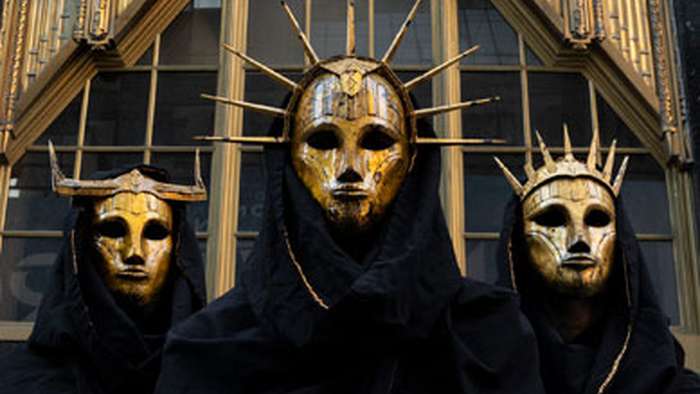
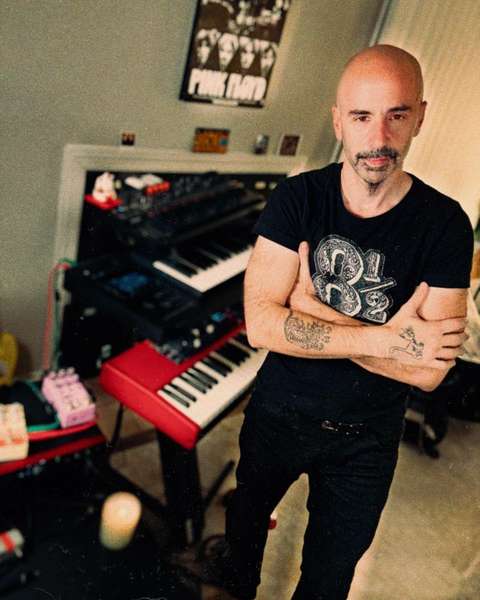
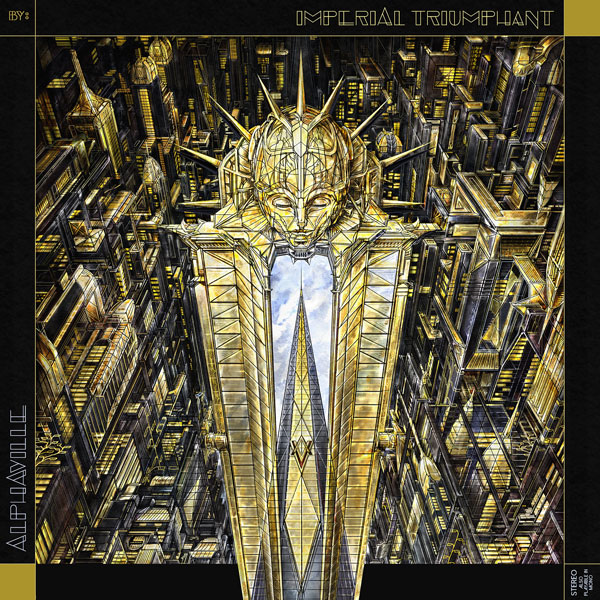
Imperial Triumphant is one of the few bands able to capture the spirit of our age. Rising like the Temple of Gozor above the New York City skyline, they channel the sounds and sights of a city and a time that was never meant to sleep. Where power knows no limits and the fate of millions may hinge on a marginal gain of a 10th of a percent. While the world has changed since their last release, 2018’s Vile Luxury, the essence of their cold examination of the engineering of society’s mechanisms and devices of control remains ever illuminating and prescient. As the band prepares to release their forthcoming album, Alphaville on July 31 through Century Media, bassist Steve Blanco did Scene Point Blank the honor of sitting down for a phone interview to discuss his band’s inspirations, artistic processes, and the themes of their new album.
Interview was conducted July 17, 2020 via phone. The conversation below has been edited from the original transcript for the purposes of brevity and clarity.
Scene Point Blank: I appreciate your taking the time to chat with me and Scene Point Blank. You guys are such serious musicians and it's a total honor. I'm really just geeking out over here.
Steve Blanco: Haha cool. It's my pleasure.
Scene Point Blank: How have things been going since the pandemic hit? How much has it derailed Imperial Triumphant's 2020 plans?
Steve Blanco: It's like a fork in the road so to speak. We did lose some tours, which obviously sucks. We had a US tour and a European tour that were both canceled or postponed, whichever way you want to look at it. But on the other side of the coin, we've been doing all this other work behind the scenes to keep it creative and keep getting our singles out on target. So we're still working and trying to stay optimistic, I guess.
Scene Point Blank: What tours ended up getting scratched because of COVID?
Steve Blanco: We were slated to do the Devastation on the Nation Tour which was going to be a cool package and that was going to be the entire USA so it would have been great to pick up some new fans and get out there and connect with people some more. And then we had our European tour which was going to be cool, it was scheduled through Dead Pig Management and we were really looking forward to that. We were going to play the UK, go back to London. We had a great time playing in London last time we were there. That was going to be another month-long tour. They were two pretty good-sized tours that we were looking forward to.
Scene Point Blank: That really sucks. Who was going to come out with you on the Devastation on the Nation Tour?
Steve Blanco: We were one of the supporting bands for Rotting Christ.
Scene Point Blank: Ouch. Yeah, that would have been cool.
Steve Blanco: I think the entire bill has been moved to February of 2021. It's still supposedly happening. But given circumstances, we have to see how to navigate that one when the time comes.
Scene Point Blank: Right, because at this point it's not even clear that it will be safe to resume touring by next winter.
Steve Blanco: Definitely not. Things are so fucked up.
Scene Point Blank: What has been the general mood of the metal community regarding touring and playing out?
Steve Blanco: People have been handling it pretty well. But if you step back and take a look at things it's pretty bleak. The entire music industry came to a complete standstill with nothing going on. Even Metallica is just doing streams. So that's a good gauge in my world where things are at. If they are doing their business via streaming then the rest of us are not doing shit. I don't want to paint a completely black picture but the reality is not good.
Scene Point Blank: Right. And there are only so many times you can stream before the novelty wears off. Vile Creature has sort of a fun idea where they are trying to create a virtual club atmosphere and calling it a "choose your own adventure." Have you heard about that?
Steve Blanco: Yeah, it's cool. If it works out for them great. But you have to think about what kind of band you are, how you like to connect with fans, what your material is like. We're very much a live band. You could call us old school in that way. We like connecting people, you know, out there in the world, actually doing it. Streaming is a possibility for us, we have a couple things in the works, but I would say that we would not do any of the bands-playing-over-Zoom kind of thing. It's not a good way for us to present what we do.
"We're very much a live band. You could call us old school in that way. We like connecting people, you know, out there in the world, actually doing it."
Scene Point Blank: So you guys don't have plans to join Gal Gadot's next sing-along?
Steve Blanco: I would say that's probably not going to be something we're going to jump on. [Laughs.] We all do all sorts of stuff besides Imperial Triumphant. I tried to get into the streaming thing where you play with a bunch of other musicians where you just try to play with your friends and I don't know man, it's just not working for me, you know?
Scene Point Blank: Right, you're the kind of musicians who thrive in a live setting.
Steve Blanco: Yeah, we're pretty proud of the way we sound live. We've worked really hard at it and we try to make a huge sound with just the three of us. Not to say we don't put a shit ton into our records. We love both, but they're different. It's funny, Tray Spruance of Mr. Bungle produced this album [Alphaville] with us, and he said something that I keep quoting because it's just so perfect. He said that all of the stuff we do in the studio, not just us, but all artists throughout the industry, all of the different colors or layers we put in are attempts to add in what's missing on a record because it's not a live performance. I never really thought about it that way before he said it. I had always approached live performances as an attempt to recreate what you had done in the studio and he was looking at it in the reverse and I thought that was kind of interesting.
Scene Point Blank: That is the opposite of how most people envision the relationship between recordings and live performances working. Something that I'm sure people who haven't' seen you play yet are probably wondering is how do you recreate some of the complex songs on your records in a live setting? Specifically, when it comes to the extra flourishes, interludes, and things that you have on your records, how do you recreate those during your live show?
Steve Blanco: It's definitely one of the challenges that we deal with when we decide to go out on the road. We are careful how we do it when we consider the audience and a live setting. We'll put somethings on playback, and I'll trigger things like the piano. We're not going to have a Steinway grand piano on stage, so that will go in the playback. But a lot of those parts we'll just play as a trio. They won't have all the same parts that appear on the record, but it will be a different experience. It's evolved in some cool ways, where we'll have stuff playing from a playback pedal and then we'll play along with it. Even though we're not playing to a click, we're not playing on a grid, we still manage to pull it off live.
Scene Point Blank: How many instruments do you play?
Steve Blanco: Me personally? I play the piano, all keyboards basically, bass obviously, and I was a drummer in my early days. I started that way. Piano was my main thing for the longest period of time, though. I spent the most amount of time playing piano and came to bass a bit later and I'm in love with bass now.
Scene Point Blank: I'm guessing that your piano work wasn't all for metal bands.
Steve Blanco: No, it was jazz mostly. Jazz standards.
Scene Point Blank: When did you develop an interest in jazz?
Steve Blanco: The jazz thing has been there forever. I grew up on classical music like Igor Stravinsky and of course rock as well. But I got bit by the jazz bug in my teens and just went down that rabbit hole. That's how I got super deep into that shit. All three of us are into jazz actually. Kenny [Grohowski] has also played jazz pretty much his whole life. So there is a jazz element in our music, but not by design, it's just the music we hear in our heads.
"There is a jazz element in our music, but not by design, it's just the music we hear in our heads."
Scene Point Blank: It emerges organically.
Steve Blanco: Which has been why we've been able to pull it off in a way. You don't want to over think art too much.
Scene Point Blank: Do any of you have any formal training?
Steve Blanco: Yeah, all of us. We're all formally trained in conservatories. Zachary [Ilya Ezrin] has his degree is in composition. Kenny and I both have degrees in jazz performance degrees. I went to Suny Purchase, Kenny went to New School, and Zach went to Cal Arts.
Scene Point Blank: That makes sense for how I experience your music in terms of how tightly constructed it is.
Steve Blanco: We're all very similar in the way that we write music, and how we construct our albums. We think in terms of what the sum total of what the experience is going to be like. Talking about it is different than doing it, though. Who knows what's channeling through you in the moment.

Scene Point Blank: I've also heard that your songwriting involves a fair amount of improvisation. How does the improvisation jell with the more controlled aspects of your process?
Steve Blanco: Improvisation is a very natural part of making music. First time you pick up an instrument and play it, make it make a sound, that's improvisation. If you are really into crafting parts like we are, how you balance that out is you have to create a structure that you then improvise around. We could get super nerdy about this shit, but the balance between crafted and thoughtful parts and improvisation is a taste thing. How much do you want of each? You have to strike that balance.
Scene Point Blank: How do you resolve differences in taste and intention? What does that push and pull look like?
Steve Blanco: It's very rational. We all love music so much and we all really try to keep open minds. All the touring and all the evolving that we've done, the three of us have gotten real tight and no one's afraid to throw an idea out there just because someone else might not be into it. There may be disagreements when constructing something, but how we handle it is that we just take that part out or we put it somewhere else. It may show up in another verse or even another album. As crazy as it sounds, we generally see eye to eye on most things. That's why things seem to be evolving and working. In general we're all "go fuck off" kind of guys, but between the three of us we're trying to build something, and we're trying to build it together.
Scene Point Blank: You're rational in the expectation that if you give in one respect you're going to get in another.
Steve Blanco: You have to compromise in the creative world. Even someone who an audience would see as uncompromising, like say Stanley Kubrick, of course had to deal with obstacles in his creative process that required compromise. And obviously, you have to be lucky enough to be able to work with like-mined people.
Scene Point Blank: Right you guys are all pretty talented, pretty connected, you have a good thing going. And you're all well-networked too. It seems like when you need to find someone outside of the band to do something that you can't, you're connected enough that it makes it easy to find the right person.
Steve Blanco: There is such a massive pool of talent out there. It's pretty incredible.
Scene Point Blank: Who were you most excited to play with on this record?
Steve Blanco: It was bad ass to play taiko drums with Tomas [Haake] from Meshuggah. That connection came through Kenny. We played and recorded in a Japanese dojo in Brooklyn. The owner of the dojo, Hero, builds drums and travels all over the world teaching people how to play them. The space is not set up as a studio, that we did that ourselves. That was such a cool experience. But everyone on the album was awesome to work with. We have these crazy vocals in there from Yoshiko [Ohara] and Sarai [Chrzanowski], and of course those were used in a lot of different ways. Working with Trey was great as well, so was Colin Marston, who is almost a member of the band at this point.
Scene Point Blank: That's really great that you've been able to work with a member of Mr. Bungle. That's another band who likes to play around in both metal and jazz spheres. Makes me curious when you guys are going to cut a record with John Zorn.
Steve Blanco: Haha, there is nothing in the works right now. But who knows. Kenny already works with John. He's been on a couple of his projects, including Simulacrum. I don't know him personally, and I don't know what he thinks of our work, but it would be cool.
"You have to play your instrument at a certain level of proficiency to be able to express what you hear in your head [for metal and jazz]"
Scene Point Blank: What are some of the connections between playing metal and playing jazz that people may not realize are compatible?
Steve Blanco: There is one insanely clear connection, and it’s that you have to play your instrument at a certain level of proficiency to be able to express what you hear in your head. You don't have to go to a conservatory, but you do have to be good enough to make what you have in your head come out of your instrument. I never thought of music as too genre specific. It's always been whether I like it or not. Whether it's good or it's not. That of course is subjective. Recently though, jazz musicians have been looking to metal as a source of inspiration, and vice versa. I know a lot of great players in New York, guys who I came up with who are Meshuggah fans. There are so many connections and it's really very dynamic. People ask us what records inspire us, and one is this record Money Jungle from Duke Ellington, Max Roach, and Charles Mingus. That's inspiring for us, the way that they play together as a trio. And when you listen to it, it's fucking heavy, they are playing the shit out of their instruments.
Scene Point Blank: Yeah, Money Jungle is a fantastic album! It's so alive, it feels like a lot of the tracks on that album have their own heartbeat.
Steve Blanco: A band should have a heartbeat. They should be feeling what they're playing. And if the band is feeling it, then the audience will be feeling it too.
Scene Point Blank: It's something that I really love about heavy metal is that you can really tell when a band is into what they're doing. You can feel it and it just feels awesome!
Steve Blanco: Dude, yeah for sure.
Scene Point Blank: Let's pivot a little and talk about your record, Alphaville, out July 31, on Century Media. First thing's first, where does the name come from?
Steve Blanco: The name comes from a movie from a French new wave filmmaker, John-Luc Godard. It was the inspiration directly for the album title, a song on the album, and the themes of the album as a whole. The film paints a picture of totalitarian control and artificial intelligence. There are no sets or special effects. It's all just filmed on the streets of Paris. It's a very interesting piece of art that I highly recommend. Alphaville means "#1 City," and we write about New York and we consider it our "#1 City" both good and bad.
Scene Point Blank: New York is kind of a world capital city, isn't it? All of the world's commerce moves through there.
Steve Blanco: Yeah, could change, but it is right now for sure. It's a fucked up place. You been there?
Scene Point Blank: Yes, a few times.
Steve Blanco: Yeah, then you catch the vibe. It's a tough place to live. It's also the apex of evil. All of the evil forces in the world are doing business there. You think of fictional portrayals of bankers and crime lords counting money in high rises. Those portrayals are fictional but they're inspired by real people.
"You think of fictional portrayals of [New York] bankers and crime lords counting money in high rises. Those portrayals are fictional but they're inspired by real people."
Scene Point Blank: Right, the details of the portrayals don't matter, it’s the truth that the fiction points to that matters.
Steve Blanco: Exactly. And all the stuff that we talk about is connected thematically. We try to look at the bigger picture of civilization. Like, how was it engineered and construed, how was it carnally engineered and where is it going? We ask these questions and then try to zoom in and ask: how do people feel about it, how do people react, what's the struggle, where is the divide between the bottom and the top? Looking at ancient history, the best we can (none of us were actually there), but looking at it the best we can, you can get an idea of how things have been moved along and how they get moved along, what the designs are that we're not aware of. We try not to add too much of our own opinion, though, because the truth is that we really have no idea.
Scene Point Blank: A lot of the mechanisms of power operate openly and people still can't see them. It's one of the amazing aspects of power in my opinion.
Steve Blanco: Yeah, it's hidden in plain sight. But it's still invisible to most people and there are different information circles at different levels of society that we're not all privy to. There are so many barriers at so many levels that keep you from really seeing the whole picture even when it's right in front of you.
Scene Point Blank: Right, not all of us are invited to the Bohemian Grove.
Steve Blanco: Haha, exactly.
Scene Point Blank: I like that Imperial Triumphant has adopted an art deco aesthetic. So many metal bands adopt a satanic or occult image for themselves, and I like that yours is a little more clean and elegant. But I wonder if you think that there is still some connection between the art deco movement and the occult.
Steve Blanco: It seems fairly obvious that there is some kind of a connection. Although, I can only speak for myself when I say that there is most definitely a connection. If you look at the movement, it's very impressive, even today the top of the Chrysler Building still looks insane: stainless steel with a bunch of pyramids, it's a very powerful structure. And then if you look back to Egyptian structures and ancient Persian structures you see a lot of the same elements. Those who built the Chrysler Building probably did so as a monument to some esoteric thing that I am not privy. They captured something there, some expression of power, and we are doing the same in writing about New York, in attempting to capture the sounds and moods of the city. We're not just looking to money and economics though. There are many elements, spiritual things and artistic movements we are speaking to as well. All of these things transpire probably because of the energy that surrounds them at different times. We're trying to channel all that.
Scene Point Blank: I really like that you are taking such a deep look at the power dynamics of society and trying to tap into some older forms of humanity with your work. That's extremely cool. Fast-forwarding back to the present though, what are some of Imperial Triumphant's plans for the future? What do you hope happen in the next 6 months?
Steve Blanco: We'll we're definitely looking forward to a good reception to the album and a solid launch on July 31st. That's very important to us because we put a lot of work into it. So far the reception has been good. Other than that we have another video in the works. We're looking to shoot that in August. We had to postpone the shoot because it was scheduled for right around the time that everything shut down. Instead we created a bunch of animated videos which have turned out to be cool, especially the "Rotted Futures" video which was done by my friend Louise F. Cuffari. We're putting together a tour schedule for 2021 as well. We're working on some ideas for a new album. We're also looking into something that may turn out to be a movie. However we can stay creative, that's what we're going to be doing the next few months.
Ideally, what I think we'd all like to see, is that we can move past these obstacles and global obstructions so that we can play live again.
--
Alphaville is out now via Century Media. You can preorder from here.