The quaint and urbane mask of Hobart, Tasmania is perhaps not a true representation of the many creative perturbations that occur beneath its often-quiet streets. After personally spending some time as a Hobart resident in late 2013, I know that there is something to be said about the combination of the constant wind-chill, the enigmatic River Derwent and looming omnipresence of MONA (the Museum of Old and New Art) that seems to render its inhabitants undisturbed by some of the more provocative excursions into art and music that suffuse throughout the city.
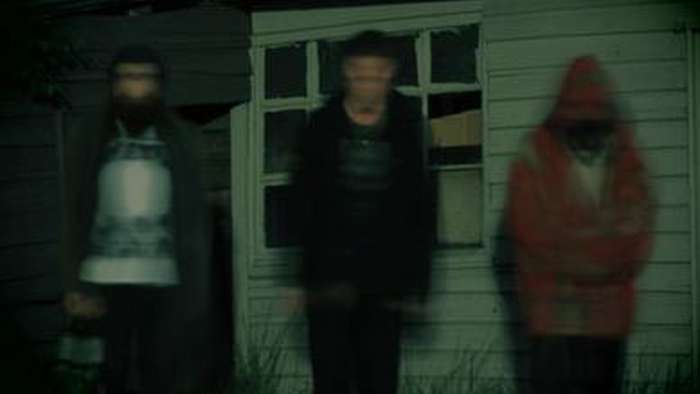
Hobart denizens Ryan Lynch, William Syms, and Spencer Reid comprise Omahara, an eclectic mix of dark ambient, drone, and experimental influences. In their latest self-titled release, the trio use their raw, percussion driven instrumental sound to paint a succinct image of both Hobart’s cold urban mystique, and the pervading harshness of the Tasmanian landscape. Recently, we got in touch with principal guitarist Ryan, regarding some of the finer aspects of the new release.
Scene Point Blank: First off, tell us a little bit about how Omahara first got together.
Ryan: It started with haircuts. Will and I have been writing music together for almost a decade now and when we started going to Spencer's barbershop for a trim we realised the three of us had a lot in common musically. We decided that music was not experimental or heavy enough, so we took it upon ourselves to change that; thus Omahara was born.
Scene Point Blank: Will and yourself were previously in an instrumental outfit together and the stylistic differences between the two are pretty dramatic when you compare them. What do you think were the factors that have influenced the change towards the “darker” imagery of Omahara?
Ryan: There's definitely a desire to explore the dark corners of ourselves and find the places where it's difficult or uncomfortable to be. To some extent the music is an extension of where we're all at personally while we're writing the material, and there's definitely a therapeutic element to performing it. For me, these songs are very emotionally involved so I've got my eyes closed half the time, but by working certain things out through the music I guess I'm probably less likely to address the same issues in a less socially acceptable manner, like stomping on fluffy kittens.
"By working things out through the music I'm less likely to address the same issues in a less socially acceptable manner, like stomping on fluffy kittens."
Scene Point Blank: Speaking with percussionist Spencer Reid regarding this same sort of catharsis, I was engaged by the parallels he drew regarding some of his personal live performances and that of certain traditional Eastern art forms. These sort of influences seem somewhat anomalous, and it would be interesting to know a little bit more about some of the other inspirations are that band members have adopted into the overall sound.
Ryan: You're doing well to remember that conversation! We all bring in a number of influences, and often a lot of them have nothing to do with music. We cover a lot of ground across the three of us so it's hard to list any one thing in particular. I'd say the majority of our influences are internal.
Scene Point Blank: It certainly stuck, as it seemed to represent an interesting connection between the music and the performance itself - which was an intriguing notion at the time. Straying away from those two elements, tell us a bit more about the cover art (below) that you chose.
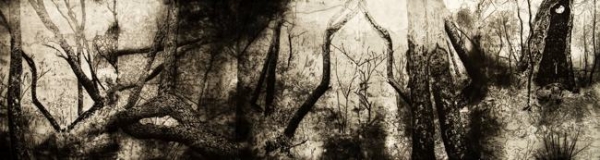
Ryan: The image is an artwork by Jacqueline Green titled “State of Flux.” To be able to use this work is nothing short of an honour. Without giving too much away, the image is a depiction of a psychological landscape, and it really compliments the music on a multitude of levels. We've kept the packaging as minimal as possible in terms of information, so it's just about the image and the sound. To get the most out of this album you're going to have to do some work, but you'll get out what you put in - that's definitely how it's gone for all of us.
Scene Point Blank: That definitely seems to be a recurring theme when it comes to more experimental projects such as this. What sort of processes did you employ when writing the record?
Ryan: It actually took us ages to figure out how to be this band: what our sound was and how we would write this music. We found complete improvisation a bit too aimless, but writing out a strict song structure took away all the freedom and flexibility of being able to play off each other in the moment.
Eventually, we developed a writing process that finds the happy medium: we know what's coming next so we don't get lost, but if a certain section is feeling really good we can sit in there until we're satisfied. As a result these pieces are never quite the same each time we perform them; they can change a little or a lot depending on our moods, the location, people around us and how sober we are.
Scene Point Blank: It must be relieving knowing that you can allow yourselves such a high level of freedom when performing, but how does this relate to what happens during the recording process? Could you fill us in on what exactly went down when trying to piece together a full-length?
Ryan: Yeah, I think it's pretty safe to say we're not an easy band to record. Everything was recorded ensemble, so what you hear on the album is the three of us playing live in the room, and there are no overdubs or little extra things added in later. We just played each piece until we got it right, and I don't think any song took more than 3 or 4 goes. We spent a hell of a lot of time rehearsing in preparation for the studio, and at the end of the recording process we knew it was the best we'd ever played.
If there's one thing that's been consistent throughout this entire process it's a lack of compromise—a couple of times in the studio we had a take that felt really healthy, but there'd be one slightly off note in a quiet section or some other minor detail that wasn't quite right—so we scrapped that and started again. By the end of the recording process we were all completely physically and mentally exhausted and, by the time we had the final mix, I think that the studio engineer [Alan Andrewartha] was just about ready to strangle us. But we got there in the end. It was definitely a battle but at least we won.
Scene Point Blank: The exhaustive emotionality certainly comes across when you spend a bit of time with the record, and of course this level of sincerity can often be hard to replicate when stepping back into the writing process. In saying this, what sort of plans does Omahara have for the future?
Ryan: We're already working on new material—we're masochistic like that. We are definitely going to continue performing in unique locations after the success of holding our album launch in a historic church. We'll start appearing live in various locations to support the release of our new album, and continue to expand our sound in the writing process of what I guess will eventually become album number two!