There are a lot of misconceptions about the life of a musician. Most musicians have day jobs – and not just to pay the bills. Jobs provide new challenges, personal fulfillment and, yes, some rent or gas money.
How an artist spends their time by day will influence the creative process at night. In Don’t Quit Your Day Job, Scene Point Blank looks at how musicians split their time, and how their careers influence their music (or how their music provides escape).
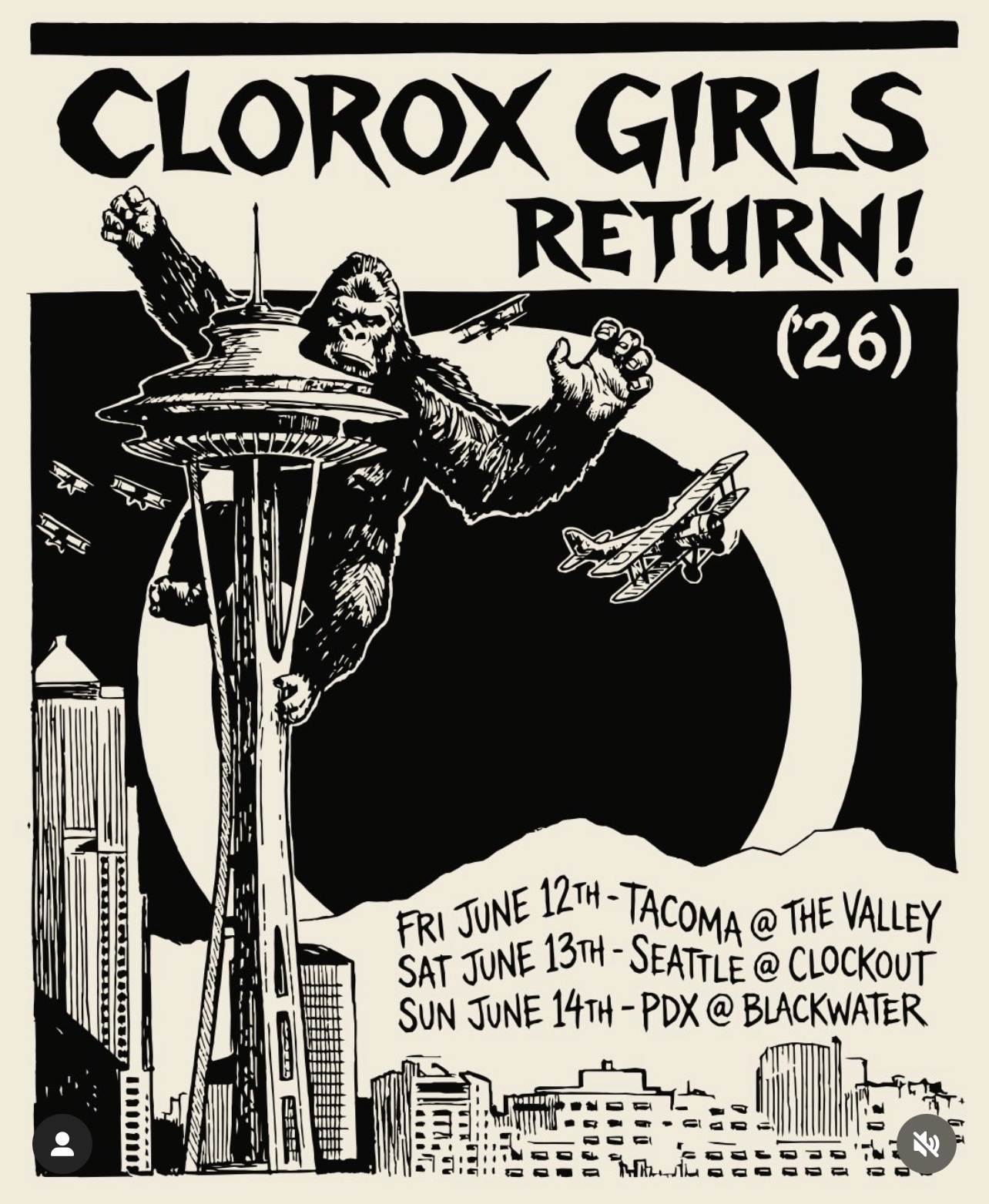
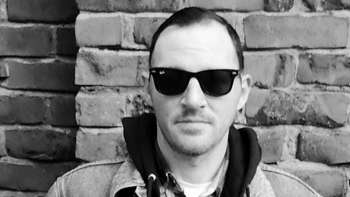
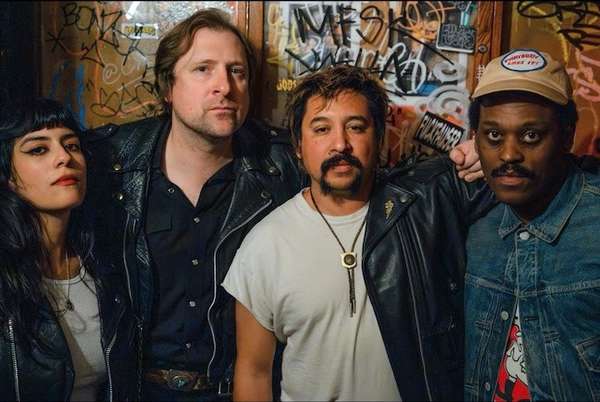
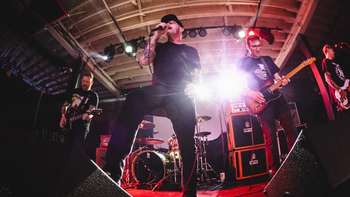
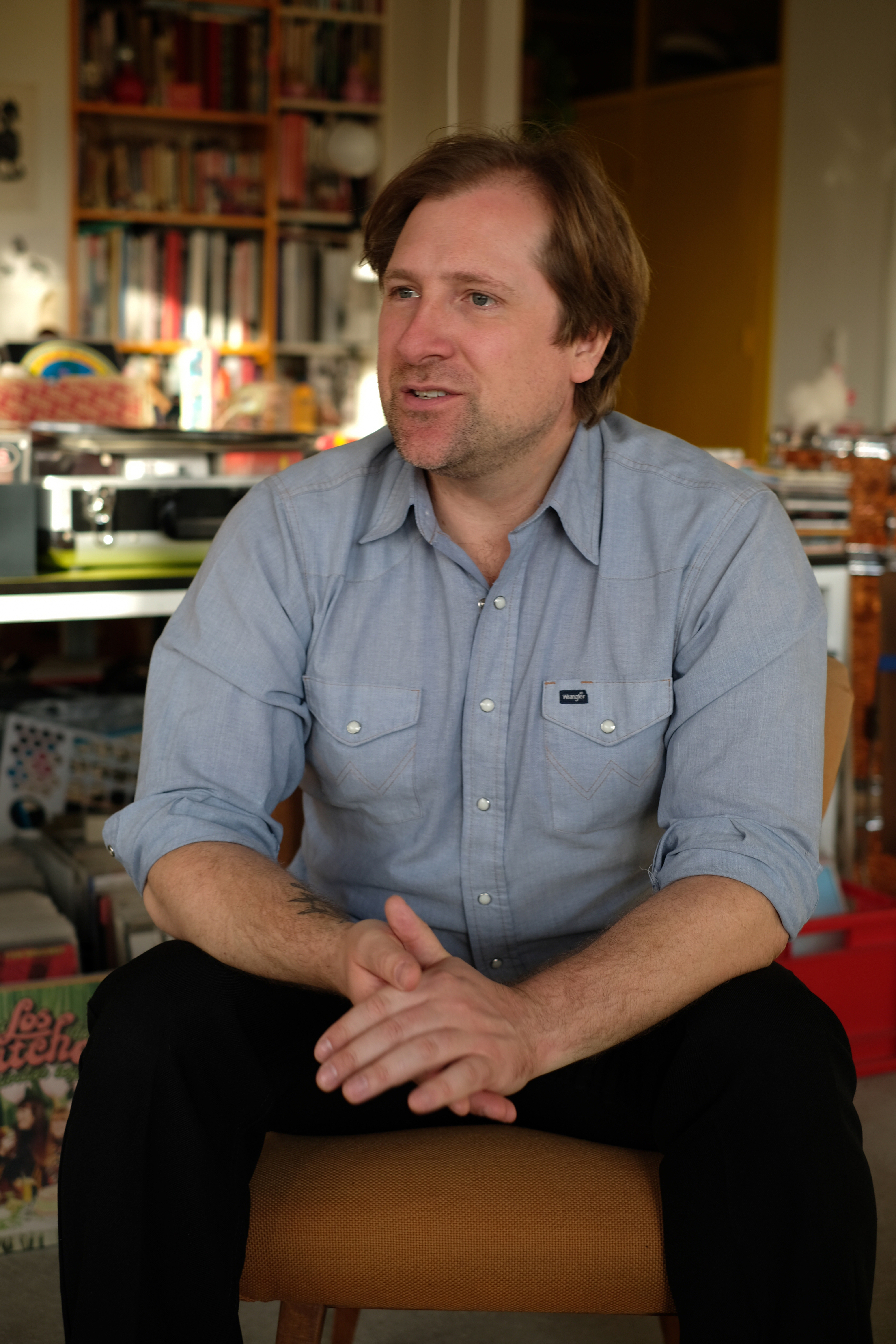
Today we catch up with Justin Maurer (Clorox Girls, Suspect Parts, Maniac, Jenny) and his latest project, J Mau & The Kiss Off. The Kiss Off has new music coming this year, featuring Maurer along with Cynthia “Mickie Splits” Herrera (bass), Jairo Gabriel (lead guitar), and Christopher “Crux” Michael (drums).
The theme of this interview though is Maurer’s day job as an ASL (American Sign Language) interpreter. And we learned about the job and, more importantly, the Deaf community. Before going into that, a statement by Justin about the deaf community.
Justin Maurer: I’d like to have a moment to make a disclaimer. In 2022, there were three CODA (Child Of Deaf Adults) interpreters working on the awards-season campaign for the Apple film CODA. I worked with Troy Kotsur, who plays the dad in the movie, as his designated ASL interpreter for interviews, red carpets, panel discussions, acceptance speeches, and more. I can disclose this because the whole campaign was obviously very public. Troy ended up winning a Best Supporting Actor Oscar which, for the Deaf, Disabled, and CODA communities, was our 2022 cultural equivalent of Sidney Poitier being the first black man to win an Oscar in 1964. At the time, it felt like a civil rights breakthrough for the Deaf community because it was the first time a movie featuring an authentically Deaf ensemble cast received mainstream recognition and dozens of awards. As a CODA myself, it was the first time I had seen my own experience growing up represented onscreen. After the movie won three Oscars, our interpreting team (who are all real CODAs themselves) was approached by multiple national publications, which asked if we’d like to be interviewed about our experiences working on the campaign. We had an internal conversation and decided to decline all interviews because we explicitly wanted the Deaf actors we worked with to be the center of attention and receive accolades for their work. If I’m to explain what a CODA means culturally, we often instinctively take the back seat, step out of the limelight, and intentionally make sure that Deaf people are in the spotlight.
As far as being an ASL Interpreter, due to our Code of Professional Conduct, or CPC for short, we also aren’t supposed to be in the spotlight. Interpreters who capitalize on their fleeting fame are seen as riding on the coattails of Deaf people and exploiting their Deaf consumers.
I’d like to make it clear that, while I did work on the CODA campaign and on quite a few TV shows and movies with Deaf consumers, the campaign I am on now is completely different. This campaign is to promote my music, my new band, J Mau & the Kiss Off, and our debut single, “Poison.” I was a touring musician for many years before I became a professional interpreter, not the other way around. I’m not exploiting my success as an ASL Interpreter to promote my music. I considered whether to do this interview, and I decided to use it as an opportunity to advocate, educate folks, and respectfully answer your questions. I hope folks get something out of it. I know that, as a publication, you have the right to edit interviews, but I hope you can publish this intro disclaimer in its entirety. When I’m working as an Interpreter, it’s my Deaf Clients who are in the limelight -- not me. I happen to be very close to it physically -- but it is their voice coming out of my mouth -- and I represent them in the best way I can - -professionally, with integrity and using discernment to ensure that it’s clear it’s them onstage or onscreen, not me. I hope that’s clear. If you want to take ASL Classes, make sure they're taught by a Deaf teacher. If you hire a tutor, make sure it’s a Deaf tutor. If you want an ASL Consultant or Dialogue Coach for your TV or film project, make sure it’s a Deaf Consultant or dialogue coach. Employ Deaf people! Now, as a CODA, I’m happy to answer your questions about growing up as a CODA and my weird and woolly journey into the interpreting field.
Scene Point Blank: You are a CODA and ASL was your first language. With that skill, you've become a high-profile interpreter. Are you a freelancer or do you work for a company? What is your title?
Justin Maurer:Yes, I’m a CODA. It stands for Child of Deaf Adults. My mom, aunt, and stepdad are all Deaf, and ASL was my first language. I can best describe being a CODA as living between two worlds. We are part of the Deaf Community, but not completely accepted as one of them because we are not Deaf and theoretically could choose to leave the Deaf community at any time. We also don’t feel a complete sense of belonging to the outside dominant culture, the hearing world, because at home we are part of the Deaf world. Growing up, many of us witnessed our parents' oppression -- not being taken seriously, not being promoted at work, the impatience of the world when wanting to rush through interactions. They call the oppression of the Deaf “audism.” Growing up in the '80s and '90s, I witnessed a lot of audism. Sign language wasn’t considered cool; many people thought of Deaf people as people who had intellectual disabilities and lumped them into that category. Deaf people are a cultural and linguistic minority, and in the past, they weren’t often recognized as such. The Americans with Disabilities Act, or ADA, was signed in 1990, guaranteeing certain rights for Deaf people, such as captioning and interpreting services, but because it was so new, it wasn’t really enforced, and CODA kids like me were often used as interpreters for their parents when interpreters weren’t provided.
I was the eldest so, growing up, I interpreted for my mom at my friends’ birthday parties in the kitchen, chatting with the other moms while watching my friends play outside out of the corner of my eye. I interpreted for my mom in church on Sundays, including her flirting with a Catholic priest named Father Chuck. I hated doing this. Imagine a mom flirting through her ten year-old son’s voice? It was insane. I also had to interpret for my mom’s divorce lawyer when my parents got divorced. I also had to interpret for many serious and uncomfortable conversations with bill collectors, the police, and my own teachers at parent-teacher conferences at school. Basically, conversations that a ten year-old kid shouldn’t be participating in.
I wrote and produced a play called “Falling On Deaf Eyes,” all about it. We had seven performances at the Hollywood Fringe Festival a few years back. I played myself, my dad, and the cops, and the Deaf actress Lisa Hermatz played my mom. The play features music by Clorox Girls and Suspect Parts. If anyone is interested in watching it, send me a DM, and I’ll send you a link.
A lot of my friends growing up were children of first-generation immigrants. Now looking back, I understand why. They were living in between two worlds too. My friends who were Mexican-American or Asian-American weren’t seen as being “real” enough for the cultures of the countries where they came from. In Mexico, they call Americanized Latinos “pochos” because they speak Spanish with an accent and grew up in “el otro lado” (the other side) and, from their perspective, don’t really understand what life is like in Mexico. I’ve heard my Asian-American friends say that they were called “twinkie,” meaning they were perceived to be too assimilated into American culture, “yellow on the outside, white on the inside.” Many CODAs I know feel the same way about how they are treated by Deaf people. Even though they were born to a Deaf person with “Deaf blood” flowing through their veins, they might sign with an accent, and they may not be fluent enough in ASL. For many reasons, CODAs often feel rejected by the Deaf community, even though we were born into it. CODAs are sometimes perceived as controlling or thinking they know what’s best for Deaf people and making decisions for them on their behalf without their knowledge.
Most of the CODAs I know love sign language, love Deaf culture, and love and respect their Deaf family members despite the additional responsibilities they had growing up. Almost all of them are empaths, having witnessed so much oppression firsthand, they can relate to people who are different from them much easier than others who may have been raised monoculturally or monolingually. CODAs are bicultural and bilingual and are an unseen, overlooked, and often invisible subculture of a minority culture. Does that make sense?
CODAs function as the bridge between the dominant hearing culture and the minority Deaf culture. We provide cultural mediation to both groups, and we process information in two languages simultaneously. We often have to ignore our own humanness and try to exist as a functional tool that allows third parties to function seamlessly with us, bridging their cultural and linguistic differences.
Sign language is a blessing, Deaf culture is a blessing. I am grateful and honored to have served the Deaf community for over fifteen years as a professional interpreter and, because of it, I’ve had the opportunity to work on TV and film sets on location all over the world.
This answer to your question is very long, so I apologize, but a big question should get a big answer. How did I start working as an interpreter? When playing in touring punk bands didn’t exactly pay the bills, I worked a million dead-end jobs in L.A., including, but not limited to a dental-supply salesman, a Hollywood tour bus driver, and an all-night delivery driver for the Crispy Pork Gang restaurant in Thai Town. I was working multiple jobs and still struggling to make ends meet. My Aunt Vickie and Uncle Charlie are ASL Interpreters and when Aunt Vickie found out how unhappy I was as a dental supply salesman, she encouraged me to take a certification exam.
I passed and started as a sub interpreter in public schools and community colleges over 15 years ago. About 10 years ago, I began working as a freelance interpreter in film and TV, on shows like Jimmy Kimmel Live!, Shark Tank, Let’s Make a Deal, and many more. My thank-you list starts with my Aunt Vickie, who encouraged me to get started. I also thank Bill Pugin from The Sign Language Company interpreting agency for giving me many opportunities early on and trusting that I would do well. I can also thank Deaf producer and filmmaker Del Whetter for trusting me to work with him on many projects. I would also like to thank Heather Rossi, who hired me to work on the CODA awards season campaign; Jack Jason and Gabe Gomez for being part of my team on the campaign; and, finally, Troy Kotsur, the Kotsur family, and Troy’s team for trusting me to work with them for five years now. Troy and I have been around the world together, and it’s been a very wild and fulfilling experience.
And so here I am, a touring punk musician who is still a freelance ASL Interpreter in Greater Los Angeles. I’ve been fortunate enough to work with prominent Deaf actors, producers, directors, ASL Consultants and Dialogue Coaches on TV and film sets around the world. Touring for years with punk bands actually prepared me quite well to interpret protests and work in cramped, dark conditions on film sets. Troy Kotsur was a guest on Running Wild With Bear Grylls and I found myself jumping out of helicopters, interpreting dangling by a rope off sheer cliffs, and eating unseasoned deer liver. Ya know, just like a punk tour minus the helicopter.
Scene Point Blank: Due to your higher profile, does the work come to you, or do you have to chase down new opportunities?
Justin Maurer: In TV and film, almost everything is referral-based and relationship-based. In LA, I also work freelance with most local interpreting agencies and have a great relationship with them. People might think working on set is all glitz and glam, but quite often we work 12 to 15 hour days and sometimes work overnights. Imagine a 5pm to 5am shift, then switching back to a day shift a couple of days later. Film crews are some of the hardest-working, selfless people I have ever met or worked with, and they deserve all of the protections that the unions guarantee them.
Another longer conversation that I won’t get to here is that ASL Interpreters on set don’t qualify for any of the unions -- that’s another onion to peel back another time.
The two gifts I have to give the world are sign language and music, and I plan on giving back as much as I can. It feels good to give.
Scene Point Blank: At what point do you meet your highest-profile clients, like Michelle Obama and Kamala Harris? Is it in the moment, or do you meet in advance? When it's a big public speech, do you see the scripted parts in advance?
Justin Maurer: My clients would be the Deaf consumers whom I am interpreting for. As I mentioned before, we have a strict Code of Professional conduct which is similar to the confidentiality that applies to doctor-patient relationships, so we should never divulge who our Deaf clients are. I’m in a unique situation because many of these high-profile events are public, so I make it a point to be respectful and mindful of deaf consumers, and to keep in mind that my responsibility is to provide them with access to communication. When prominent public speakers are present, I usually don’t meet them at all. I have a mark onstage and start signing when they speak. Sometimes speeches and remarks are provided in advance, but many times they are not, especially if it’s a last-minute request at a live event. Unfortunately, accessibility is sometimes an afterthought, and more often than not, ASL Interpreters are requested at the last minute, which does not guarantee that the highest-caliber interpreters are even available.
Scene Point Blank: How about Hollywood award ceremonies? Those seem like spontaneous events that would present a unique challenge.
Justin Maurer: The most challenging is actually spelling everyone’s names correctly. Titles of films are sometimes also challenging to spell. The length of the ceremonies, sometimes three hours or longer, with events beforehand and afterwards, can also be very grueling. On the night of the 2022 Oscars, I was interpreting until four o'clock in the morning, and I believe we had an interview at 7 or 8 am the same day.
Scene Point Blank: What type of background do employers expect when a new person begins their career toward becoming an ASL interpreter?
Justin Maurer: I had a pretty non-traditional journey into the profession, so I wouldn’t recommend others follow my path. I’d recommend taking ASL Classes (levels 1-5), then enrolling in an interpreter training program. After graduating, follow your professors' advice and, hopefully, benefit from the mentorship of experienced interpreters. Be humble. It’s a job of service. Your job is to serve the deaf community and provide high-quality access to information. Most ethical interpreting agencies consider certifications, education, experience, and skill level when hiring interpreters.
Scene Point Blank: Do you know other sign languages as well? How prominent is ASL outside of the US? Can you interpret ASL for any non-English spoken languages?
Justin Maurer: I’m fluent in English, Spanish, and ASL. I can order food and drink and say please and thank you in a few other languages. There are over 300 signed languages worldwide. ASL is used primarily in Canada and the US, but is probably the most widely used internationally, just as English is frequently spoken abroad.
Scene Point Blank: How long have you played music? How has that overlapped with your career? Were you doing one before the other?
Or did each interest happen separately and organically?
Justin Maurer: Each interest happened separately and organically. My Uncle John showed me a few chords on the guitar when I was 12 years old, and I started my own band, wrote my own songs, and began touring the Pacific Northwest when I was 15, the West Coast when I was 16, and overseas at 22.
When not touring with my own bands, I briefly tried working in the music industry as a tour manager, driver, roadie, merch guy, booking agent, and sync/licensing rep. I wasn’t able to make a living doing these things. It’s very expensive to live in Los Angeles, and I hustled for years, sometimes working 3 or 4 jobs, nights and weekends, and was still living paycheck to paycheck. I had to make a leap of faith into freelancing. It's not stable, and it’s not for the weak of heart. Freelancing and working in the film industry is very turbulent. Please fasten your seatbelts. I’m very fortunate and grateful for what I do, and I find my awareness, frequency, and consciousness elevating daily. The two gifts I have to give the world are sign language and music, and I plan on giving back as much as I can. It feels good to give.
Scene Point Blank: How often does music or the fact that you're in a band come up at work? Do clients ever Google your bands?
Justin Maurer: It rarely comes up. I try not to bring up my personal life or my other hats while working. Someone who wears too many hats at once looks like a clown. I’m not a clown.
Scene Point Blank: Do you keep your professional and music lives separate, or are they intertwined?
Justin Maurer: Yes, totally separate. When I’m at work, I’m focused on ensuring access to communication and serving the Deaf consumers I work with. Music is my own language and my own medium of expression. If any Deaf people want to attend my shows, of course, they are welcome to, I just need to know with enough advance notice to request an interpreter so that the Deaf folks in the audience can have access to the lyrics, etc. This happened a couple of times recently, and we were fortunate enough to work with some talented interpreters.
Scene Point Blank: How does your work schedule affect your music schedule, whether it's touring, recording, live shows, etc.?
Justin Maurer: It's been tough for me to schedule time for music since 2022 or so because I’ve been working so much out of town on location for film and TV shoots (and paying my dogsitter all the money I’m earning, haha). Now I’m making a concerted effort to dedicate time to playing in my new band, J Mau & The Kissoff, recording, and touring. Our plan is a bunch of local dates and Bay Area dates in 2026, and to tour Europe in Feb 2027. Clorox Girls also have some Pacific Northwest dates coming up in June 2026.
Scene Point Blank: How do you balance everything? Do you set schedules or block off time to write new music or practice? get the impression this isn't a 9-to-5 job but more of a random one...
Justin Maurer: Great question. My best answer is to be 100% present in everything I do. Put my full, true, authentic self into everything I do and have a rigorous self-care routine so that I can be a better person every day, show up for myself, and show up for others. Work is a blessing, music is a blessing, sign language is a blessing, and being alive is a blessing.
I try not to bring up my personal life or my other hats while working. Someone who wears too many hats at once looks like a clown. I’m not a clown.
Scene Point Blank: Have any experiences as an interpreter influenced any of your songs directly that you can share?
Justin Maurer: My songs are mostly pretty personal. Interpreting for other people’s conversations doesn’t really influence my music, but it has made me more patient and empathetic and a better person and a better citizen -- so perhaps unconsciously, that empathy has made me a better generator of songs, lyrics, poetry, and storytelling.
I can also say that growing up in a dysfunctional family that had a lot of history of physical and sexual abuse, drug addiction, alcoholism, and all of the other fun isms, music was my outlet, my escape, my way to exorcise all of those demons. A lot of kids who grew up in broken homes found peace in punk rock. I was also one of them. My mom’s side of the family was very loving, and I was especially close to my Grandma, Uncle, and step Grandpa. My Grandma actually encouraged me the most to tour and pursue my music. And Uncle John showed me the cowboy chords. Later on, going through a divorce, I found an entirely new wellspring of pain and suffering -- and that feeling of failure and loss and heartbreak affected a lot of my songwriting too. I’ve been reading a lot of Neville Goddard, and he said something like, “Breaking must take place before a breakthrough.” I definitely felt broken, and music helped me put myself back together.
My Dad and I don’t talk anymore, but he was the singer of the LA new wave band The Defenders in the early '80s. He also played drums in a KISS cover band called Dreams and wore the Peter Criss cat makeup. He also appeared in a theater production of The Hobbit, playing Gollum. It took him hours to get the prosthetics and full-body makeup on. A very charming sociopath, Gollum, would be a good way to describe him. My Dad did give me my first drumset, which was his 1970s Remo blue sparkle kit that my high school punk band completely trashed. It’s painful to think about. My Dad also bought me an Ibanez Fender Strat copy, which I immediately covered in Bainbridge and Seattle punk band stickers -- The Rickets, PUD, The Cleavers, Bristle, The Degenerates, The Bloodclots, The Displacements, The Unabombers. All great bands that made a big impact on me as a teenager. My Dad listened to a lot of the Beach Boys, The Doors, and the Rolling Stones. I still love all of those songs. I had my Dad thrown in jail when I was 16 for assault, and things weren’t the same. At some point in my early 30s, I decided to break ties with him.
As far as songwriting goes, there’s a theory of divine intervention -- being a channel or a medium for a higher power who sings through us. My theory is that you need to be present enough in order to get that initial spark -- that inspiration for a song. David Lynch called it “Catching the Big Fish.” He wrote this great short book about it. In the book, he mentions that he took a painting class in college, and the professor said he needed four hours of doing nothing to have one good hour of painting. I feel the same way about my music.
If I’m not thinking about money or work or stress, then sometimes these songs flow right through me. I just need to cultivate the right atmosphere in my house. I usually write songs on my acoustic guitar on the couch when I'm alone at night. It’s important to have a guitar nearby. I have a million voice notes on my phone, singing ideas to catchy choruses. It’s important to have that modern smartphone with a tape recorder nearby, too, although it can steal hours and days of your life if you’re not careful with endless scrolling.
San Francisco beat poet Lawrence Ferlinghetti said in his book Poetry As Insurgent Art,i that the role of a poet is to be “the voice of joy in the face of collective gloom.” I am also that voice of collective joy through my music and touring. It’s like making lemonade from lemons, making catchy songs in moments of deep despair. The skin of the tangerine is bitter, but the inside is sweet and magical, just like life itself -- we have the sweet and sour, the pain and harmony, and we have to embrace it all. Music is a great way to do that.
Scene Point Blank: I know many deaf people can still pick up certain tones, such as bass vibrations. Does your experience with the Deaf community influence your songwriting to hit some of these notes?
Justin Maurer: Haha, that’s a great question. When I was a little kid, my mom would sometimes take me to a Deaf church in South Central LA called Holy Angels Church. I remember them having speakers for the church organ underneath the wooden pews, which made the pews vibrate, and it was an insane, unnerving feeling. The Deaf people loved it.
As far as me writing songs with really long drony bass notes, no, not really. Deaf people tend to be able to feel kick drum and bass, and even more so if it’s a wooden floor. The San Francisco Deaf Club hosted over 100 punk bands in its hardwood-floored club in 1979, so there’s a cool factoid. I’m currently working on a documentary with a Deaf filmmaker about it.
Scene Point Blank: Does anybody ever question how you work in two seemingly (but not accurately) separate worlds of sound and no-sound?
Justin Maurer: I did a story for Patagonia’s storytelling series a few years back called “Silence Isn’t Silent.” You can find it on YouTube. People sometimes find it funny or ironic that I had a Deaf mom and ended up living a life of music. It turned out that I have lived both a life of music and a life of sign language. It’s a beautiful thing, and I’m truly grateful.
Check out previous entries in the Don’t Quit Your Day Job series.