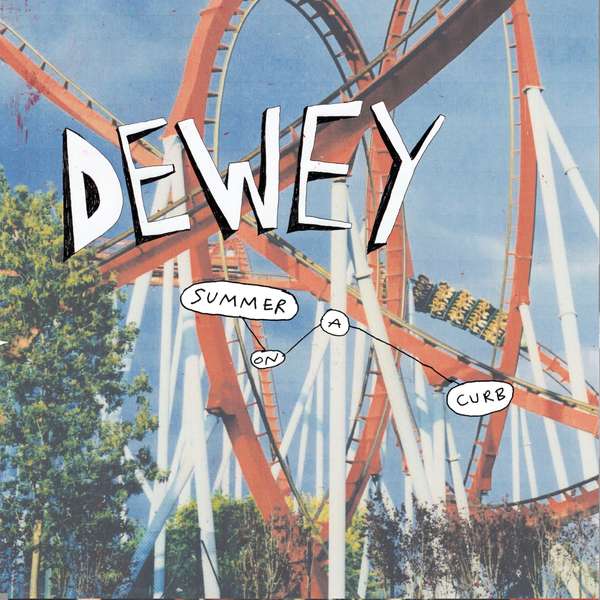
If you like your pop melodies wrapped in fuzz, your shoegaze grounded in real songwriting, and your records best experienced front-to-back on a quiet night, Dewey’s debut is absolutely worth your time. There’s something disarmingly unpretentious about Summer On A Curb. Dewey don’t arrive with a manifesto, a scene-policing attitude, or a sense of calculated cool. Instead, this Parisian quartet show up with eleven songs that feel like they were written because they needed to be. There are little emotional snapshots that sit somewhere between memory and mood, sugar rush and late-night spiral.
Dewey’s debut album taps directly into that late-’90s / early-2000s sweet spot without sounding like a tribute act. The guitars haze over without ever slipping completely out of focus. The hooks are front and center, but they’re rarely shouted. This is hazy pop with a backbone. The songs feel good immediately then quietly stick around longer than expected. You can hear the DNA of shoegaze’s classic fog, but it’s filtered through a distinctly modern indie lens that feels closer to American basement pop than textbook UK reverb worship.
The newly unveiled single, “City Has Come To Crash,” might be the clearest mission statement here. It drifts in like a half-remembered radio hit, built on soft-focus guitars, subtle synth drama, and a melody that feels both comforting and sedated. It really does sound like a 3 AM cab ride. Window cracked, city lights smeared, brain doing that thing where it replays conversations you didn’t mean to overthink. There’s an emotional detachment baked into the track that makes it hit harder than outright sadness ever could.
Across the full album, Dewey lean into contrast. The guitars often float, but the songwriting stays grounded. Choruses arrive without warning and disappear just as quickly. Matthieu Berton’s writing favors immediacy over grandeur. These songs don’t beg for interpretation, they just exist. They’re inviting you in without demanding too much back. That balance is rare, especially on a debut.
What’s especially impressive is how cohesive Summer On A Curb feels despite its spontaneity. Being self-produced gives the record a lived-in warmth. Nothing feels overworked or excessively polished, but nothing sounds unfinished either. It’s the kind of album that thrives on feeling human with its small imperfections, soft edges, and all.
There’s also something refreshing about how Dewey approaches nostalgia. When the album nods to My Bloody Valentine, it’s through texture rather than imitation. When pop sneaks in, it’s buried under reverb and late-night melancholy, not early-2000s radio sheen. That push and pull keeps the record engaging, never drifting too far into dreamland or sugarcoating itself into emptiness that fans of Slow Pulp and Hotline TNT will be drawn to.
In a French indie scene that often feels overlooked internationally, Summer On A Curb positions Dewey as a genuine breakout possibility. These are songs that don’t need context, trend cycles, or scene validation. They just work. And sometimes, that’s more than enough.