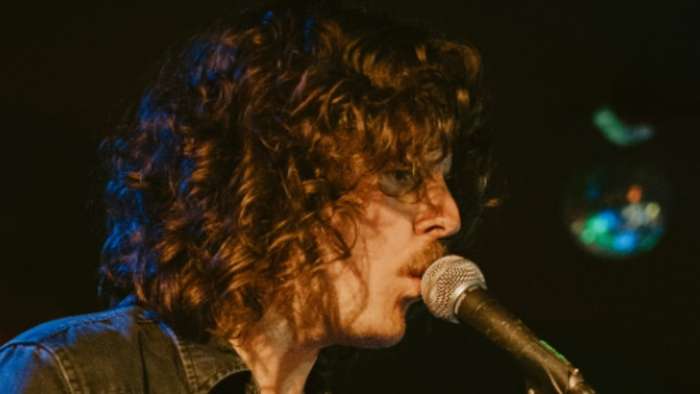
There are a lot of misconceptions about the life of a musician. Most musicians have day jobs – and not just to pay the bills. Jobs provide new challenges, personal fulfillment and, yes, some rent or gas money.
How an artist spends their time by day will influence the creative process at night. In Don’t Quit Your Day Job, Scene Point Blank looks at how musicians split their time, and how their careers influence their music (or how their music provides escape).
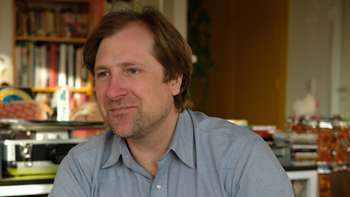
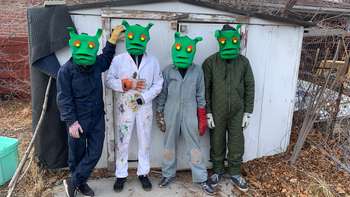
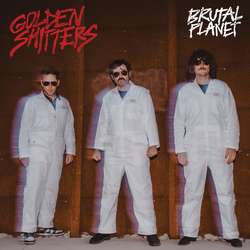
In this edition, we chat with Matt Ellis of Golden Shitters. He calls the band his passion project, or “loss leader,” while also working as a Rock Band Teacher / Music Teacher at Noise Pollution Rock School in Hamilton, Ontario.
Scene Point Blank: You told me in pre-interview prep that you are more of a band leader than a music teacher. To get started, tell us about the school. As principal, what is your role with your co-workers? (Very) broadly speaking, what do they do, compared to what you do?
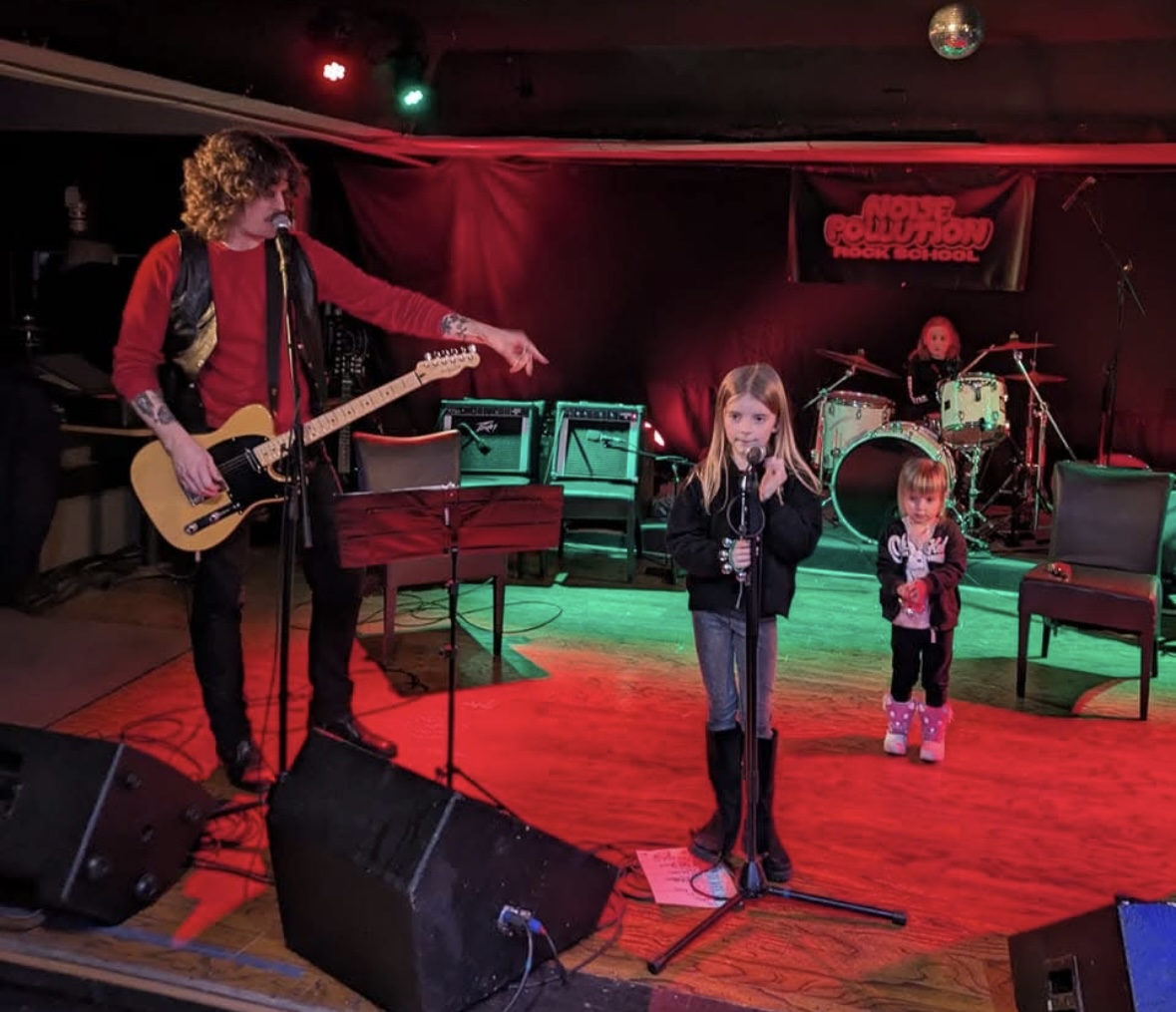
Matt Ellis: I run Noise Pollution Rock School. I teach 3-5 kids at the same times, ages 5 to 17. I show them how to play easy songs: Ramones, Beatles, Stooges, Green Day, or anything else that gets them excited. I show them how to play together and show them how to be in a band. I don’t teach music theory or offer one-on-one lessons. While we learn chords and song structures this is more like a “let’s start a band” and see what happens. I also help them write songs and just be creative. Creativity only happens when there is a time and space set aside for it. I try to give that to kids in hope they will do the same when outside of the class or after they leave. Playing other people’s songs is a good way to learn but music is about creating your own sounds.
Scene Point Blank: Your students play varied instruments in a rock band setting. How do they form their bands? Are they friends, or "assigned" to a group?
Matt Ellis: They are assigned to a group that matches up with their age and skill level. Scheduling at the beginning of the year is tricky!
Scene Point Blank: How would you describe "a typical day in the office?"
Matt Ellis: A typical day in the office is me planning lessons, learning songs, stringing guitars, etc. Then I have two classes show up after school: Monday-Thursday. 5pm and 6pm. I also have to do boring bookkeeping and numbers, but my partner Nina helps with that. I’m a terrible business man. I suppose that’s why I’m a self-employed musician.
Scene Point Blank: Anyone reading this site is already a music fan and shares some common ground. What led you to this work? When did you know you could mix music with a real career?
Matt Ellis: I’ve played music my whole life and have enjoyed a modest amount of success releasing music and touring. Never enough to sustain myself fully by playing in a rock band. I got sick and tired of working jobs for other people and, while I’ve never had a job I hated, I’ve never had one I loved until now. It started with a push from my partner so I could be happy and have more time to be at home with her and our kids.
Scene Point Blank: Did you have a background in education outside of music/arts?
Matt Ellis: No, but when I was younger my original plan was to go to art school after I got accepted to the Ontario college or art and design. But the calling of rock music was too loud so I bailed on school and moved to Hamilton to pursue music and ended up a bartending to pay the bills, serving, and landscaping for a few years and that’s what’s broke me.
Leaving the house before my kids woke up and coming home at bedtime for two years made me realize I couldn’t do it forever.
Scene Point Blank: How long have you played music and how has that overlapped with your career? How did playing music influence your path?
Matt Ellis: I’ve been playing in bars and clubs since I was 15 years old. So about 23 years now. Music had always been the focal point of my life and when I was younger I sacrificed a lot and would have died for rock 'n' roll! But now I’m a little older and have two kids. I had a great time being in a band (and I still do) but I started to think how can I still be a part of this and take a step back at the same time?
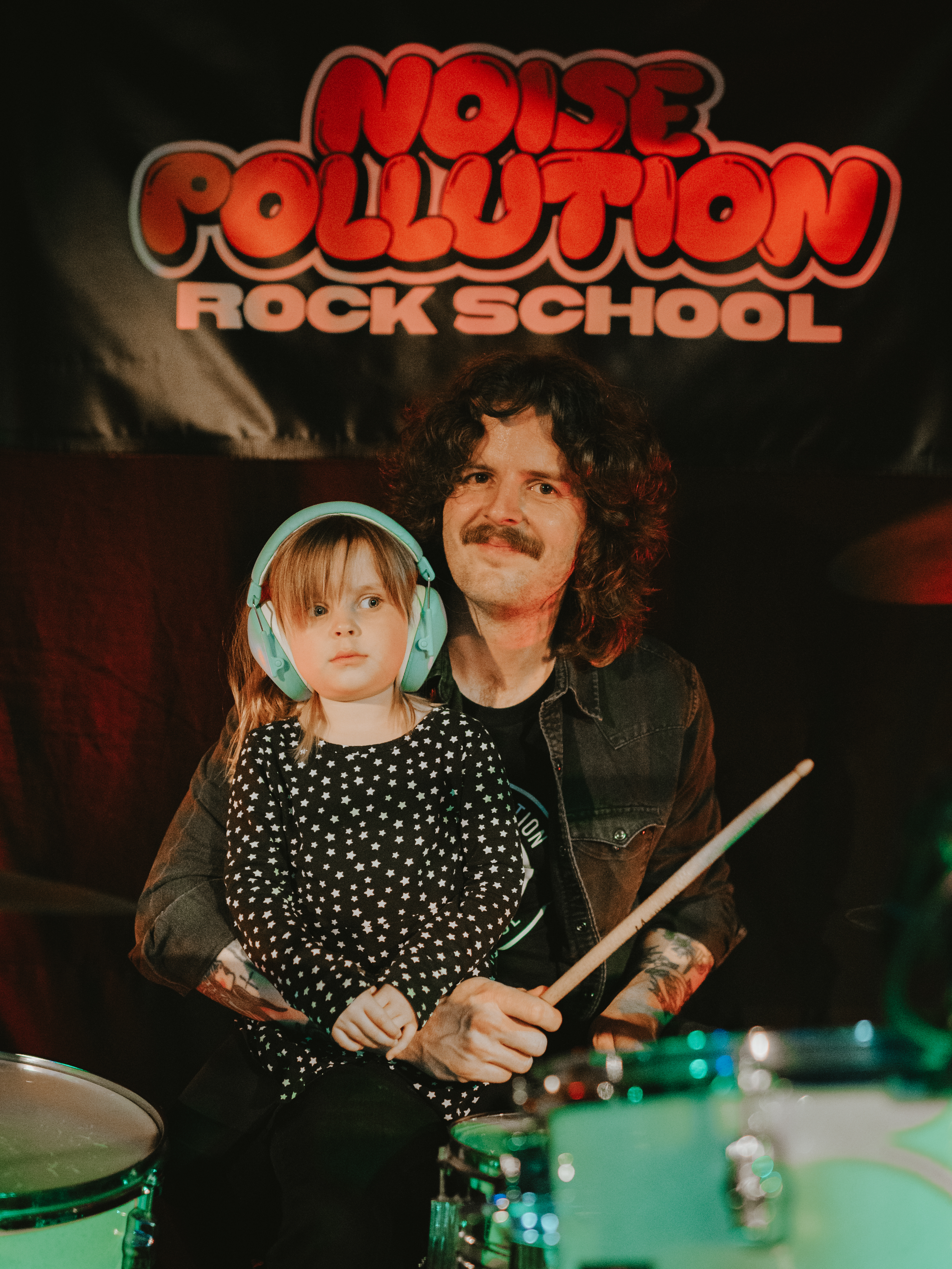
Sacrificing for music is easy when you are young. Now I have mouths to feed and I want to spend my time differently. I want to be home with my girls. I can still be a part of the thing I love and pass on my knowledge to the next generation. Rock 'n' roll is for young people so I guess this is like me passing the torch and seeing it continue on.
My partner pushed me by saying, “You’re not happy at your job, you can’t do this forever. Let’s find a way you can do music and make a living at it.” I love kids and I’m great at connecting to them and this all just kind of happened naturally when I started my own family.
Scene Point Blank: Do your coworkers play similar styles of music in their own artistic endeavors, or is it a hodgepodge of musicians?
Matt Ellis: It’s just me for now but as things continue to grow I would like to expand and hire other teachers.
Scene Point Blank: When working with students, do you focus on more interpersonal relationship issues of bands, or more on the how-to of songwriting and live performance?
Matt Ellis: I’m all about getting the instruments in their hands and to get them playing. First a few cover songs and then we start writing. I do pass on some of my philosophies and DIY approach to music. As much as what I do is about teaching music, it is also about fostering creativity and getting shy kids comfortable with themselves and others so they can get on stage and play live.
Scene Point Blank: What is your "songwriting 101" example song? What song do you use to get everything started?
Matt Ellis: It depends on the class and age but for the youngest kid classes I use "Wild Thing" by The Troggs, "Coconut" by Harry Nilsson and, for older classes, I like to use "I Wanna Be Your Dog" by the Stooges, Ramones' "Blitzkrieg Bop" and AC/DC's "It’s a Long Way To the Top."
When we are first learning, I focus on simplicity and we start on songs that have 2 or 3 chords with the emphasis on “anyone can do this” and demystifying rock music so it can be approachable and fun.
Scene Point Blank: How do you balance everything? Do you set schedules or block off time to make your own music?
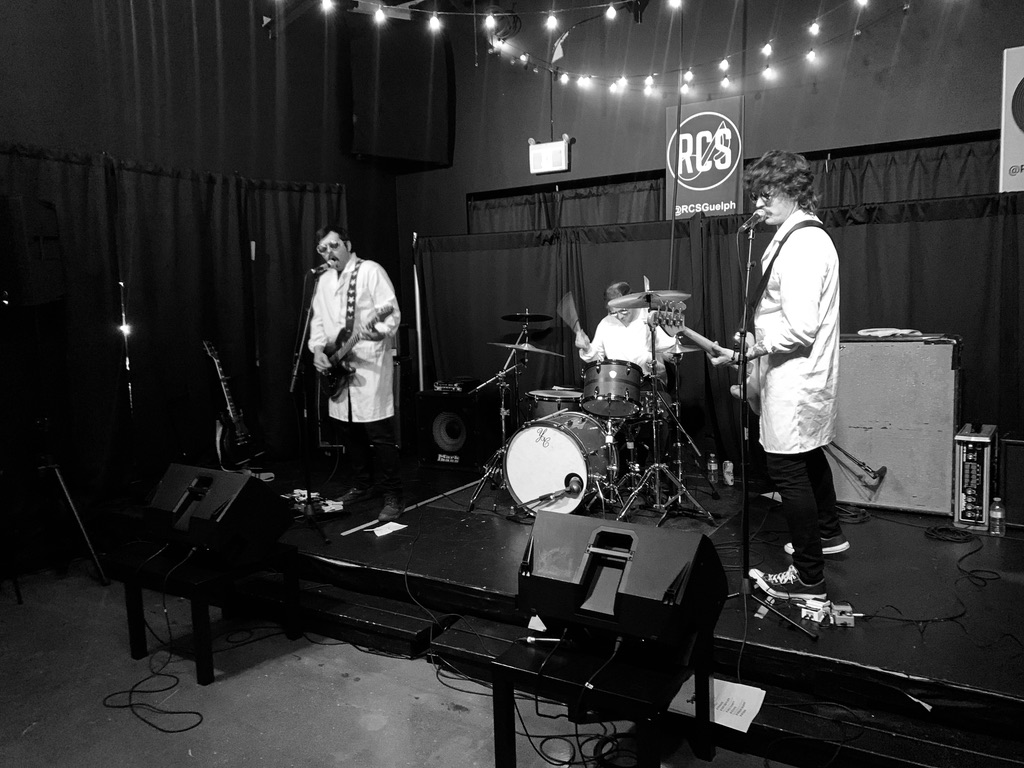
Matt Ellis: My own music is usually late at night after my kids go to bed, or if they go away for the day I’ll spend an afternoon writing demos in my basement studio. These days I write almost exclusivity by myself and I don't have a regular “jam night” with my band. I suspect when my kids get older I’ll have more free time and might start to enjoy that again.
Scene Point Blank: Does Golden Shitters have any songs that started with a work experience?
Matt Ellis: Not directly, but the song “Don’t Relax” off our first album comes from thinking about the younger generation. It’s about how hard the world can be for my generation -- and probably will be even harder for kids.
It’s a bit negative but is also is saying, “Don't relax and close your eyes.” Ask questions, create art and music, stand up for what you believe in, and just do your best.
Scene Point Blank: You also do some kids music shows. How do you intertwine or, alternately, separate the two musical projects? Obviously, one band has a "swear" in the title -- which I feel might limit bringing the two worlds together?
Matt Ellis: I keep my punk band in the punk world and I do student concerts where the kids get to play on stage. I act more like a band manager or stagehand for the older kids and sometimes play a supporting role like rhythm guitar.
But I also play shows where I play kids' classics mixed with rock songs: just me and an acoustic guitar. These gigs are for young kids, usually 10 and under, and I use them to help spread the word of the rock school. I suppose in a way it’s all connected. My punk band is my passion project and what you’d call a “loss leader” in the business world, haha!
Rock 'n' roll is for young people so I guess this is like me passing the torch and seeing it continue on.
Scene Point Blank: To kind of summarize everything: How intertwined are your "professional life" and "music life"? Do the two worlds come together often?
Matt Ellis: I think even my family life revolves around rock music. My kids call Chuck Taylors “Dad’s rock 'n' roll shoes” and my nieces all know me as the cheesy rock 'n' roll uncle who only wears black and has a lot of records in the living room on those big shelves. I get recognized more for being a kids' entertainer and music teacher than being in a band these days. That cracks my partner up and it makes me smile, so I like it.
And I just try to wear as many hats as I can. I teach kids music, I play in a punk rock band, I do live, family-friendly rock shows, I even record a few bands (student bands and punk bands) a couple times a year in my home studio. Somehow it all comes together and I’m able to make ends meet and do something that I see value in.
There are tradeoffs -- good and bad -- to being self-employe, but I honestly believe in what I do and I sleep good at night knowing my students are having a good time and learning and growing as young people through rock music.
Scene Point Blank: I can't speak for Canadian arts funding as a US resident, but is funding (or seeking funding) a big part of the job?
Matt Ellis: It’s out there if you want to play that game but I don’t really care about it at this moment. I'm just keeping things as streamlined as I can. The older I get, the less I want and the less I’m interested in such things.
Scene Point Blank: What advice would you give to a musician who is interested in a similar path?
Matt Ellis: You have to keep a day job for as long as you can. For a while I worked and taught on weekends. I even tell my teenage students, “Go out and get a crappy job so you can buy some better gear and it will give you some stuff to write about.”
When you eventually have to decide to make the jump, quit the day job and just go for it, all-in! If you stick with anything long enough and slug it out there is some level of success to be had. It is possible to have financial reward for those who put in the time and effort. I guess it depends on what you want and how you want to live.
It might not be exactly what you want but that’s ok. My dream job would be to make money playing in a punk band. That’s a pretty tall order! …Well, I’m a kids' music teacher. I make a living off music. It’s not how I envisioned the dream but I’m very happy with the way things are.
If you want to support yourself in the arts you have to live within your means. There is less money so there is less luxury. Don't get a credit card, don’t buy things you can’t afford. If you can’t pay for it, you can’t afford it.
Be careful with drugs and alcohol, I’ve seen it ruin people and, to be honest, it almost ruined me and I really needed to make some big changes years ago. It’s no secret that the music industry has a tricky relationship with substance abuse and I don’t want to be to preachy about this, but these pitfalls are well known so it’s important to be mindful.
Just try to do your best and accomplish a few small tasks everyday and it slowly gets easier and gathers momentum. It is a job but you can still have fun doing it. If you believe in what you do and think you can live and work for yourself don’t think about it, just do it because you won’t know unless you try.
To quote Lemmy, “Go for it. If you think you got it, run it up the flagpole and see who salutes it.”
Scene Point Blank: Anything you'd like to add?
Matt Ellis: Big thanks to my bandmates, past and present, shout outs to all my students and their parents. My amazing partner Nina who helps me do what I do, and my two kids who continue to inspire me. And lastly thanks to the Ramones for blowing my mind and letting myself and everyone know anyone can be in a band!
Hey ho! Let’s go!
Check out previous entries in the Don’t Quit Your Day Job series.