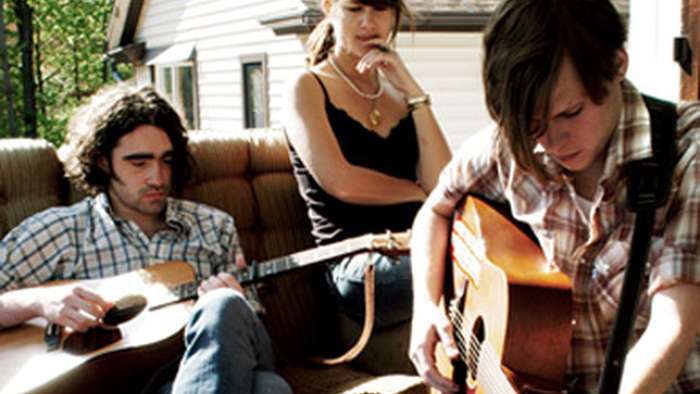
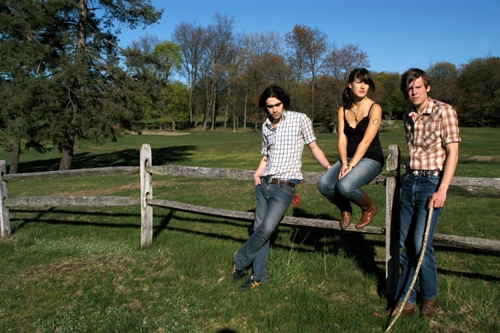
Way back in the far gone year of 2005, Jacob Berns and Chris Kiehne got together to record a small set of songs that, beyond their folksy, love story exterior, betrayed a dark and horrific substance. Accompanied by the lovely vocals of Sonya Cotton, those songs became the National Lights's debut album, The Dead Will Walk, Dear, released in 2007 on Bloodshake Records. Though reactions occupied the whole spectrum, it was largely a critical success.
Fast forward to 2012, when one of our writers first got a hold of said album and was immediately intrigued by the strange juxtaposition of emotions. In investigating the band further, she realized their website hadn't been updated since 2008--just when a follow-up, Whom the Sea Will Keep, had been tantalizingly mentioned for release. It was if they had fallen off the face of the Earth.
Until now, that is. Scene Point Blank managed to get in touch with Jacob Berns, the songwriter behind the National Lights's mysterious allure, and finally ask him: what on Earth happened?
Scene Point Blank: Firstly, thank you very much for allowing us to interview you. We know that contacting you for this was a bit out of the blue.
Jacob Berns: A nice surprise. Thank you.
Scene Point Blank: The National Lights’ first (and so far, only) album was The Dead Will Walk, Dear, released in 2007. Now that you have some distance on it, how do you feel about the album?
Jacob: I’m happy with it. Given the great distance, it’s easy to look back on the album and see what we could have done differently. But it’s a product of what Chris Kiehne and I were interested in musically at the time and where we were as songwriters, and I think we were doing all right. Henry James re-edited his novels until his death, and the later editions are worse for the effort. Still, the drive to go back and make changes is one I can understand. That said, I don’t listen to the album much. It’s a batch of songs recorded at a specific time, reflecting that point in our careers—strengths and everything else.
Scene Point Blank: By virtue of its dark themes, The Dead Will Walk, Dear seems like an album that would be easy to revile (even if it is a love story). Where did the concept for this album come from in the first place?
Jacob: The album came together while Chris, Sonya Cotton, and I were in college and much of it was inspired by the work we were reading in our classes, especially American Gothic literature. What we were watching outside class, too, namely ‘80s horror films; Chris and I would clear out the cheap bins when video stores were going out of business. Found lots of gems that way, lots of movies that will never make it to DVD. In both genres, you’re forced to interact with characters you wouldn’t invite for a beer—or want knowing where you live. But even then, if you’re looking closely, you can often find humanity, even in inhuman characters.
Scene Point Blank: What were the reactions like to the album’s content? (And for our own curiosity, what was the funniest or oddest response to the album that you recall?)
Jacob: Plenty of albums (and novels and stories) deal in dark themes, and I think there’s a tendency to be critical of this focus for debuts. Not that there aren’t missteps on the album, but I—and, I believe, the rest of the musicians on it—don’t consider the content one of them. Everyone has a story, and everyone’s story is worth telling—that goes for the best and worst among us, whatever those words mean.
But reactions were positive overall. At the very least, most reviewers were able to distinguish between the music and the musicians. The highest-profile review was more critical than others, though I wouldn’t say dismissive. What I will say is [that] intention is meaningless if you don’t pull it off, so I’ll take the hit there; but there’s a difference between what someone reads into lyrics and what’s on the page. It’s much easier to write a review if one writes oneself into it.
As for the funniest/oddest response: “A form best reserved for campfires, and people with beards.” “About as exciting as a vasectomy” is pretty good, too.
"All stories are about perspective, and stories about the sea are particularly well-suited to making characters look at themselves differently."
Scene Point Blank: In the aftermath of The Dead Will Walk, Dear, a follow-up album was mentioned, titled Whom the Sea Will Keep. Judging from a few of your interviews and your website, it seems as if writing and recording for the album had already begun, and a release date was projected for 2008. However, it’s now 2013, and it still hasn’t seen the light of day. So, the biggest question is, what happened to it? How far into the recording process did you actually get and what transpired that led to the album remaining unfinished?
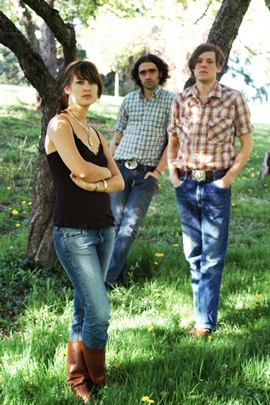 Jacob: Life—school, work, limited time and resources—got in the way. Recording began five years ago, and it has remained a piecemeal process. With engineer/producer Patrick Scott Vickers’ help, I recorded a full-length’s worth of skeleton tracks (guitars, banjo, vocals) over the course of a year, then sent them to Chris to give the songs flesh (I was in Virginia at the time, Chris in New York City, where he’s currently finishing his Master’s in English). The album has since become a six-song EP, though it still focuses on the sea and its visitors (including whalers, captains’ daughters, and Joshua Slocum, which you mention below).
As was the case for The Dead Will Walk, Dear, Chris is producing this album and arranging it alongside Jeff Alford (another friend from college, who records as Skyland Arms) and Derek Piech. I’m now in Oregon, but they keep me updated on the arranging process. In fact, I just learned a rough mix should be done in a couple weeks. I’ve heard the songs, and they sound incredible. A looser feel than the first album, and—as Chris pointed out—much more confident. Lots of new instrumentation as well. Jeff’s accordion work appears on almost every track, adding dimensions I hadn’t imagined when I wrote these songs.
Scene Point Blank: You mentioned that the original concept for Whom the Sea Will Keep was to involve “whaling ships, captains’ daughters, and Joshua Slocum,” material that is certainly ripe to fit in with the American Gothic themes that permeated your debut. Slocum in particular is an intriguing character and, judging from the title, it seems like the album had something to do with his disappearance. Can you talk a bit about your interest in him and the other themes of that album?
Jacob: Slocum’s disappearance, yes, but also what’s forfeited when connections—to land, the people on it—are severed. Most characters in these songs were lost long before they were lost at sea. I’ve always been fascinated by the ocean, its expanse, mystery, etc. Out from shore, where the only landmark is the curvature of the earth, the individual shrinks and the world swells. All stories are about perspective, and stories about the sea are particularly well-suited to exploring identity/making characters look at themselves differently.
Scene Point Blank: Today, how have your thoughts on Whom the Sea Will Keep changed? Do you have any intention of finishing the album as it was originally envisioned? More importantly, should we expect any kind of follow-up at all from the National Lights, or has the band effectively retired?
Jacob: By now, I’ve stopped predicting a deadline/release date, but the album will happen. At some point, I’m going to have to let these songs go, realize they’re also part of a time that has passed.
After the EP, I’m not sure. While I’m still interested in writing music, other, stronger interests have taken shape. But in the scheme of things, I’m just a small part of the National Lights, and Chris, Sonya, Jeff, and Derek are constantly producing original and moving music. Even if the National Lights moniker isn’t around, the musicians who made these albums more than the sum of their parts have plenty left to say.
Scene Point Blank: It’s been around seven years since your debut. What have you been working on since then, musically or otherwise? Have you played at all with Chris or Sonya?
Jacob: Seven years. Wow. It feels like a long time ago, but not that long, probably because I haven’t been writing much music, don’t have as much musical output to look back on. I haven’t played a guitar in months, actually. If I pick up anything, it’s the ukulele hanging over my writing desk, which I’ll strum absently while working out a problem in a story. I just completed my MFA, and fiction has been my primary focus, certainly over the past three years. Haven’t played with Chris or Sonya since the last National Lights tour, back before the first album was released.
Scene Point Blank: What have you been listening to in the intervening years? How have some of the newer releases affected your personal musical taste?
Jacob: Lately, I’ve been listening to Dire Straits, as well as the new National and Vampire Weekend albums (really wish I’d written “Hannah Hunt”). Prince is never far from the record needle, though that’s pretty much always been the case. The music I write/have written and the music I listen to are often very different. There’s a lot to learn from careful, deliberate songwriting, no matter the genre. Though I recently rediscovered The Handsome Family, and have been slowly filling my gaps in their catalogue. Drove along the Oregon coast last week and had the Father John Misty album on repeat.
Scene Point Blank: What are your other plans for the future?
Jacob: I’ve been teaching college creative writing courses, which is as rewarding an experience as any I’ve had, and I’d like to continue that as I keep writing. Short-term, moving to a house with a bit of land so my girlfriend and I can get a dog.
Scene Point Blank: This isn’t really relevant to anything at all, but how do you feel about dubstep?
Jacob: Don’t know much about dubstep, unfortunately, other than it’s constantly evolving, incorporating other genres, a practice I’m all for.
Scene Point Blank: Thanks again for your time! We’ll let you return to your quiet, undisturbed solitude now.
Jacob: Thanks for digging me up.