Water of Life – ArteNOM
Now, if you care for Tequila a tad more than shooting it, there are worlds to discover once you delve beyond the mainstream offerings that are crowding the shelves of your spirits dealer of choice. The beauty with Tequila is that contrary to other spirits, it is one of the most regulated alcoholic beverages there is, i.e. not only does it have to evolve from defined regional territory in Mexico and it also has to be extracted from Blue Webber Agave to be classified as such.
ArteNOM is a Tequila brand that I had not been exposed to prior to a Masterclass at Sydney’s go-to Tequila bar and restaurant Tequila Mockingbird, the curation of which ensures that its audience are only authentic quality spirits and a cuisine that proves to be exceptional, no matter if you are preferring Mexican fare or not.
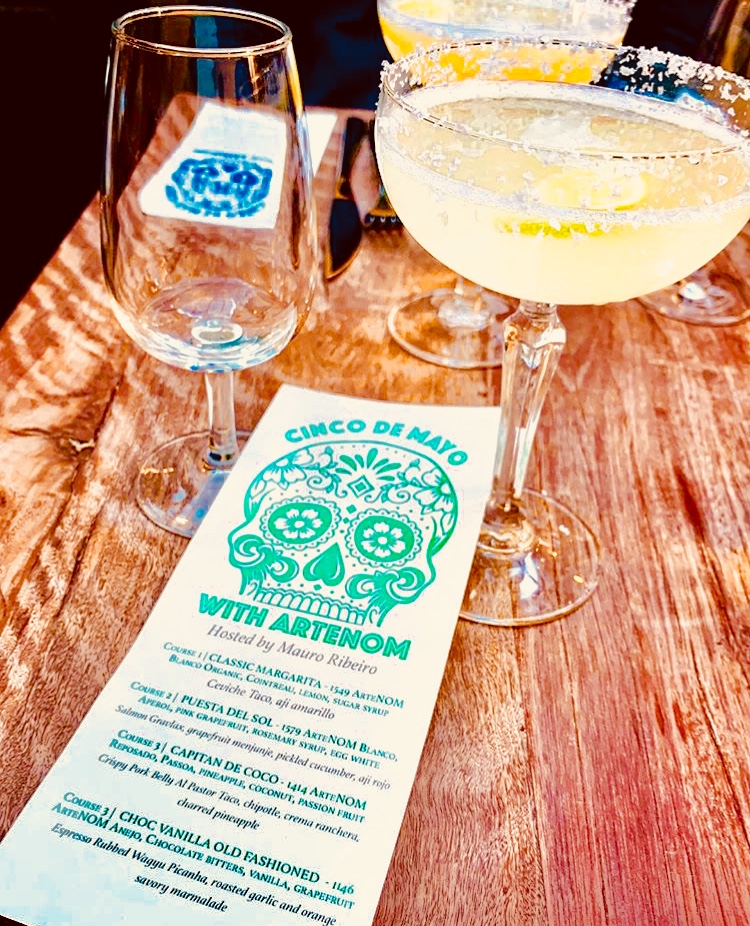
An example of their expertise when it comes to cocktails was the Classic Margherita that was proffered as an aperitif. Carefully calibrated, it had a depth and character that is often overpowered by one ingredient if mixed by less skilled hands. Beautiful.
What makes ArteNOM different in their approach is that they are sourcing tequila from a range of different distilleries to then showcase the idiosyncratic DNA of the respective house with their expressions. Mauro Ribeiro of Cerbaco Distribution, who hosted the Cinco de Mayo Tequila masterclass, elaborated on the curation process, which is not only focussed on distilleries of distinct villages but is also informed by the altitude the respective agaves used have been grown – a factor that determines subtle flavour nuances.
Tequila ArteNOM Seleccion de 1579 Blanco Tequila is one of the highland Tequilas and the aroma tickles the nostrils with a pleasant waft of roasted agaves along with fruitier notes, think pineapple.
What hits the palate, what the nose promised is being continued whoever we now enter piquant territory along with hints of lime, which makes things interesting. The dry finish marries both spiciness and fruitiness with vegetal undertones. One nice sipping Tequila and one that made me excited about the other expressions that were to come.
Tequila Mockingbird’s cocktail interpretation of it materialized in form of a Puesta del Sol, which, being an Aperol aficionado, hit the spot exquisitely and matched with salmon gravlax, grapefruit mejunjie, pickled cucumber and aji rojo, a delight to behold – a feast both for the eyes and the palate.
Tequila ArteNOM Seleccion de 1414 Reposado Tequila is another highland one, however, it takes things up a notch or two. The fact that is has been aged in ex-Bourbon casks gives it a nice oaky nose and the trademark highland roasted agaves notes are complimented by hints of vanilla and white pepper. I found the Reposado to be spicier on the palate, which is expertly balanced by citrussy flavours. A major point of difference to the Blanco is the elongated finish, which serenades the palate with spiciness and underlines the Reposados bold characteristics. Nice.
Tequila Mockingbird used it as an ingredient for a rich Capitan de Coco cocktail, which was counteracted by a crispy pork belly al pastor taco, chipotle, crema ranchera and charred pineapple. The marriage of both was an example par excellence of how the chefs of the day not only set the stage for the Tequilas as with the other courses, but also expertly complemented different flavours to enrich the experience.
So far, so good.
Tequila ArteNOM Seleccion is a lowland Tequila and while the first two did not disappoint, things are getting way more sophisticated to which the fact that it is comprised of different Tequilas, aged individually for in between two to three years in different French Oak Casks, with the hybrid being matured for another year in ex-Bourbon casks certainly contributes.
Given the aforementioned, it is not further wondrous that he golden drop rests of a solid canvas of oakiness on which roasted agaves, chocolatey nuances and raisins unfold their characteristics. There is spice on the palate as are more delicate vegetal flavours, none of which overpowers the other. A masterstroke in calibrating seemingly opposed worlds and while I have yet to come across an arteNOM expression I would not enjoy sipping on, the Reposado is one to sit down with and dedicate ample time to.
Tequila Mockingbird created a Choc Vanilla Old Fashioned with it, which was substantiated with an espresso rubbed wagyu picanha – a course which not only the previous one showcased the excellent cuisine of Sydney’s go-to South American infused etablissement but also the craft that underpins the expertise of their mixologists.
_7.jpeg)
---
Photos by @k.a.vv
 Needless to say that each of us would have a list of what we would deem to be influential thinkers.
 Again, despite being the capital of Australia, I have never felt the urge to visit – that has recently changed as more and more high-quality small batch distilleries emerge that are unconstrained by the need to produce volume and can focus on quality.
 Consider yourself somewhat of a gin aficionado?
_10.jpeg)
_6.jpeg)