Turbonegro, Tom of Finland and High Gloss
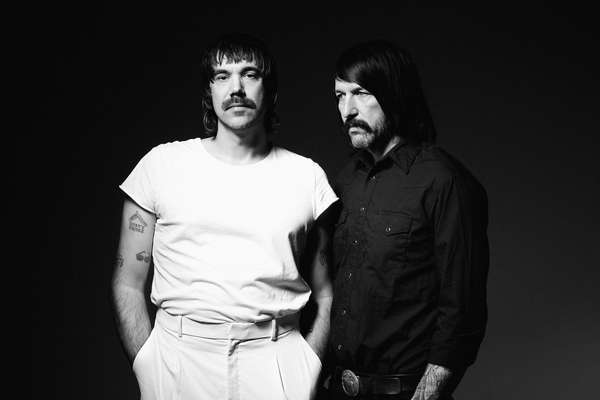
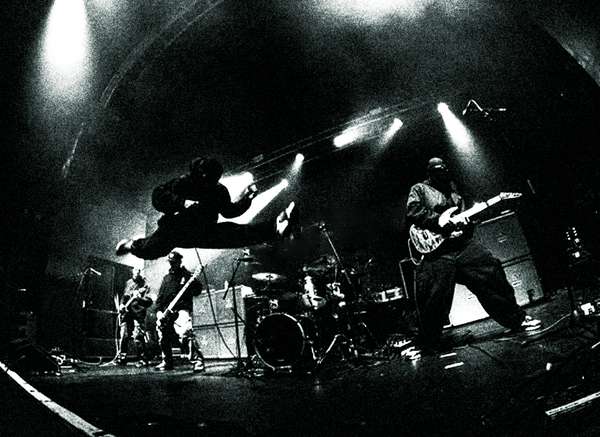
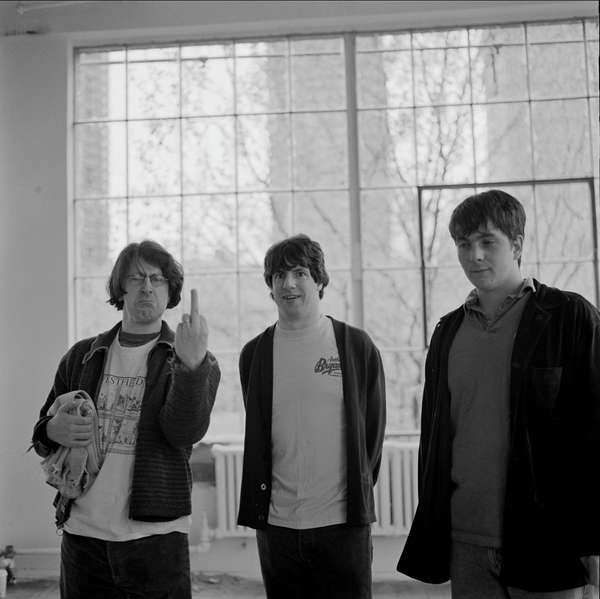
 My first exposure to Turbonegro must have been via the triumvirate that are the Hot Cars and Spent Contraceptives, Helta Skelta and Never is Forever albums, which entered my rotation in the early 1990s.
However, it was not until the 1996 release of the defining Ass Cobra album and the subsequent tour, where I got to meet them the first time, that it clicked.
What Happy Tom, i.e., Thomas Seltzer, the creative force behind the band, and his worthy constituents had created was a refined and deliberate signification of styles and influences, which the band channelled into their own boundary pushing brand of alchemy.
Musically, Turbonegro have never not been beyond all doubt and when they started to adapt their denim and moustache look in the mid-90ies, after trials and errors in the style department, things really took off.
To understand the nuances of the homosexual innuendo of Turbonegro, the oeuvre of Finnish artist Touko Laaksonen, i.e. Tom of Finland, is indispensable. In essence, each constituent of Turbonegro modelled themselves in a subversive manner after Tom of Finland’s characters.
Abrams book’s ode to the queer cult artist, i.e. Tom of Finland: The Official Life and Work of a Gay Hero, was created in close collaboration with the Tom of Finland Foundation and not only pays homage to the well-known artwork celebrating every facet of the male body, archetypes and hyper masculinity, but also sheds light on rarely seen materials from the archives.
The book is not only introduced via a foreword by Jean Paul Gaultier, but the pencil drawn depictions of gay erotica are substantiated by an extensive interview with the man himself, which is not only lending perspective but makes this tome one of the few on the subject that resemble having an authorised, official seal of approval.
No matter your sexual preference or the often hyperbolic aesthetics, it would be difficult to argue that Tom of Finland lacks a liberating, keen and cheeky sense of humour and artistic values that go far beyond mere graphic and explicit sex content, which ultimately helped to create a new identity for the gay scene. With over three hundred photographs and illustrations, a beautifully curated and authorative coffee table book on the subject and one that is bound to raise eyebrows.
 Change of gear?
Let’s transition to the comparatively tame heteronormative mainstream realm: After starting out as the assistant of David Chapelle, Vijat Mohindra has established himself firmly on the firmament of a new generation of idiosyncratic photographers and has refined an aesthetic of his own.
While there are no pre-defined boundaries as to the subjects of his lens, the common denominator could be pinned down to hyper-syntheticism and defiance of the portrayal of candid realism.
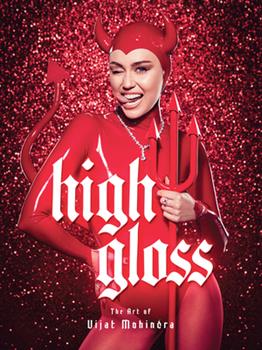
High Gloss: The Art of Vijat Mohindra is a monograph dedicated to his fantasy worlds and his unique collaborations with brands and artists. While it is not further wondrous for musicians like Miley Cyrus and Nicki Minaj to be depicted in Mohindra’s over-the-top glossy manner, things get interesting and nuanceful when artists like Amanda Lepore, Tyra Banks, and A$AP Rocky enter his microcosm.
The eye candy found in High Gloss not only comprises the photos widely known from mainstream publications, but entail footage specifically shot for this tome, which not only looks ace across the table from Tom of Finland, but should be of interest to anyone remotely interested in the art sitting at the intersection of photography and fashion.
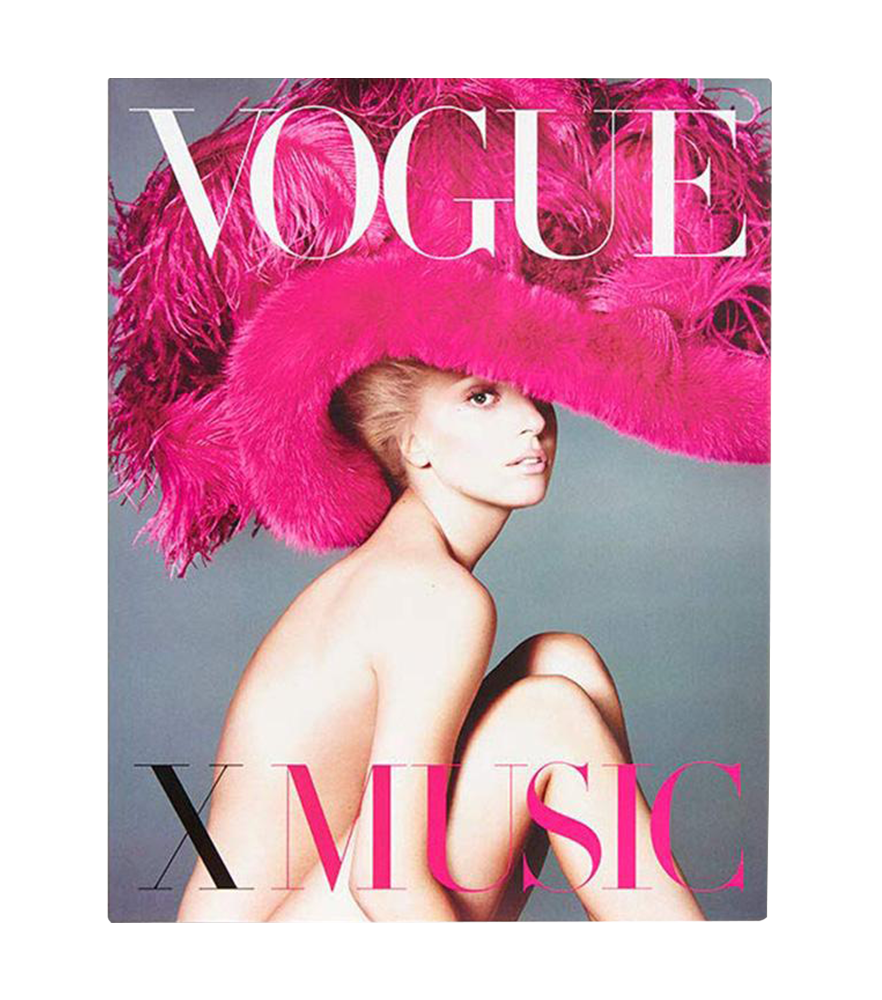 To say it with the words of the ever so eloquently Marge: “…Greta Garbo and Monroe, Dietrich and DiMaggio, Marlon Brando, Jimmy Dean on the cover of a magazine. Grace Kelly, Harlow, Jean. Picture of a beauty queen. Gene Kelly, Fred Astaire, Ginger Rogers, dance on air. They had style, they had grace, Rita Hayworth gave good face, Lauren, Katherine, Lana too - Bette Davis, we love you. Ladies with an attitude. Fellas that were in the mood Don't just stand there, let's get to it - strike a pose, there's nothing to it…Vogue, vogue!”
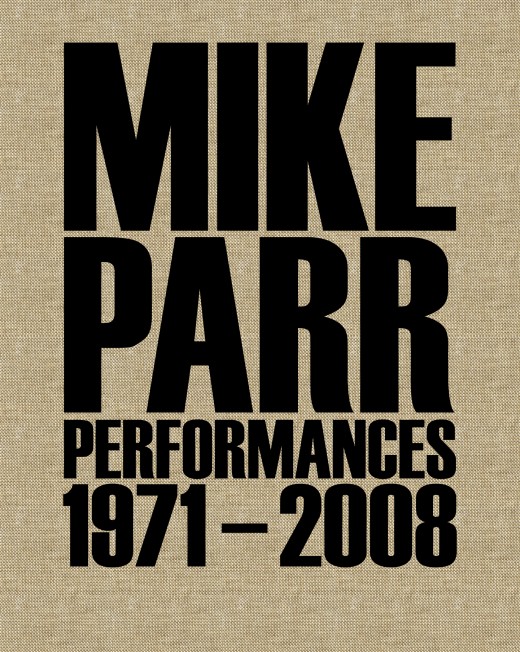 Mike Parr’s shadow looms large, both on international terrain but specifically on terra australis. Having emerged on his artistic mission in the early 1970s, his oeuvre encompasses not merely a vast array of media but specifically performances, which not only work on different levels but more often than not have a political message at their core.